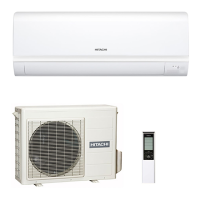
This document is a user manual for the Hitachi RAK-50PPA / RAC-50WPA Split Type Air Conditioner, covering both the indoor and outdoor units. It provides essential information on safety precautions, component descriptions, operation, and maintenance.
Safety Precautions
The manual emphasizes safety throughout, categorizing warnings into "Warning" and "Caution" sections. "Warning" indicates potential for death or serious injury if instructions are not followed, while "Caution" indicates potential for serious consequences. Key safety points include:
During Installation:
- No Reconstruction: Do not attempt to reconstruct the unit yourself, as this can lead to water leakage, faults, short circuits, or fire. Always consult a sales agent or qualified technician for installation.
- Earth Line: Ensure the unit is properly earthed. The earth line should not be placed near water or gas pipes, lightning conductors, or telephone earth lines, as improper installation can cause electric shock.
- Piping: Use only the specified piping set for R410A to prevent broken copper pipes or faults.
- Circuit Breaker: Install a circuit breaker appropriate for the mounting site to prevent electric shock.
- Flammable Gas: Do not install the unit near flammable gas to avoid fire hazards.
- Drain Hose: Ensure smooth water flow when installing the drain hose.
- Environment: Avoid installing the indoor unit in environments like machine shops or kitchens where oil vapor or mist can flow into the unit. Oil deposits can reduce performance and deform/break plastic parts.
During Shifting or Maintenance:
- Abnormal Situations: If any abnormal situation (e.g., burning smell) occurs, immediately stop operation, turn off the circuit breaker, and contact your agent. Continuing to operate a faulty unit can lead to short circuits or fire.
- Professional Maintenance: Contact your agent for maintenance. Improper self-maintenance can cause electric shock and fire.
- Removal/Reinstallation: Do not attempt to remove or reinstall the unit yourself. Electric shock or fire may occur if done improperly.
- Damaged Cord: If the supply cord is damaged, it must be replaced by a special cord from authorized service/parts centers.
During Operation:
- Air Flow: Avoid extended periods of direct airflow for health reasons.
- Obstruction: Do not insert fingers, rods, or other objects into the air outlet or inlet, as the high-speed fan can cause injury. Always stop operation and turn off the breaker before cleaning.
- Fuse Wire: Never use any conductor as fuse wire, as this can be fatal.
- Thunderstorms: During thunderstorms, disconnect and turn off the circuit breaker.
- Combustibles: Keep spray cans and other combustibles at least one meter away from the air outlets of both indoor and outdoor units, as hot air can increase internal pressure and cause rupture.
- Intended Use: Operate the product only under manufacturer specifications and for its intended use.
- Wet Hands: Do not operate the unit with wet hands to avoid fatal accidents.
- Ventilation: When operating the unit with burning equipment, regularly ventilate the room to prevent oxygen insufficiency.
- Air Direction: Do not direct cool air from the air conditioner towards household heating appliances (e.g., electric kettles, ovens) as this can affect their operation.
- Outdoor Unit Stability: Ensure the outdoor mounting frame is always stable, firm, and without defects to prevent collapse.
- Cleaning: Do not splash or direct water onto the unit body during cleaning to prevent short circuits.
- Aerosols: Avoid using aerosols or hair sprays near the indoor unit. Chemicals can adhere to the heat exchanger fins, block water flow to the drain pan, and cause water splashing from the indoor unit.
- Cleaning Power Off: Always switch off the unit and turn off the circuit breaker before cleaning, as the high-speed fan inside can be dangerous.
- Long Periods of Non-Use: Turn off the circuit breaker if the unit will not be operated for a long period.
- Outdoor Unit Climbing: Do not climb on the outdoor unit or place objects on it.
- Water Containers: Do not place water containers (like vases) on the indoor unit to prevent water from dripping into the unit, which can damage insulation and cause short circuits.
- Plants: Do not place plants directly under the airflow, as it is detrimental to them.
- Humidity and Condensation: If the unit operates with open doors/windows (room humidity above 80%) and the air deflector is facing down or moving automatically for a long time, water may condense and drip, wetting furniture. Avoid operating under such conditions for extended periods.
- Room Temperature: If the heat in the room exceeds the unit's cooling/heating capability (e.g., more people, heating equipment), the preset room temperature may not be achieved.
- Children and Infirm Persons: This appliance is not intended for use by young children or infirm persons unless adequately supervised. Young children should be supervised to ensure they do not play with the appliance.
Names and Functions of Each Part
Indoor Unit:
- Pre-filter: Prevents dust from entering the indoor unit. (Refer to page 10 for maintenance).
- Front Panel: The outer cover of the indoor unit.
- Indoor Unit Indicators: Light indicators showing the operating condition. (Refer to page 5).
- Horizontal Deflector / Vertical Deflector (Air Outlet): Directs the airflow.
- Remote Controller: Sends operation signals to the indoor unit. (Refer to the Remote Control Manual).
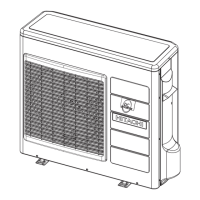
Outdoor Unit:
- Drain Pipe: Drains condensed water to the outside.
- Connecting Cord: Connects the indoor and outdoor units.
- Air Inlet (Back, Left Side): Where air enters the outdoor unit.
- Air Outlet: Where air exits the outdoor unit.
Indoor Unit Indicators
- Filter Lamp: Lights up after approximately 200 hours of operation, indicating it's time to clean the filter. It turns off when the "AUTO SWING" button is pressed in "STANDBY MODE".
- Operation Lamp: Lights during normal operation. It flashes during heating:
- During preheating (2-3 minutes after startup).
- During defrosting (5-10 minutes, approximately once every hour when frost forms on the outdoor unit's heat exchanger).
- Timer Lamp: Lights when the timer function is active.
- Temporary Switch: Used to start and stop the unit if the remote controller is not working. Pressing it initiates automatic mode. If power is turned off and then on again, using the temporary switch will also start operation in automatic mode.
Ideal Ways of Operation
- Suitable Room Temperature: Avoid excessively low temperatures (freezing temperature) as it is unhealthy and wastes electricity.
- Install Curtains or Blinds: This helps reduce heat entering the room through windows.
- Ventilation: Do not keep the room closed for long periods. Occasionally open doors and windows to allow fresh air in.
- Effective Usage of Timer: Use the "OFF or ON timer operation mode" at night, aligning with your wake-up time, to maintain a comfortable room temperature and use the timer effectively.
- Clean Pre-filter: A dusty pre-filter reduces air volume and cooling efficiency. Clean the filter every 2 weeks to prevent energy waste.
- Adjust Suitable Temperature for Baby and Children: Pay attention to room temperature and airflow direction when operating the unit for babies, children, and elderly individuals who may have difficulty moving.
- Air Conditioner and Heat Source: If the heat in the room exceeds the air conditioner's cooling capability (e.g., many people, heating equipment), the preset room temperature may not be achieved.
- Not Operating for a Long Time: If the indoor unit will not be used for an extended period, switch off the main power. Even in "OFF" mode, the indoor unit still consumes about 8W in the operation control circuit if the main power remains "ON".
- When Lightning Occurs: To protect the unit during lightning, stop operation and remove the plug from the socket.
- Interference from Electrical Products: To avoid noise interference, place the indoor unit and its remote controller at least 1 meter away from other electrical products (e.g., inverter-type fluorescent lamps, TVs).
Attaching the Air Purifying Filters
- Caution: Cleaning and maintenance should be done when the filter lamp lights. Stop operation and switch off the power supply before cleaning.
- Steps:
- Open the Front Panel: Pull up the front panel from both sides.
- Remove the Pre-filter: Push upward to release the claws and pull out the pre-filter.
- Attaching Air Purifying Filters: Gently compress the sides of the air purifying filters and release after inserting them into the pre-filter frame. Do not bend the filter, as this can damage its structure. Do not smell directly from the filter source.
- Attach the Pre-filters: Ensure the "FRONT" surface faces forward. After attaching, push the front panel at the three arrow portions shown in the figure and close it.
- Note:
- Air purifying filters are not washable. Use a vacuum cleaner to clean them. They last about 1 year. The type number for replacement is .
- Operating the air conditioner without a pre-filter can allow dust to enter and cause faults.
- Cooling capacity and speed may be slightly reduced when using air purifying filters. Set the fan speed to "HIGH" in this condition.
Maintenance
- Caution: Cleaning and maintenance must be carried out only by qualified service personnel. Stop operation and switch off the power supply before cleaning.
Pre-filter:
- Cleaning: Clean the pre-filter regularly, as dust accumulation reduces airflow, cooling capacity, and can cause noise.
- Procedure:
- Open the front panel and remove the pre-filter. Gently lift and remove the air purifying filters from their frame.
- Vacuum dust from the pre-filter and air purifying filter. If heavily soiled, rinse under running tap water and gently brush with a soft bristle brush. Allow filters to dry in the shade.
- Re-insert the air purifying filter into the frame. Set the pre-filter with the "FRONT" mark facing front and slot it into its original state. After attaching the pre-filters, push the front panel at the three arrow portions shown in the figure and close it.
- Caution: Do not wash with hot water (above 40°C), as the pre-filter may shrink. When washing, shake off moisture completely and dry in the shade; do not expose to direct sunlight, as it may shrink.
Washable Front Panel:
- Cleaning: Remove the front panel and wash with clean water using a soft sponge. After using neutral detergent, wash thoroughly with clean water.
- If the front panel is not removed, wipe it with a soft dry cloth. Wipe the remote controller thoroughly with a soft dry cloth.
- Wipe water thoroughly. If water remains at indicators or the signal receiver, it can cause trouble.
- Removal Method: Hold the front panel with both hands to detach and attach it. When fully opened, push the right arm outwards to release it, then pull it forward while slightly closing the front panel.
- Attachment Method: Move the projections of the left and right arms into the flanges in the unit and securely insert them into the holes.
- Caution: Do not splash or direct water onto the unit body during cleaning to prevent short circuits. Never use hot water (above 40°C), benzine, gasoline, acid, thinner, or a brush, as they will damage the plastic surface and coating.
Maintenance Before Long Off Period:
- Run the unit in "COOL" mode, set to 32°C, and fan speed to "HI" for about half a day on a fine day to dry the entire unit.
- Switch off the power plug.
Regular Inspection
Qualified service personnel should check the following points either every half-yearly or yearly. Contact your sales agent or service shop.
- Is the earth line disconnected or broken?
- Is the mounting frame seriously affected by rust, or is the outdoor unit tilted or unstable?
- Is the power line plug firmly plugged into the socket? (Ensure no loose contact).
After Sale Service and Warranty
When Asking for Service, Check the Following Points:
- Remote Controller Not Transmitting/Display Dim: Check if batteries need replacement or if their polarity is correct.
- Unit Not Operating: Check if the fuse is alright, if voltage is extremely high or low, if the circuit breaker is "ON", and if the operation mode setting is different from other indoor units.
- Not Cooling/Heating Well: Check if the pre-filter is blocked with dust, if sunlight falls directly on the outdoor unit, if the outdoor unit's airflow is obstructed, if doors/windows are open, if there's a heat source in the room, if the set temperature is suitable, if air inlets/outlets are blocked, and if the fan speed is set to "LOW" or "SILENT".
Notes:
- Slight flowing noise of refrigerant or rubbing noise from the fan casing during quiet operation or stopping is normal.
- Odors may be emitted from the unit due to smoke, foodstuffs, cosmetics, etc., sticking to it. Regular cleaning of the pre-filter and evaporator can reduce odors.
- If the unit still fails to operate normally after these checks, contact your sales agent, providing the model, production number, installation date, and fault description.
- Power supply must be at the rated voltage; otherwise, the unit may break or not reach specified capacity.
- If the supply cord is damaged, it must be replaced by a special cord from authorized service parts centers.
- A slight brightness fluctuation in room lighting may occur when switching on the equipment, which is not a consequence of a fault. Local Power Supply Company conditions should be observed.

 Need help?
 General

 To Next Page