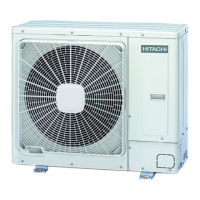
This document is an Operation Manual for INVERTER-DRIVEN MULTI-SPLIT SYSTEM HEAT PUMP AIR CONDITIONERS, specifically for ceiling-mounted models RPC-1.5FSR, RPC-2.0FSR, RPC-2.5FSR, RPC-3.0FSR, RPC-4.0FSR, RPC-5.0FSR, and RPC-6.0FSR. It provides essential information for safe and efficient operation, maintenance, and troubleshooting.
Function Description
The air conditioner is designed for standard air conditioning, providing both cooling and heating functions. It utilizes an inverter-driven multi-split system, allowing for efficient temperature control. The unit can be controlled via an optional wired controller (Model: PC-ARF1) which displays various operational parameters and settings.
A key feature is the Motion Sensor (optional), which detects human activity using infrared light. This function automatically adjusts the air conditioning capacity (setting temperature, air flow volume, and direction) to save energy when absence is detected. Users can choose how the unit responds to absence: "ON" (continues operation with capacity saving), "Stand-by" (switches to fan operation at "Slow" speed), or "OFF" (stops operation). The motion sensor can also be configured with a "Check Interval" (30, 60, 90, 120, or 180 minutes) to determine how long absence must be detected before the function is executed.
The system incorporates several automatic control functions:
- Three Minute Guard (Enforced Stoppage/Operation): Protects the compressor by ensuring it does not operate for at least 3 minutes after stopping, or does not stop for at least 3 minutes after starting.
- Oil Return Operation: Prevents oil accumulation in the heat exchanger of out-of-service indoor units during cooling.
- Frost Prevention During Cooling Operation: Automatically switches to fan operation if the indoor unit's heat exchanger is at a low discharge air temperature to prevent frost formation.
- Self-Cleaning of Expansion Valve: Automatically cleans the expansion valve when operation stops during cooling.
- Hot Start During Heating Operation: Prevents cold air discharge at the start of heating or after defrosting by adjusting fan speed and fixing louver position horizontally.
Important Technical Specifications
The air conditioner uses R410A or R32 refrigerant. The specific type is indicated on the nameplate of the outdoor unit. Mixing refrigerants or introducing non-designated substances is strictly prohibited due to explosion and fire risks.
Operating temperature ranges are specified for optimal performance and longevity:
- Cooling Operation:
- Indoor: 32°C DB/23°C WB (Maximum), 21°C DB/15°C WB (Minimum)
- Outdoor: 48°C DB (Maximum), -10°C DB (Minimum)
- Heating Operation:
- Indoor: 27°C DB (Maximum), 15°C DB (Minimum)
- Outdoor: 15°C WB (Maximum), -20°C WB (Minimum)
- Note: Outdoor temperatures may vary depending on the outdoor unit.
The manual emphasizes the importance of proper installation, including secure electrical wiring, grounding, and refrigerant piping, to prevent electric shock, fire, or injury. It also highlights the need for an ELB (Earth Leakage Breaker) and adherence to local regulations and standards for refrigerant leakage safety.
Usage Features
- Efficient Use:
- Keep windows and doors closed during operation.
- Use curtains or blinds to prevent direct sunlight during cooling.
- Avoid using heating appliances during cooling.
- Consider using a circulator to improve comfort by distributing warm air.
- Turn off the main power source if the unit is not used for a long time to save standby electricity.
- Air Flow Direction:
- Recommended air outlet angle for cooling is approximately 10°.
- Recommended air outlet angle for heating is approximately 35°.
- The vertical deflectors can be manually adjusted, but the louver should not be moved by hand to avoid damage.
- Air Flow Volume: "MED" is usually recommended, but "HIGH" spreads air wider.
- Temperature Settings:
- Recommended set temperature for cooling is 27-29°C.
- Recommended set temperature for heating is 18-20°C.
- Wired Controller (PC-ARF1): Features a display for fan speed, operation mode, temperature, schedule timer, operation lock, filter sign, motion sensor status, and cold draft rest. It includes directional keys, an Enter key, On/Off switch, Menu switch, and ECO switch.
- Simultaneous Operation: Multiple indoor units can be controlled by a single wired controller (up to 16 units for single, 8 sets for twin, 5 sets for triple, 4 sets for quad).
- Setback Operation: Maintains a comfortable room air temperature when occupants are away by adjusting the setpoint.
Maintenance Features
- Daily Maintenance:
- Cleaning Air Filter: The filter sign (FLTR) on the wired controller indicates when cleaning is due. To clean, open the air inlet grille, unhook and remove the air filter, vacuum or wash with water/neutral detergent, and dry in the shade. Do not use hot water above 50°C or dry with open flame/heater.
- Cleaning Air Inlet Grille: Wipe with a soft cloth soaked in lukewarm water. Avoid benzine, thinner, or strong detergents as they can cause discoloration or deformation.
- Beginning and Ending of Use:
- Beginning: Remove any obstacles from the air inlet grilles and air outlets of both indoor and outdoor units. Check that the air filter is not clogged.
- Ending: Clean the air filter and air inlet grille.
Safety Considerations:
- Always turn OFF the main power source before performing maintenance work to prevent electric shock or fire.
- Perform maintenance work with stable footing to prevent falls and injury.
- Handle the air inlet grille and air filter carefully during removal and attachment to avoid falling or injury.
- Do not operate the indoor unit without the electrical box cover and air inlet grille.
- If any abnormality (e.g., burnt odor) occurs, stop operation, turn OFF the main power, and contact a distributor.
- The manual includes specific warnings and cautions regarding installation, electrical work, refrigerant handling, and general operation to ensure user safety and prevent damage to the unit.



 To Next Page

 General