EasyManua.ls Logo

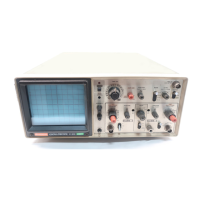
Hitachi V-209 - User Manual

Hitachi V-209
47 pages
Print Icon
To Next Page IconTo Next Page
Loading...
MODEL
V-209
OSCILLOSCOPE
------
.._...__
-
OPERATION
MANUAL
~Hitachi
Denshi.
Ltd.
Question and Answer IconNeed help?

Do you have a question about the Hitachi V-209 and is the answer not in the manual?

Summary

Warranty Information

Important Notes

Instrument Features

Wide Bandwidth

Instrument bandwidth from DC to 20 MHz.

High Sensitivity

Sensitivity is 1 mV/div.

3.5-inch Screen

Internal graticule CRT for parallax-free observation.

3-Way Operation

Operates via AC line, external DC, or battery pack.

TV Synchronization

Uses TV sync separator for stable TV signal observation.

Auto Focusing

Automatically corrects focusing shift.

Accessories Included

Standard Accessories List

Lists standard accessories including probes, fuses, power cords, and manual.

Precautions for Use

Installation Site and Environmental Precautions

Guidelines for temperature, humidity, vibration, and magnetic fields.

Handling and Operational Safety

Precautions on shock, probes, ventilation, and general handling.

Handle Positioning and Usage

Describes how to position the carrying handle as a tilt-stand.

Operational States

When not in use

Instructions for storing the instrument with a dust-proof cover.

When Operation is faulty

Guidance on troubleshooting by rechecking procedures or contacting service.

Care and Repair

Cleaning the Case

How to remove stains from the case using neutral detergent.

Cleaning the CRT Screen

How to clean the CRT screen to avoid measurement errors.

Fuse and Line Voltage Precautions

Fuse Specifications and Replacement

Details on fuse types, ratings, and replacement precautions.

Operation Precautions (Line Voltage)

Checking line voltage range and setting voltage selector.

Controls and Connectors Overview

Power Supply and CRT Controls

Information on operating voltage, fuses, and voltage selection.

Power Supply Mode Selection

Options for AC, external DC, and battery pack operation.

Power Supply Mode Settings

Power Supply Mode Switch Settings

Table detailing switch settings for AC, External DC, and Battery Pack modes.

External DC Operation

How to operate the V-209 using an external DC source.

Front Panel Controls

POWER Switch and Indicators

How to turn on the instrument and status lamps (POWER, CHARGE).

Brightness and Focus Controls

Adjusting display brightness (INTENsity) and focus.

Trace Rotation and Synchronization Controls

Aligning trace (ROTATION) and selecting trigger sources (SOURCE).

Power Source and Mode Selection Switches

Switches for selecting AC/DC power and operation mode.

Vertical Deflection System Controls

Connectors and switches for vertical axis input and coupling.

Vertical Deflection Controls (Continued)

CH2 INPUT Connector

BNC connector for CH2 vertical axis input or Y-axis.

Input Coupling Switches (AC-GND-DC)

Selects signal coupling for the vertical axis amplifier.

VOLTS;DIV Select Switches

Sets the vertical deflection factor or sensitivity.

Variable Sensitivity Controls

Fine-tunes vertical deflection sensitivity.

Vertical Position Controls

Adjusts the vertical position of the trace.

Vertical Mode Select Switch

Selects vertical display modes (CH1, CH2, ALT, CHOP, ADD).

Horizontal Deflection Controls

CH2 Invert Button

Inverts the polarity of the CH2 input signal.

TIME;DIV Select Switch

Sets the sweep time per division.

Sweep Time Variable Control

Calibrates or continuously varies sweep time.

Horizontal Position and Magnification Control

Adjusts horizontal position and activates x10 magnification.

x10 MAG Control Operation

x10 MAG Control Operation

Magnifies sweeps by 10 times for detailed observation.

Synchronization System Controls

SOURCE Select Switch

Selects the trigger signal source (CH1, CH2).

Trigger Source Selection (LINE, EXT)

Selecting LINE or external trigger for synchronization.

TRIG Input Connector

Terminal for external triggering signals.

TRIG LEVEL and Slope Control

Sets the trigger level and slope for synchronization.

TRIG MODE Select Switch

Selects trigger modes (AUTO, NORM).

TV Synchronization Modes

Synchronizing for vertical and horizontal TV signals.

Miscellaneous Controls

EXT BLANK Connector

Input terminal for brightness modulation.

CAL 0.5 V Tip

Calibration output for probe testing and adjustment.

GND Terminal

Earth terminal for the oscilloscope for safety and grounding.

Battery Operation

AD-209 Battery Pack Operation

How to operate the oscilloscope using the AD-209 battery pack.

Battery Charging Procedure

Step-by-step instructions for charging the AD-209 battery pack.

Battery Operating Considerations

Precautions for battery charging, storage, and lifespan.

AD-209 Battery Pack Replacement

Procedure for safely replacing the battery pack.

Producing the Bright Line

Initial Control Settings

Recommended initial settings for producing the bright line on the screen.

General Measurement Procedures

Observing a Single Waveform

Settings for observing one waveform using CH1 or CH2.

Observing Two Waveforms

Settings for observing two waveforms using ALT or CHOP modes.

Observing Waveforms with X-Y Mode

Settings for operating the oscilloscope in X-Y mode.

Signal Connection Methods

Using the Probe

Guidelines for using the provided AT-10AK 1.5 probe for measurements.

Probe Usage Cautions

Warnings regarding input voltage and proper ground lead connection.

Earth Lead Wire Connection

Examples of correct and incorrect earth lead wire connections for measurements.

Probe Correction State Adjustment

How to adjust the probe correction for accurate measurements.

Direct Signal Connection Precautions

Precautions for connecting signals directly to the oscilloscope without a probe.

Shielded Wire and Termination Usage

Recommendations for using shielded wires and terminating resistors for wide band measurements.

Measuring Procedures

DC Voltage Measurement

Step-by-step guide to measuring DC voltage using the oscilloscope.

AC Voltage Measurement

Guide to measuring AC voltage, including sensitivity and coupling.

Frequency and Period Measurement

How to measure frequency and period using waveform timing on the screen.

Time Difference Measurement

Procedure for measuring the time difference between two signal waveforms.

Rise and Fall Time Measurement

How to measure rise and fall times, considering oscilloscope rise time limitations.

Complex Waveform Synchronization

Techniques for achieving stable synchronization with complex signal waveforms.

TV Exclusive Synchronization

Using specialized circuits for stable synchronization of TV video signals.

Synchronization Circuit Differences

Comparison of synchronization circuits in conventional vs. this oscilloscope.

Adjustments

ATT Balance Adjustment

Procedure for easily adjusting the vertical axis ATT balance.

Maintenance and Specifications

General Care and Storage Guidelines

Recommendations for handling, cleaning, and storing the oscilloscope.

CRT Specifications

Details on the Cathode Ray Tube (CRT) type, phosphor, graticule, and focus.

Vertical Deflection System Specifications

Bandwidth, sensitivity, accuracy, and display modes for vertical deflection.

Horizontal Deflection System Specifications

Time base range, accuracy, and magnification for horizontal deflection.

Triggering System Specifications

Details on trigger modes, sources, and slope.

Trigger Source and Level Specifications

Parameters for trigger sources, sensitivity, and level variable range.

X-Y Operation Specifications

Specific parameters for X-Y mode operation, including deflection and bandwidth.

Calibrator Specifications

Details of the built-in calibrator, including frequency and output voltage.

Power Supply, Environment, and Battery

Power Supply Details

Information on voltage and fuse ratings, power consumption, and external DC input.

Environmental Operating Limits

Limits for operation and storage temperature and humidity.

Dimensions and Weight

Physical dimensions and weight of the oscilloscope.

AD-209 Battery Pack

Specifications and charging details for the rechargeable battery pack.

External Views and Dimensions

Top View and Dimensions

Illustrates the top view of the oscilloscope with key dimensions.

Side View and Dimensions

Illustrates the side view of the oscilloscope with key dimensions.

Rear View Panel Layout

Diagram showing the layout of connectors and controls on the rear panel.

Front View Panel Layout

Diagram showing the layout of controls and connectors on the front panel.

Power Supply Circuitry

Voltage Reference and Low Voltage Alarm

Details on voltage references and the low voltage alarm circuit.

Power Control and Input Signal Handling

Information on power control, input signals, and line voltage shutdown.

Chassis Battery Charger Circuit

Power Input and AC;DC Switching

Configuration for AC input, DC input, and the AC/DC switching mechanism.

Battery Pack and Charger Connections

Diagrams showing connections for the battery pack and the charger circuit.

Wire Connection Diagrams

Input and Output Signal Wiring

Diagrams illustrating the wiring of various input and output signals.

Optional Accessories

Shoulder Belt Mounting Instructions

Instructions for attaching and using the shoulder belt for carrying the oscilloscope.

Accessory Pouch Mounting Instructions

Instructions for attaching the accessory pouch to the oscilloscope.

Summary

Warranty Information

Important Notes

Instrument Features

Wide Bandwidth

Instrument bandwidth from DC to 20 MHz.

High Sensitivity

Sensitivity is 1 mV/div.

3.5-inch Screen

Internal graticule CRT for parallax-free observation.

3-Way Operation

Operates via AC line, external DC, or battery pack.

TV Synchronization

Uses TV sync separator for stable TV signal observation.

Auto Focusing

Automatically corrects focusing shift.

Accessories Included

Standard Accessories List

Lists standard accessories including probes, fuses, power cords, and manual.

Precautions for Use

Installation Site and Environmental Precautions

Guidelines for temperature, humidity, vibration, and magnetic fields.

Handling and Operational Safety

Precautions on shock, probes, ventilation, and general handling.

Handle Positioning and Usage

Describes how to position the carrying handle as a tilt-stand.

Operational States

When not in use

Instructions for storing the instrument with a dust-proof cover.

When Operation is faulty

Guidance on troubleshooting by rechecking procedures or contacting service.

Care and Repair

Cleaning the Case

How to remove stains from the case using neutral detergent.

Cleaning the CRT Screen

How to clean the CRT screen to avoid measurement errors.

Fuse and Line Voltage Precautions

Fuse Specifications and Replacement

Details on fuse types, ratings, and replacement precautions.

Operation Precautions (Line Voltage)

Checking line voltage range and setting voltage selector.

Controls and Connectors Overview

Power Supply and CRT Controls

Information on operating voltage, fuses, and voltage selection.

Power Supply Mode Selection

Options for AC, external DC, and battery pack operation.

Power Supply Mode Settings

Power Supply Mode Switch Settings

Table detailing switch settings for AC, External DC, and Battery Pack modes.

External DC Operation

How to operate the V-209 using an external DC source.

Front Panel Controls

POWER Switch and Indicators

How to turn on the instrument and status lamps (POWER, CHARGE).

Brightness and Focus Controls

Adjusting display brightness (INTENsity) and focus.

Trace Rotation and Synchronization Controls

Aligning trace (ROTATION) and selecting trigger sources (SOURCE).

Power Source and Mode Selection Switches

Switches for selecting AC/DC power and operation mode.

Vertical Deflection System Controls

Connectors and switches for vertical axis input and coupling.

Vertical Deflection Controls (Continued)

CH2 INPUT Connector

BNC connector for CH2 vertical axis input or Y-axis.

Input Coupling Switches (AC-GND-DC)

Selects signal coupling for the vertical axis amplifier.

VOLTS;DIV Select Switches

Sets the vertical deflection factor or sensitivity.

Variable Sensitivity Controls

Fine-tunes vertical deflection sensitivity.

Vertical Position Controls

Adjusts the vertical position of the trace.

Vertical Mode Select Switch

Selects vertical display modes (CH1, CH2, ALT, CHOP, ADD).

Horizontal Deflection Controls

CH2 Invert Button

Inverts the polarity of the CH2 input signal.

TIME;DIV Select Switch

Sets the sweep time per division.

Sweep Time Variable Control

Calibrates or continuously varies sweep time.

Horizontal Position and Magnification Control

Adjusts horizontal position and activates x10 magnification.

x10 MAG Control Operation

x10 MAG Control Operation

Magnifies sweeps by 10 times for detailed observation.

Synchronization System Controls

SOURCE Select Switch

Selects the trigger signal source (CH1, CH2).

Trigger Source Selection (LINE, EXT)

Selecting LINE or external trigger for synchronization.

TRIG Input Connector

Terminal for external triggering signals.

TRIG LEVEL and Slope Control

Sets the trigger level and slope for synchronization.

TRIG MODE Select Switch

Selects trigger modes (AUTO, NORM).

TV Synchronization Modes

Synchronizing for vertical and horizontal TV signals.

Miscellaneous Controls

EXT BLANK Connector

Input terminal for brightness modulation.

CAL 0.5 V Tip

Calibration output for probe testing and adjustment.

GND Terminal

Earth terminal for the oscilloscope for safety and grounding.

Battery Operation

AD-209 Battery Pack Operation

How to operate the oscilloscope using the AD-209 battery pack.

Battery Charging Procedure

Step-by-step instructions for charging the AD-209 battery pack.

Battery Operating Considerations

Precautions for battery charging, storage, and lifespan.

AD-209 Battery Pack Replacement

Procedure for safely replacing the battery pack.

Producing the Bright Line

Initial Control Settings

Recommended initial settings for producing the bright line on the screen.

General Measurement Procedures

Observing a Single Waveform

Settings for observing one waveform using CH1 or CH2.

Observing Two Waveforms

Settings for observing two waveforms using ALT or CHOP modes.

Observing Waveforms with X-Y Mode

Settings for operating the oscilloscope in X-Y mode.

Signal Connection Methods

Using the Probe

Guidelines for using the provided AT-10AK 1.5 probe for measurements.

Probe Usage Cautions

Warnings regarding input voltage and proper ground lead connection.

Earth Lead Wire Connection

Examples of correct and incorrect earth lead wire connections for measurements.

Probe Correction State Adjustment

How to adjust the probe correction for accurate measurements.

Direct Signal Connection Precautions

Precautions for connecting signals directly to the oscilloscope without a probe.

Shielded Wire and Termination Usage

Recommendations for using shielded wires and terminating resistors for wide band measurements.

Measuring Procedures

DC Voltage Measurement

Step-by-step guide to measuring DC voltage using the oscilloscope.

AC Voltage Measurement

Guide to measuring AC voltage, including sensitivity and coupling.

Frequency and Period Measurement

How to measure frequency and period using waveform timing on the screen.

Time Difference Measurement

Procedure for measuring the time difference between two signal waveforms.

Rise and Fall Time Measurement

How to measure rise and fall times, considering oscilloscope rise time limitations.

Complex Waveform Synchronization

Techniques for achieving stable synchronization with complex signal waveforms.

TV Exclusive Synchronization

Using specialized circuits for stable synchronization of TV video signals.

Synchronization Circuit Differences

Comparison of synchronization circuits in conventional vs. this oscilloscope.

Adjustments

ATT Balance Adjustment

Procedure for easily adjusting the vertical axis ATT balance.

Maintenance and Specifications

General Care and Storage Guidelines

Recommendations for handling, cleaning, and storing the oscilloscope.

CRT Specifications

Details on the Cathode Ray Tube (CRT) type, phosphor, graticule, and focus.

Vertical Deflection System Specifications

Bandwidth, sensitivity, accuracy, and display modes for vertical deflection.

Horizontal Deflection System Specifications

Time base range, accuracy, and magnification for horizontal deflection.

Triggering System Specifications

Details on trigger modes, sources, and slope.

Trigger Source and Level Specifications

Parameters for trigger sources, sensitivity, and level variable range.

X-Y Operation Specifications

Specific parameters for X-Y mode operation, including deflection and bandwidth.

Calibrator Specifications

Details of the built-in calibrator, including frequency and output voltage.

Power Supply, Environment, and Battery

Power Supply Details

Information on voltage and fuse ratings, power consumption, and external DC input.

Environmental Operating Limits

Limits for operation and storage temperature and humidity.

Dimensions and Weight

Physical dimensions and weight of the oscilloscope.

AD-209 Battery Pack

Specifications and charging details for the rechargeable battery pack.

External Views and Dimensions

Top View and Dimensions

Illustrates the top view of the oscilloscope with key dimensions.

Side View and Dimensions

Illustrates the side view of the oscilloscope with key dimensions.

Rear View Panel Layout

Diagram showing the layout of connectors and controls on the rear panel.

Front View Panel Layout

Diagram showing the layout of controls and connectors on the front panel.

Power Supply Circuitry

Voltage Reference and Low Voltage Alarm

Details on voltage references and the low voltage alarm circuit.

Power Control and Input Signal Handling

Information on power control, input signals, and line voltage shutdown.

Chassis Battery Charger Circuit

Power Input and AC;DC Switching

Configuration for AC input, DC input, and the AC/DC switching mechanism.

Battery Pack and Charger Connections

Diagrams showing connections for the battery pack and the charger circuit.

Wire Connection Diagrams

Input and Output Signal Wiring

Diagrams illustrating the wiring of various input and output signals.

Optional Accessories

Shoulder Belt Mounting Instructions

Instructions for attaching and using the shoulder belt for carrying the oscilloscope.

Accessory Pouch Mounting Instructions

Instructions for attaching the accessory pouch to the oscilloscope.

Hitachi V-209 Specifications

General IconGeneral
Bandwidth20 MHz
Channels2
Vertical Sensitivity5 mV/div to 5 V/div
DisplayCRT
Max Input Voltage400 V (DC + AC peak)
Time Base Range0.2 µs/div to 0.5 s/div
Sweep Time0.2 µs/div to 0.5 s/div
Input Impedance1 MOhm || 25 pF
Trigger ModesAuto, Normal
Power Supply100, 120, 220, 240 V AC, 50/60 Hz
TypeAnalog Oscilloscope

Related product manuals