EasyManua.ls Logo

Hobart Welders Handler 187 - User Manual

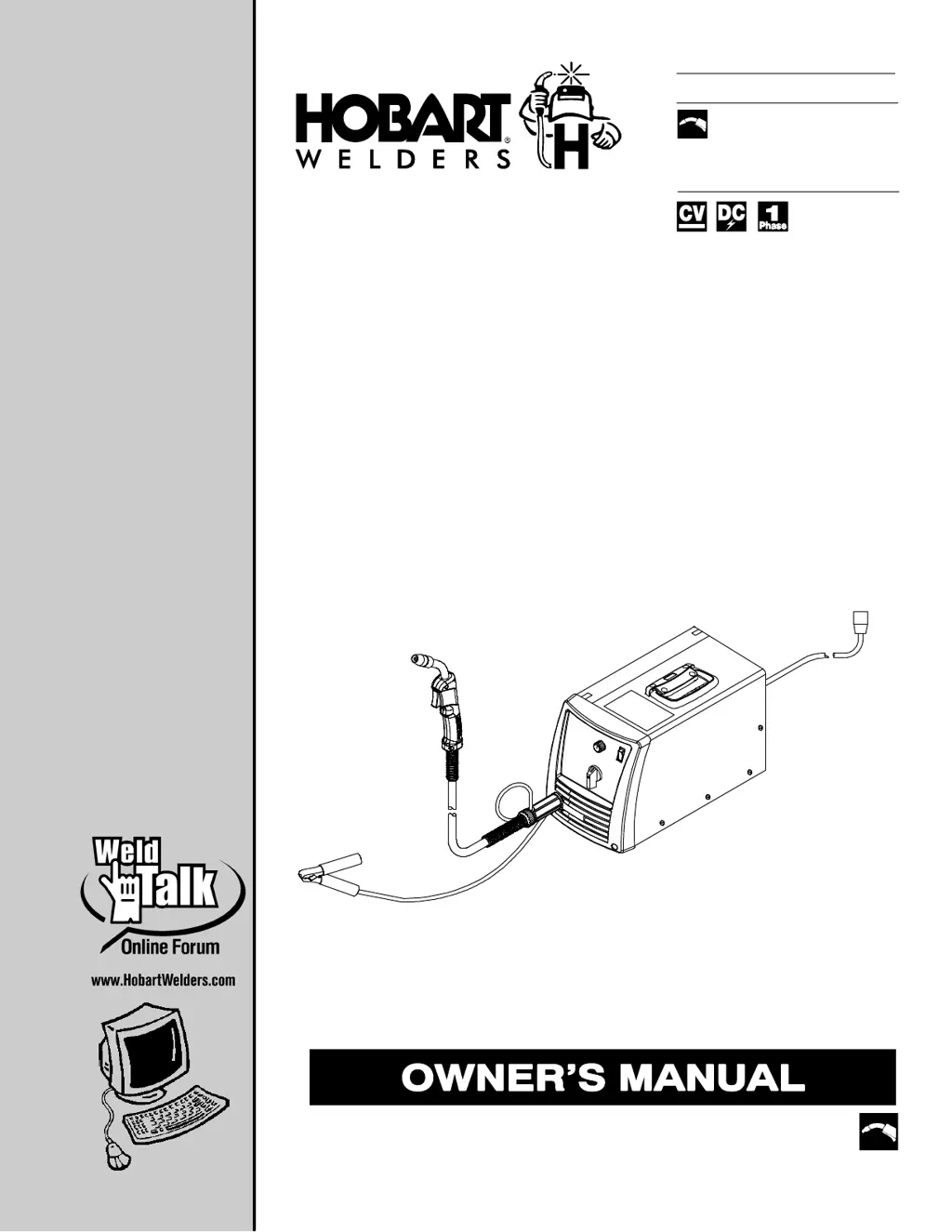
Hobart Welders Handler 187
52 pages
Print Icon
To Next Page IconTo Next Page
Loading...
Processes
OM-228 187D 201102
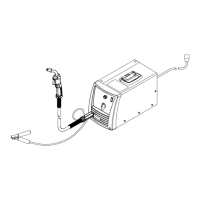
Handler 187
And H100S210 Gun
Arc Welding Power Source And
Wire Feeder
Description
MIG (GMAW) Welding
Flux Cored (FCAW) Welding
R
File: MIG (GMAW)

Table of Contents

Questions and Answers

  • J
    Jessica SmithAug 5, 2025
    What to do if there is no weld output, wire doesn't feed and fan doesn't run on Hobart Welders Welding System?
    • A
      Alex BonillaAug 5, 2025
      If your Hobart Welders Welding System shows no weld output, the wire isn't feeding, and the fan isn't running, ensure the power cord is securely plugged into the receptacle. Also, check the building line fuse or circuit breaker and replace or reset if necessary. Make sure the power switch is in the On position, and reset the welding power source supplementary protector.
  • J
    julia26Aug 15, 2025
    What to do if Hobart Welders Welding System has no weld output, wire doesn't feed, but fan motor runs?
    • A
      Alice ReyesAug 15, 2025
      If your Hobart Welders Welding System has no weld output and the wire isn't feeding, but the fan motor continues to run, the thermostat TP1 may be open due to overheating. Allow the fan to run with the gun trigger switch off to cool the unit and allow the thermostat to close. Check the voltage range switch position and ensure it clicks into place at the desired range setting. Also, ensure the gun trigger leads are secure.
  • S
    Shannon ScottAug 20, 2025
    How to fix Hobart Welders Welding System when wire doesn't feed, isn't energized, or feeds unevenly?
    • V
      Veronica ReedAug 21, 2025
      If the wire doesn't feed, isn't energized, or feeds unevenly in your Hobart Welders Welding System, inspect the contact tip and check for kinks in the gun cable and liner. Also, verify the gun trigger plug connection at the welding power source/wire feeder. Check and replace the gun trigger switch if necessary. Blow out the liner and gun casing.
  • M
    Mark RussoAug 26, 2025
    What to do if Hobart Welders Welding System has no weld output but wire feeds?
    • K
      Kathryn KnightAug 26, 2025
      If your Hobart Welders Welding System has no weld output but the wire feeds, ensure the work clamp is connected to establish good metal-to-metal contact. Replace the contact tip if needed. Verify that the polarity connections are correct and tighten the thumbscrew securing the gun end to the feed head adapter if necessary.
  • L
    Laurie LarsenAug 30, 2025
    Why Hobart Welders Welding System has low weld output?
    • S
      Shelby RussellAug 30, 2025
      If your Hobart Welders Welding System has low weld output, connect the unit to the proper input voltage or check for low line voltage. Also, ensure the voltage switch is in the desired position.
  • M
    Mariah JamesNov 9, 2025
    Why does electrode wire feeding stop during welding with Hobart Welders Welding System?
    • N
      nathanmartinezNov 9, 2025
      If the electrode wire feeding stops during welding with your Hobart Welders Welding System, try the following: * Straighten the gun cable or replace damaged parts. * Adjust the drive roll pressure. * Change to the proper drive roll groove. * Readjust hub tension. Also, ensure the wire is properly positioned in the drive roll groove. Replace the contact tip if blocked, and clean or replace the wire inlet guide or liner if dirty or plugged. Replace the drive roll or pressure bearing if worn or slipping. Secure or repair the gun trigger leads. Check and clear any restrictions at the drive assembly and liner. Release the gun trigger to allow the gun and motor protection circuitry to reset. Check the thumbscrew securing the gun end to the feed head adapter and tighten if necessary. Re...

Summary

Safety Precautions

Symbol Usage and Electric Shock

Explains warning symbols, electric shock, and grounding precautions.

Arc Welding Hazards

Details hazards related to arc welding processes and equipment.

Specific Welding Hazards

Fume, Gas, Arc Ray, Fire, and Noise Hazards

Covers hazards from fumes, gases, arc rays, fire, flying metal, noise, and cylinder risks.

EMF and Medical Device Hazards

Discusses hazards related to EMF effects on medical devices.

Installation, Operation, and Interference Hazards

Installation, Operation, and Interference Hazards

Covers hazards during installation and operation, including fire, falling equipment, and interference.

Proposition 65, Safety Standards, and EMF

California Proposition 65 and Safety Standards

Lists California Proposition 65 warnings and principal safety standards.

EMF Information for Medical Implants

Provides detailed EMF information and precautions for individuals with medical implants.

Definitions

Symbols and Definitions

Defines various symbols used throughout the manual for clarity and safety.

Specifications

Technical Specifications Overview

Details the technical specifications of the welding unit, including output, weight, and dimensions.

Duty Cycle and Overheating

Explains duty cycle percentage, overheating warnings, and cooling procedures.

Volt-Ampere Curves

Displays volt-ampere curves illustrating output capabilities and parameter ranges.

Installation

Installing Gun Consumables

Provides steps for installing the nozzle, contact tip, and adapter on the welding gun.

Connecting the Welding Gun

Details the process of connecting the welding gun to the main unit, including lead connections.

Installing the Work Clamp

Guides on securely attaching the work clamp to the workpiece for proper electrical connection.

Process and Polarity Table

A table outlining polarity settings for different welding processes like GMAW and FCAW.

Changing Welding Polarity

Instructions on how to change the welding polarity by repositioning electrical connections.

Installing Shielding Gas Supply

Details the setup and connection of the shielding gas cylinder, regulator, and flowmeter.

Location Selection and Power Connection

Guidance on selecting an appropriate location and connecting the unit to the input power supply.

Electrical Service Guide

Provides recommendations for electrical service, including fuse/breaker ratings and conductor sizes.

Wire Spool Installation and Hub Tension

Steps for installing the wire spool and adjusting the hub tension for proper wire feeding.

Threading Welding Wire

Details the procedure for threading welding wire through the drive rolls and gun assembly.

Operation

Unit Controls Overview

Identifies and explains the function of each control on the welding unit's front panel.

Welding Parameter Chart

Offers a chart with recommended voltage and wire speed settings for various materials and wire types.

Wire Welding Package Settings

Provides recommended voltage and wire speed settings for different metal thicknesses and wire types.

Maintenance & Troubleshooting

Routine Maintenance Schedule

Outlines routine maintenance tasks to be performed periodically for optimal performance and longevity.

Overload and Drive Motor Protection

Explains overload protection and drive motor protection circuits and their reset procedures.

Drive Roll and Wire Inlet Guide Replacement

Provides instructions for changing drive rolls and wire inlet guides, including selecting correct grooves.

Welding Gun Maintenance

Guides on replacing gun consumables like nozzle, tip, adapter, liner, and cleaning the gun casing.

Welding Gun Switch and Head Tube Replacement

Details the procedure for replacing switches and head tubes on the welding gun.

Troubleshooting: Wire Feed and Output Issues

Lists common welding problems with their probable causes and recommended remedies for wire feed and output.

Troubleshooting: Porosity, Arc Stability, and Gas Flow

Continues troubleshooting for issues like porosity, arc stability, and gas flow.

Electrical Diagram

Main Circuit Diagram

Presents the main electrical circuit diagram for the welding unit.

Internal Circuit Diagram Details

Continues the electrical diagram, showing internal components and connections.

MIG Welding (GMAW) Guidelines

Typical MIG Process Connections

Illustrates a typical connection diagram for MIG welding processes.

MIG Process Control Settings

Provides general guidelines for setting controls for MIG welding processes based on material and wire.

Welding Gun Handling and Positioning

Offers guidance on proper techniques for holding and positioning the welding gun during operation.

Weld Bead Shape Factors

Explains various factors that influence the shape of the weld bead, such as gun angle and travel speed.

Gun Movement and Weld Bead Quality

Describes gun movements and illustrates characteristics of good and poor weld beads.

Good vs. Poor Weld Bead Characteristics

Illustrates and describes characteristics of good and poor quality weld beads.

Troubleshooting: Spatter and Porosity

Addresses causes and corrective actions for excessive spatter and porosity during welding.

Troubleshooting: Excessive Penetration

Addresses causes and corrective actions for excessive weld penetration.

Troubleshooting: Lack of Penetration and Fusion

Addresses causes and corrective actions for lack of penetration and incomplete fusion.

Troubleshooting: Burn-Through

Addresses causes and corrective actions for burn-through during welding.

Troubleshooting: Waviness and Distortion

Addresses causes and corrective actions for waviness in the weld bead and distortion.

Common MIG Shielding Gases

Provides a chart of common MIG shielding gases and their applications.

Troubleshooting Semiautomatic Welding Equipment

A guide for troubleshooting common problems with semiautomatic welding equipment and wire feeding.

Parts List

Main Assembly Parts Diagram

Illustrates the main assembly of the welding unit with labeled parts.

Main Assembly Parts List

Continues the illustration and listing of parts for the main assembly of the welding unit.

Welding Gun Parts Diagram

Illustrates the parts breakdown for the H100S2-10 welding gun.

Optional Drive Rolls

Lists optional drive rolls available for different wire diameters and feed head assemblies.

Optional Accessories

Lists optional accessories and their remarks, such as running gear and regulators.

Warranty Information

Warranty Contact and Service Information

Provides contact information for warranty questions, service, and general support.

Hobart 5;3;1 Limited Warranty Terms

Outlines the terms and conditions of the Hobart 5/3/1 limited warranty for welding equipment.

Warranty Limitations and Legal Rights

Details limitations, exclusions, and legal rights related to the warranty.

Owners Record

Personal Equipment Record Keeping

A section for users to record their personal information and equipment details.

Available Resources and Support

Lists various resources available to users, including distributors, technical assistance, and manuals.

Hobart Welders Handler 187 Specifications

General IconGeneral
Input Voltage230 V
Input Frequency60 Hz
Input PhaseSingle Phase
Duty Cycle30% at 130A
Wire Feed Speed50 - 700 in/min
Wire Size0.023 - 0.035 in
Spool Size Capacity4 in or 8 in spool

Related product manuals