Need help?
Do you have a question about the Honeywell enCore FC1 and is the answer not in the manual?
 General
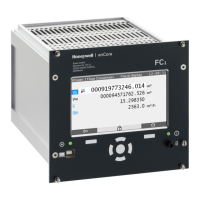
| Category | Desktop |
|---|---|
| Manufacturer | Honeywell |
| Model | enCore FC1 |
| Operating System | Windows 10 IoT Enterprise |
| Ports | HDMI, Ethernet |
| Wireless Connectivity | Bluetooth |
Legal disclaimer regarding the document's content, reproduction, and liability.
Explanation of the enCore platform and the enSuite PC software.
Details the included items in the enCore FC's delivery package.
Guidance on understanding and using the operating instructions manual.
Identifies the intended audience and their required qualifications.
Overview of the modular structure and different volumes of the enCore FC manual.
Explains how different text elements and symbols are used in the manual.
Details how hazard warnings and safety instructions are presented.
Explains the meaning of symbols used for actions, results, and examples.
Defines various character formats used to represent elements, references, and inputs.
Explains character formatting specifically used within flow charts.
Outlines the manufacturer's liability limitations for product use and changes.
Lists the standards and guidelines the enCore FC construction adheres to.
Discusses security aspects and best practices for network integration.
Covers essential safety precautions, including explosion risks and environmental conditions.
Defines the specific purpose and application of enCore FC devices.
Prohibits operation by individuals under the influence of substances.
Details the operator's responsibilities regarding occupational health and safety.
Explains the core functions of enCore FC devices based on their type.
Describes how stream numbers and flow directions are determined by hardware and software.
Lists international standards supported for gas characteristic calculations.
Details the physical design, housing, interfaces, and available I/O boards.
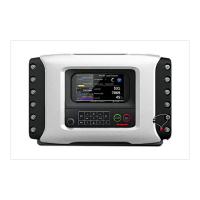
Describes the front panel layout, including keys, touch screen, and LEDs.
Explains the function of the navigation and function keys on the device.
Details the touch screen operation and procedure for re-calibration.
Guides on using the display, including display tests and types.
Explains the function and operation of the sealable rotary security switch.
Describes the power and status LEDs and their indications.
Details how to connect signal and data lines, including safety warnings.
Explains the requirements for power supply connection and grounding.
Guides on installing and changing the device's process boards.
Step-by-step instructions for physically inserting a new process board.
Illustrates connection diagrams for various measurement devices and processing units.
Provides general guidelines on cable types, lengths, and connection resistors.
Shows connection diagram and characteristics for Pt100 sensors via ExMFE5 board.
Illustrates connection for Pt100 sensors using the MFE7 board.
Diagram and specs for connecting analog transmitters (EEx i) to ExMFE5.
Connection details for analog transmitters (EEx d) using MFE7 board.
Connection for analog transmitters (EEx i) with sink mode barrier on MFE7.
Connection for analog transmitters (EEx i) with source mode barrier on MFE7.
Diagram and specs for HART transmitters (EEx i) on ExMFE5 board.
Connection for HART transmitters (EEx d) via MFE7 with internal PSU.
Connection for HART transmitters (EEx d) via MFE7 with external PSU.
Connection for HART transmitters (EEx i) via MFE7 with sink mode barrier.
Connection for HART transmitters (EEx i) via MFE7 with source mode barrier.
Connection for redundant HART transmitters (EEx d) via MFE7 in Burst Mode.
Connection for redundant HART transmitters (EEx i) via MFE7 with source mode barrier.
Connection for HART transmitters (EEx d) via MFE7 in Multidrop Mode.
Connection for HART transmitters (EEx i) via MFE7 in Multidrop Mode.
Connection for turbine gas meter sensors via ExMFE5 boards.
Connection for turbine gas meter sensors via MFE7 board.
Connection for bidirectional turbine meter with flow detection via MFE7.
Connection for bidirectional turbine meter with internal flow detection via MFE7.
Connection for Q.Sonic Ultrasound Gas Meter via MFE7.
Connection for Q.Sonic6 Ultrasound Gas Meter via MFE7.
Connection for FLOWSIC600 Ultrasound Gas Meter via MFE7.
Diagram for serial interface via COM port on CPU or MSER4 board.
Diagram and specs for analog output via MFA8 board.
Diagram and specs for message output via MFA8 board.
Diagram and specs for pulse output via MFA8 board.
Steps to create and transfer device configuration using enSuite via USB.
Procedures for final commissioning, especially for legal metrology applications.
Methods for verifying device settings and parameters.
How to check input measurements and flow conversion values.
Procedure for measuring and verifying parameterized output signals.
Using tools to check digital communication protocols like Modbus.
Final accuracy checks for measurements and calculations in legal metrology.
Using enSuite to finalize commissioning, including audit trail and counters.
Procedure for sealing the device and lines by a metrology expert.
Guidance on when and how to replace the device's internal battery.
Detailed steps for safely removing and installing a new battery.
Instructions on how to clean the device safely and effectively.
Contact information and services offered by the Technical Assistance Center.
Information on using original replacement parts and accessories.
Information on accessing current warranty conditions and terms of business.
Guidelines for proper storage conditions to prevent damage and data loss.
Instructions for sending the device back to the manufacturer for disposal.
Provides key specifications like dimensions, operating conditions, power, and display.
Details the types and specifications of input channels available on different boards.
Specifies the types and characteristics of output channels on the MFA8 board.
Lists the digital communication interfaces and supported standards.
Details the supported Ethernet and serial communication data protocols.
Lists Ethernet protocols and their default TCP ports.
Provides dimensional drawings for 1/3 and 1/2 width housing.
Detailed dimensions for the 1/3 width housing module.
Detailed dimensions for the 1/2 width housing module.
Procedure for reporting security vulnerabilities to Honeywell.
Discusses limitations in HART communication for older basic system versions.

 To Next Page