4. POWER SWEEP LINEARITY TEST (NA)
Description
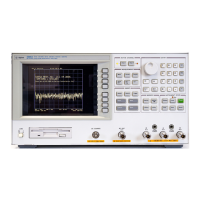
This test sets the HP 4395A to the power sweep mode and then makes a power sweep from
0
50 dBm to
0
30 dBm and
0
5 dBm to 15 dBm in 5 dB steps. Using a power meter and a high
sensitivity power sensor, the actual power of the HP 4395A RF OUT signal at each sweep point
is measured. Then the power sweep linearity for a sweep span
+20 dB is calculated. The
power linearity is specied as values relative to the stop power.
This test uses a step attenuator to maintain the power sensor input level
0
35 dBm. This
reduces the measurement uncertainty caused by the power sensor's linearity error. The actual
power of the RF OUT signal is calculated by adding the attenuation used and the power meter
reading.
Specication
Sweep range
:::: ::::: :::: ::::: :::: ::::: :::: :::: ::::: :::: ::::: :::: ::::: :::: ::::: :::: ::::: ::
20 dB
Sweep linearity
@23
6
5
C, 50 MHz, relative to stop power
:::: :::: ::::: :::: ::::: :::: ::::: :::: ::::: :::
6
0.5 dB
Test Equipment
Power Meter
::: ::::: :::: :::: ::::: :::: ::::: :::: ::::: ::
HP 436A Opt. 022, HP 437B, or HP 438A
Power Sensor
::: ::::: :::: :::: ::::: :::: ::::: :::: ::::: :::: ::::: :::: :::: ::::: :::: ::::: ::::
HP 8481D
Step Attenuator, 10 dB Step , VSWR
1.02
::::: :::: :::: ::::: ::::
HP 8496G Opt. 001 and H60
Attenuator driver
::: ::::: :::: ::::: :::: ::::: :::: :::: ::::: :::: ::::: :::: ::::: :::: ::::: ::
HP 11713A
Type-N Cable,61 cm
::: ::::: :::: ::::: :::: :::: ::::: :::: ::::: :::
HP 11500B or part of HP 11851B
Procedure
1. Connect the power sensor to the power meter
. Then calibrate the power meter for the
power sensor.
2. Set the step attenuator to 30 dB before connecting the test equipment. This protects the
power sensor from excess input.
3. Connect the test equipment as shown in Figure 2-5.
Performance Tests 2-11


 To Next Page