EasyManua.ls Logo

Hubble AM-2 - User Manual

Hubble AM-2
10 pages
Print Icon
To Next Page IconTo Next Page
Loading...
AM-2 MANUAL
To watch the AM-2 Installation Tutorial on
Youtube use this link:
https://youtu.be/F5inYAPw2qg
WARNING:
Working with high voltage systems is dan-
gerous. Do not attemt to modify your in-
verter and battery setup unless you are
certain you understand the risk. Speak to
a qualied electrician if you are unsure.
V1.0
Please visit https://www.hubblelithium.co.za/products.html
for the latest version of this manual
It is important that you read this manual before attempting the installation of your battery.
Please take note of certain steps to ensure correct inverter compatibility.

Other manuals for Hubble AM-2

Question and Answer IconNeed help?

Do you have a question about the Hubble AM-2 and is the answer not in the manual?

Summary

AM-2 Wire Diagram

Section 1: Installation

Installation Warning

Warning that the product must be installed by a qualified engineer and not upside down or sideways.

DC Isolator Requirements

Explanation of the integrated circuit breaker and the need for an external DC fuse or breaker.

DIP Switch Configuration

Guide to configuring battery addresses using DIP switches for proper setup and communication.

Connecting Multiple Batteries

Instructions for linking multiple batteries in parallel using RJ45 cables and wiring DC terminals.

Battery Linking Diagrams

Visual guides demonstrating correct methods for linking multiple batteries in parallel.

Protection Mode Warning

Caution regarding voltage imbalance between battery packs and potential protection mode activation.

Communication Ports

RS485 Communication Port

Details on the RS485 port, used exclusively for BMS firmware updates by technicians.

RS232 Communication Port

Information on the RS232 port for connecting to Cloudlink or service laptops for programming.

Third-Party Device Warning

Warning against connecting third-party devices to the BMS due to fire hazard and warranty void.

Cloudlink Device Overview

Description of the Hubble Cloudlink as an optional add-on for remote monitoring via Wi-Fi.

Section 2: Inverter Setup

Pre-Launch Inverter Settings

Recommended inverter/charger settings for bulk, float charge, and DC cutoff before using batteries.

Axpert Recommended Settings

Specific voltage settings recommended for Axpert type inverters for optimal battery performance.

CAN Bus Setup

Instructions for connecting the battery CAN bus to compatible inverters using specific pin layouts.

Section 3: LED Indicators

LED Operation Status

Table detailing LED status for power, standby, charge, and discharge modes.

LED Flash Status

Explanation of different LED flash patterns and their corresponding durations.

BMS Reset Procedure

Instructions on how to reset the BMS operation mode by pushing the switch for 6 seconds.

Section 4: BMS & Maintenance

BMS Low Power Mode Conditions

Conditions under which the BMS enters low power mode to prevent battery drain.

BMS EMC Safety Compliance

Details on the BMS's compliance with Electromagnetic Compatibility (EMC) standards for ESD and radiation.

Data Storage

Information on the BMS's built-in alarm and event data storage, accessible by service technicians.

Battery Maintenance and Cell Balancing

Importance of proper operation, maintenance, and cell balancing for battery lifespan.

Section 5: Completing Setup

Final Setup Steps

Guidance on proceeding with start-up instructions from the inverter manufacturer after setup.

Technical Support Contact

Information on contacting technical support, including details to provide for assistance.

Installation Tutorial Link

Link to an installation tutorial video on YouTube for Axpert & Sunsynk inverter types.

Overview

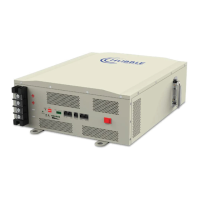
The Hubble AM-2 is a lithium battery designed for energy storage systems, intended for wall-mounted installation or placement within a cabinet. It features an integrated electronic circuit breaker (BMS) for protection against overload, overcurrent, and overvoltage, but still requires an external DC fuse or circuit breaker for safe operation. The battery is designed to be compatible with various inverters, and proper setup involves configuring DIP switches for unique serial addresses, connecting communication links, and adjusting inverter charge settings.

Technical Specifications and Features:

  • Voltage Settings:
    • Bulk / Equalisation Charge: 53.6 V
    • Float Charge: 53.6 V
    • Low DC Cutoff: 44 V (Recommended for extended lifespan; internal cutoff is 40V)
  • Axpert Recommended Settings:
    • Voltage Point Back to Utility: 47 V (Axpert Type)
    • Voltage Point Back to Battery: 53 V (Axpert Type)
  • Communication Interfaces:
    • RS485 Port: Used exclusively for firmware updates directly for the BMS by administrative and workshop technicians. It is not for inverter communications.
    • RS232 Port: Connects to the Hubble Cloudlink device or a service laptop for direct BMS programming and troubleshooting.
      • RS232 Pin Layout:
  • Pin 1: -
  • Pin 2: GROUND
  • Pin 3: BMS TRANSMIT
  • Pin 4: BMS RECEIVE
  • Pin 5: GROUND
  • Pin 6: -
    • Warning: Connecting third-party devices to the RS232 port is strictly forbidden as it can lead to fire hazards and voids the warranty.
*   **CAN Bus Port (Optional):** Integrated into each battery for connection to CAN bus-ready inverters.
    *   **CAN Bus Pin Configuration (Hubble battery CAN cable):**
  • Pin 1: -
  • Pin 2: GROUND
  • Pin 3: -
  • Pin 4: CANH
  • Pin 5: CANL
  • Pin 6: -
  • Pin 7: -
  • Pin 8: -
  • DIP Switch Settings: Allows configuration of unique addresses for up to 15 batteries in a multi-battery setup. Address 1 is designated as the "Master."
    • Address 1 (Master): #1 ON, #2 OFF, #3 OFF, #4 OFF
    • Address 2 (Battery 2): #1 OFF, #2 ON, #3 OFF, #4 OFF
    • ...
    • Address 15 (Battery 15): #1 ON, #2 ON, #3 ON, #4 ON
  • Physical Components:
    • Cover
    • Hanging Ear
    • Handle
    • Output Terminal
    • Cooling Case
    • Power Switch
    • Communication Interface
    • Reset Switch
    • LED Lights

Usage Features:

  • Installation: Designed for wall-mounting using Rawl boats or flat installation inside a cabinet. Not designed for upside-down or sideways installation.
  • Multiple Batteries: Supports parallel connection of multiple batteries using standard RJ45 (LAN) cables for communication. DC block terminals are wired to the inverter/charger.
    • Protection Mode Warning: If batteries are unbalanced (voltage difference > 2V DC), they may attempt to inter-balance at over 100 Amps, potentially causing overcurrent and protection mode. In such cases, each pack should be charged individually to 100% before connecting them.
    • Linking Methods: Diagrams illustrate standard linking connections and parallel connections to common bus bars.
  • Inverter Setup: Requires setting specific bulk/equalisation charge, float charge, and low DC cutoff voltages on the inverter/charger to ensure compatibility and battery longevity. Specific guides for non-Axpert inverters (e.g., Deye, Sunsynk) are available on the Hubble Lithium website.
  • LED Indicators: Provide visual status of the battery's operation, including normal, alarm, and protection modes, as well as State of Charge (SOC) indication.
    • POWER OFF (Sleep): All OFF
    • STANDBY (Normal): Flash 1 OFF (Indication by SOC)
    • STANDBY (Alarm): Flash 1 Flash 3 (Cell low voltage)
    • CHARGE (Normal): ON OFF (Indication by SOC)
    • CHARGE (Alarm - Over-charge Voltage): ON Flash 3 (ALM LED off when Cell Over-charge Voltage Alarm)
    • CHARGE (Over Charge Protection): ON OFF (ON ON ON ON - If no mains supply, LED as standby)
    • CHARGE (Temperature/Over-current Fault Protection): OFF ON (OFF OFF OFF OFF)
    • DISCHARGE (Normal): Flash 3 OFF (Indication by SOC)
    • DISCHARGE (Alarm): Flash 3 Flash 3
    • DISCHARGE (Under Discharge Protection): OFF OFF (OFF OFF OFF OFF)
    • DISCHARGE (Temperature Alarm or Over-Current Alarm or Short Circuit Protection): OFF ON (OFF OFF OFF OFF)
    • DISCHARGE (Fault): OFF ON (OFF OFF OFF OFF)
  • LED Flash Status:
    • Flash 1: 0.35 S ON, 3.75 S OFF
    • Flash 2: 0.5 S ON, 0.5 S OFF
    • Flash 3: 0.5 S ON, 1.5 S OFF
  • Cloudlink Device (Optional): An add-on for Hubble X and AM range products that connects to Wi-Fi to upload battery and inverter data to a cloud server for remote monitoring.

Maintenance Features:

  • BMS Low Power Mode: The BMS enters low power mode under specific conditions:
    • 30 seconds after over-discharge protection occurs.
    • When all cell voltages fall below the Sleep voltage parameter to prevent complete cell/battery drain.
    • After 24 hours of standby without charge, discharge, balance, protection, or fault.
  • BMS EMC Safety: Complies with industry standards for Electrostatic Discharge (ESD), Electromagnetic Conduction, Electromagnetic Radiation, and Inrush current.
  • Data Storage: The Hubble BMS has built-in memory to store alarm and event data, including occurrence time, fault categories, cell/pack voltage, charge/discharge capacity and current, and temperature. This data can be downloaded by a service technician for troubleshooting.
  • Cell Balancing: Crucial for battery lifespan. The BMS cell balancer activates only when the batteries reach 100% State of Charge (SOC) and are near full charge. It is recommended to fully charge the batteries at least once every five days, or preferably daily, to allow sufficient time for cell balancing. Consistent balancing is essential for guaranteeing cell cycle life, especially in off-grid systems with unstable power supplies.

The manual also provides links to installation tutorials on YouTube and the Hubble Lithium website for the latest manual versions and inverter setup guides. For support, users are advised to contact technical support with details about their inverter, battery setup, and any issues encountered.

Hubble AM-2 Specifications

General IconGeneral
BrandHubble
ModelAM-2
CategoryCamera Accessories
LanguageEnglish

Related product manuals