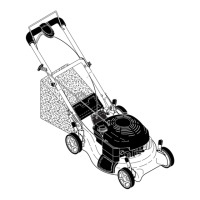
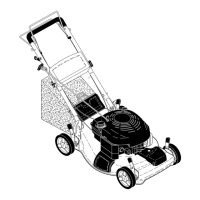
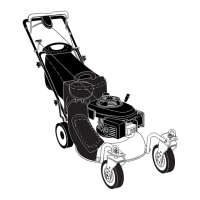
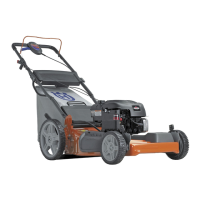
This document is an owner's manual for a Husqvarna 6522SH rotary walk-behind lawn mower, providing comprehensive instructions for its safe operation, assembly, maintenance, and storage.
The Husqvarna 6522SH is a walk-behind lawn mower designed for cutting grass. Its primary function is to maintain lawns by cutting grass blades to a desired height. The mower is capable of mulching, rear bagging, and side discharging, offering versatility for different lawn care needs. It is equipped with an internal combustion engine, and its design incorporates safety features to minimize the risk of injury.
Function Description:
The lawn mower operates by means of a rotating blade powered by an internal combustion engine. The engine speed is factory-set for optimum performance and is not adjustable by the user. The blade cuts grass as the mower is pushed or self-propelled across the lawn. The cut grass can then be mulched, collected in a grass catcher, or discharged to the side, depending on the user's preference and the mower's configuration. The self-propelling mechanism, when engaged, assists the user in moving the mower forward, reducing physical effort. An operator presence control bar is a key safety feature, requiring the operator to hold it down against the handle to start and operate the engine; releasing it stops the engine.
Usage Features:
- Assembly: The mower comes partially assembled from the factory. The user needs to unfold the handle and assemble the grass catcher. Instructions are provided for securely tightening all parts.
- Handle Adjustment: The handle can be adjusted to high or low positions for user comfort. This involves removing the upper handle, detaching the lower handle from its mounting pins, rotating the lower handle to the desired height, and reassembling.
- Starting the Engine: To start a cold engine, the primer button must be pushed three times to pump additional fuel. The operator presence control bar must be held down to the handle while pulling the starter handle quickly. For an engine that has recently run, priming may not be necessary.
- Stopping the Engine: Releasing the operator presence control bar immediately stops the engine.
- Drive Control (Self-Propelled): The self-propelling feature is engaged by holding the operator presence control bar down and pulling the drive control lever rearward towards the handle. The further the lever is pulled, the faster the mower will travel. Releasing either the control bar or the drive control lever stops forward motion. When turning corners, pushing down on the handle to lift the front wheels off the ground helps maintain drive control engagement.
- Cutting Height Adjustment: The mower's cutting height can be adjusted to suit different lawn requirements. This is done by squeezing an adjuster lever towards the wheel and moving the wheel up or down. All wheels should be set to the same height for an even cut.
- Mowing Options (Mulching, Bagging, Discharging):
- Mulching: The mower is shipped ready for mulching. The special mulching blade recuts grass clippings multiple times, reducing them in size so they disperse into the lawn and biodegrade, providing nutrients. For best results, mulching should be done with the engine at its highest speed.
- Rear Bagging: To convert to bagging, the mulcher plug must be removed from the rear discharge opening, and the grass catcher installed.
- Side Discharging: To convert to side discharging, the mulcher plug must be installed, and the discharge deflector installed under the mulcher door.
- Fueling: The mower uses fresh, clean, regular unleaded gasoline with a minimum of 87 octane. It is crucial not to overfill the fuel tank and to avoid mixing oil with gasoline. Extreme care must be taken when handling gasoline due to its flammability.
- Mowing Tips: For optimal performance, especially in tall grass, it may be necessary to raise the cutting height, reduce ground speed, or mow the area a second time. For heavy cutting, overlapping previously cut paths and mowing slowly is recommended. Mowing across the face of slopes, rather than up and down, is advised for safety. Avoiding wet grass and being aware of obstacles are also important. Changing cutting patterns weekly helps prevent matting/graining of the lawn.
Maintenance Features:
The manual emphasizes regular maintenance to ensure the mower's dependability, performance, and longevity.
- Before Each Use: Check the engine oil level and inspect for loose fasteners.
- Lubrication: The unit should be kept well lubricated according to the provided lubrication chart. Specific points include wheel adjusters, engine oil, mulcher door hinge pin, rear door hinge, and handle bracket mounting pins. Plastic wheel bearings should not be oiled with viscous lubricants; dry, powdered graphite is recommended if lubrication is necessary.
- Tires: Keep tires free of gasoline, oil, or insect control chemicals. Avoid hazards that could damage tires.
- Drive Wheels: Regularly check that front drive wheels move freely. If not, clean any trash or grass cuttings from the dust cover, pinion, and gear teeth.
- Blade Care: The mower blade should be kept sharp for best results. A bent or damaged blade must be replaced. Instructions are provided for safe removal and replacement of the blade, emphasizing the use of approved replacement parts and proper tightening torque. While sharpening is not recommended, if done, the blade must be balanced to prevent damage to the mower or engine.
- Gear Case: The gear case and surrounding area should be kept clean to ensure proper drive system function. The gear case is factory-filled with lubricant and only requires attention if service has been performed on it.
- Grass Catcher: The grass catcher can be hosed with water but must be dry before use. It should be checked regularly for damage and replaced with approved parts if necessary.
- Engine Oil: The engine is shipped without oil. Before first use, 20 ounces of SAE 30 (above 32°F) or SAE 5W-30 (below 32°F) oil must be added. The oil level should be checked before each use and after every five hours of continuous use. Oil should be changed after every 25 hours of operation or once a season, whichever comes first. Instructions for safely draining and refilling engine oil are provided.
- Air Filter: A dirty air filter can damage the engine and impair performance. The air filter cartridge should be cleaned by gently tapping it on a flat surface or replaced if very dirty. Petroleum solvents and pressurized air should not be used for cleaning. Service should be more frequent in dusty conditions.
- Muffler: Inspect and replace corroded mufflers to prevent fire hazards.
- Spark Plug: Replace the spark plug at the beginning of each mowing season or after every 100 hours of operation. The correct type and gap setting are specified.
- Cleaning: The mower housing, especially the underside, should be kept free of built-up grass and trash by scraping after each use. The engine should also be kept clean to prevent overheating and extend its life. Using a garden hose is not recommended unless electrical components, muffler, air filter, and carburetor are covered to prevent water entry.
- Storage: Before storing for 30 days or more, the mower should be thoroughly cleaned and lubricated. The fuel system should be emptied by running the engine until it runs out of fuel, or a fuel stabilizer can be used. Engine oil should be drained and replaced with clean oil. One ounce of oil should be poured into the cylinder through the spark plug hole, and the starter handle pulled slowly a few times to distribute it before replacing the spark plug. The mower should be stored indoors in a clean, dry area, covered with a breathable protective cover. It is critical not to store the mower with gasoline in the tank inside a building where fumes could reach an open flame or spark, and to allow the engine to cool before covering.


 To Next Page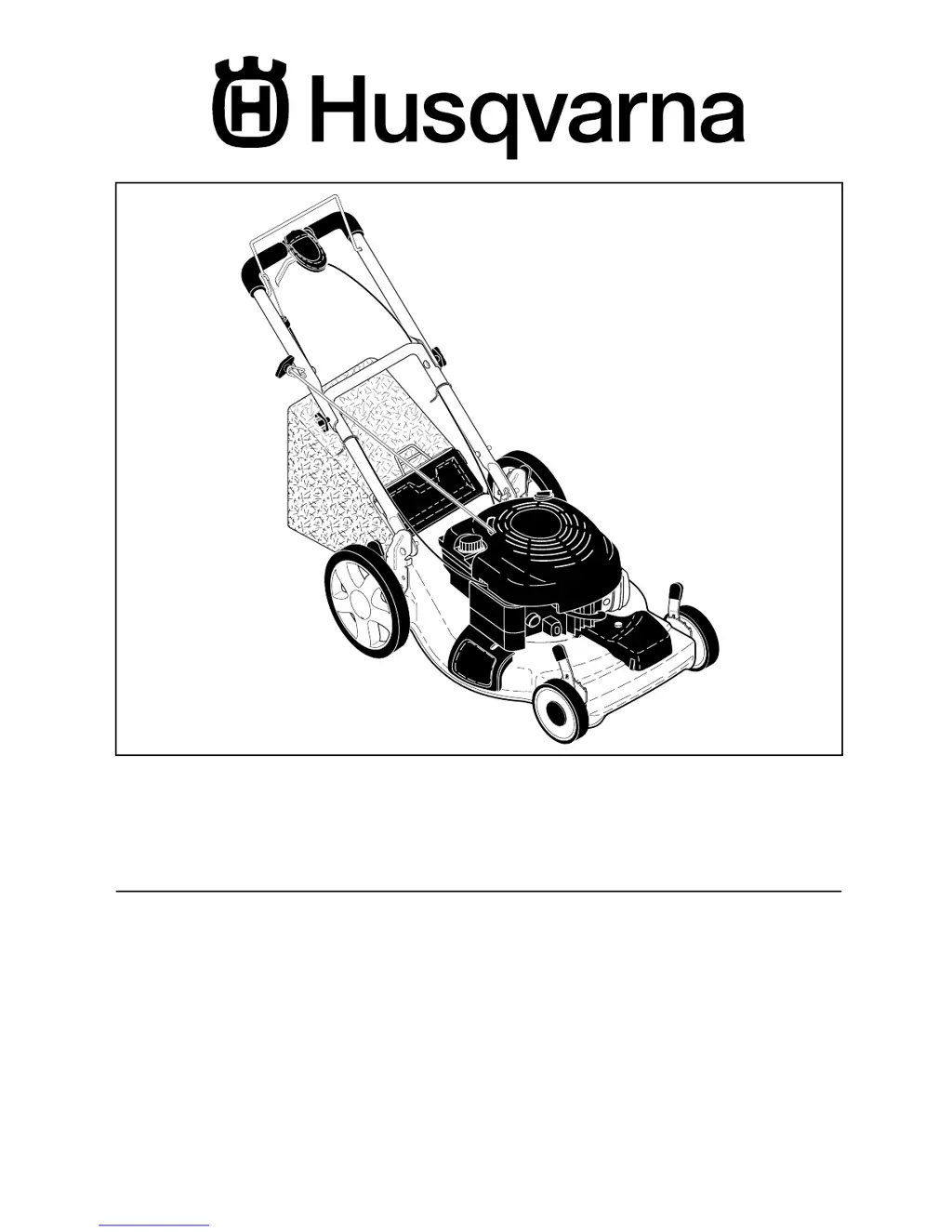
 General