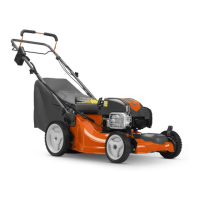
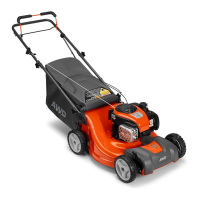
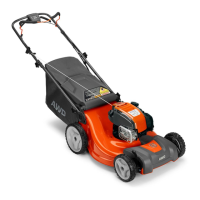
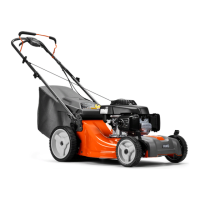
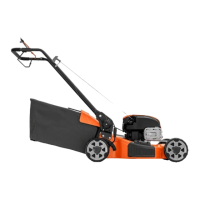
This document is an operator's manual for the Husqvarna LC221FH lawn mower, providing essential information for safe and effective operation, assembly, and maintenance.
The Husqvarna LC221FH is a pedestrian-controlled lawn mower designed for cutting grass. Its primary function is to efficiently trim lawns, with features that allow for mulching or rear bagging of grass clippings. The machine is equipped with an internal combustion engine, and its design incorporates safety features to minimize the risk of injury during operation.
Usage Features:
The lawn mower is designed for ease of use and adaptability to different mowing conditions. Before operation, users must ensure the cutting equipment is correctly fitted and adjusted, and the engine is filled with fuel and oil.
- Starting and Stopping: The engine is started by holding the operator presence control bar against the handlebar and quickly pulling the starter handle. To stop the engine, the operator presence control bar is released. For self-propelling models, the drive system is engaged by pulling the drive levers towards the handle, with speed increasing as the levers are pulled further. Forward motion stops when the drive levers are released.
- Cutting Height Adjustment: The cutting height can be adjusted to nine different positions to suit various lawn requirements. Users can raise wheels for a low cut or lower them for a high cut. Medium height is generally recommended for most lawns. To change the height, the adjuster lever is squeezed towards the wheel, and the wheel is moved up or down. It's crucial to set the same height at all four corners.
- Mulching and Bagging: The LC221FH can operate in mulching mode, which finely recuts grass clippings so they disperse into the lawn, providing nutrients. Alternatively, it can be converted to rear bagging mode to collect clippings in the grass catcher. To switch to rear bagging, the mulch plug is removed, and the grass catcher frame hooks are placed onto the grass bag brackets.
- Rear-Side Discharging: The manual also describes a rear-side discharging option, where the mulch plug or grass bag is removed, and a discharge chute is installed to direct clippings to the left of the machine.
- Slope Operation: When mowing on slopes, it is recommended to mow across the face of the slope, not up and down. Extreme caution is advised when changing direction on slopes. The mower should not be used on inclines steeper than 15 degrees. Users are warned against mowing wet grass due to slippery conditions.
- Work Area Safety: Before mowing, the area should be cleared of objects like rocks, toys, wire, bones, and sticks that could be thrown by the blade. The operator should stay behind the handle while the engine is running and ensure no other people are in the area.
- Personal Protective Equipment (PPE): Operators are required to wear sturdy, non-slip boots or shoes, heavy, long pants, gloves (when fitting, inspecting, or cleaning the blade), ear protectors, and safety glasses or eye shields.
- Fuel Handling: The machine uses fresh, clean, regular unleaded gasoline with a minimum of 87 octane. Fuel should be purchased in quantities usable within 30 days to ensure freshness. Refueling should only occur after the engine has stopped and cooled, and never indoors. Fuel stabilizer is an option for long-term storage to prevent tacky deposits.
Maintenance Features:
Regular maintenance is crucial for the longevity and safe operation of the Husqvarna LC221FH. The manual provides a detailed maintenance schedule and instructions for various components.
- General Maintenance: The manual emphasizes daily checks, including tightening bolts and nuts, inspecting tires and drive wheels, and cleaning the machine. More extensive work should be carried out by an authorized service workshop.
- Engine Maintenance:
- Oil Level Check and Change: The engine oil level must be checked before each use and after every five hours of continuous operation. The lawn mower is shipped without oil and must be filled to the FULL mark on the dipstick before first use. Oil changes are recommended after the first five hours of use and then periodically as per the maintenance schedule.
- Air Filter: The air filter should be cleaned or replaced regularly (every 100 hours or every season, whichever comes first), especially in dusty conditions, to ensure proper engine function.
- Spark Plug: The spark plug should be replaced at the beginning of each mowing season or after every 100 hours of operation.
- Muffler: The muffler should be regularly checked for completeness and secure attachment. A damaged muffler must be replaced to prevent increased noise and fire hazards.
- Blade Maintenance:
- Inspection and Replacement: The blade should be checked for cracks or damage. A damaged blade must always be replaced. When servicing the blade, heavy-duty gloves are required, and the engine must be off with the spark plug disconnected.
- Balancing: Blades should be balanced after sharpening to prevent vibration. The manual recommends that sharpening and balancing be done by an authorized service workshop.
- Drive System Maintenance:
- Gear Cases: The gear cases and surrounding area should be kept clean to ensure proper drive system function.
- Drive Belt: Instructions are provided for removing and replacing the drive belt, which involves emptying the fuel tank, disconnecting the spark plug, and tilting the mower. Genuine parts are recommended for replacement.
- Cleaning: The machine should be kept clean, with leaves, grass, and debris brushed off. The underside of the mower housing should be scraped to remove build-up. The water washout feature allows for quick cleaning of the underside by connecting a garden hose to a fitting. It's important not to engage the drive system during washout and to run the engine for a minute afterward to remove excess water.
- Grass Catcher: The grass catcher should be checked frequently for wear and deterioration and replaced if necessary. Its pores can become filled with dirt, reducing collection efficiency, so regular hosing with water and drying are recommended.
- Lubrication: The manual advises keeping the unit well lubricated, with specific instructions for general lubrication. It warns against oiling or greasing plastic wheel bearings, recommending a dry powdered graphite lubricant if lubrication is deemed necessary.
The manual stresses the importance of understanding all instructions before use and contacting a service agent for any repairs or adjustments beyond the scope of the manual. It also highlights the use of genuine accessories and parts to maintain safety and warranty.


 To Next Page
 General