
 To Next Page
J
Jessica CochranJul 29, 2025
What to do if my Hyper Tough AQ20021G will not start?
- MMiranda RodriguezJul 29, 2025
If your Hyper Tough Sander won't start, it may have internal damage or wear. In this case, have a technician service the tool.

What to do if my Hyper Tough AQ20021G will not start?
If your Hyper Tough Sander won't start, it may have internal damage or wear. In this case, have a technician service the tool.
How to improve Hyper Tough AQ20021G performance that decreases over time?
If the performance of your Hyper Tough Sander decreases over time, the accessory may be dull or damaged. Keep cutting accessories sharp and replace them as needed.
Why is my Hyper Tough AQ20021G Sander overheating?
If your Hyper Tough Sander is overheating, several factors could be the cause. Avoid forcing the tool to work too fast; let it operate at its own pace. Ensure the accessory is correctly aligned with the fence and/or table. Keep cutting accessories sharp and replace them if damaged. Also, check for blocked motor housing vents and, while wearing ANSI-approved safety goggles and a NIOSH-approved dust mask/respirator, use compressed air to blow out any dust from the motor.
Why is my Hyper Tough AQ20021G making excessive noise?
Excessive noise or rattling in your Hyper Tough Sander often indicates internal damage or wear, possibly affecting components like carbon brushes or bearings. It is recommended to have a technician service the tool.
Why does my Hyper Tough AQ20021G operate slowly?
If your Hyper Tough Sander operates slowly, you might be forcing it to work too fast. Allow the tool to work at its own rate.
Identifies key components of the sander, including the switch, dust bag, and sanding pad.
Explains the meaning of DANGER, WARNING, CAUTION, and NOTICE symbols for user awareness.
Guidelines for maintaining a safe and clean work environment to prevent accidents.
Essential rules for safe use of electrical power tools, including plug and cord precautions.
Advice on staying alert, using PPE, and preventing common personal injuries during operation.
Proper techniques for operating and maintaining the power tool for optimal performance.
Table detailing recommended wire gauge for extension cords based on length and amperage.
Instructions for servicing and repairing the power tool using identical replacement parts.
Critical safety advice related to tool operation, including noise, dust, and wiring.
Mandatory use of safety equipment for dust and noise protection during operation.
Defines electrical and operational symbols (V, A, Hz, OPM) used on tool labels.
Guidelines for preparing the workspace and securing workpieces for sanding operations.
Procedure for attaching sandpaper to the sander's hook and loop mounting system.
Instructions for operating the sander during use, including placement and pressure.
Advice on selecting grit and proper sanding methods for different finishes.
Guide to selecting appropriate sandpaper grit for various applications and materials.
Methods for managing dust generated during sanding operations using dust port and bag.
Identifies common tool problems and provides likely solutions for malfunction.
Steps for cleaning and maintaining the sander for longevity and proper cooling.
Details on model, voltage, current, weight, no-load speed, and sanding sheet size.
Lists items included with the 1.5amp detail sander.
Details warranty coverage, terms, and how to obtain service for defects.
Provides phone and email for customer service inquiries and support.
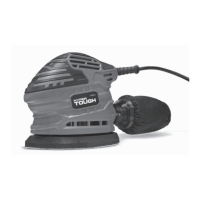
The Hyper Tough 1.5 Amp Detail Sander, model AQ20021G, is a corded power tool designed for various sanding tasks, particularly those requiring precision and detail. Its primary function is to smooth surfaces, remove paint, and prepare materials for finishing. The sander utilizes a hook and loop style mounting system for quick and easy sandpaper changes, and it operates with a 1.5 Amp motor, providing sufficient power for its intended applications.
The detail sander is engineered for both rough and fine sanding, making it versatile for a range of projects. It is particularly effective for working on profiles, grooves, and intricate areas where larger sanders might be cumbersome. The tool's design allows users to apply even pressure across the sanding surface, ensuring consistent results. It is suitable for preparing wood for painting, removing old paint, and achieving a smooth finish on various materials. The sander's operation involves an oscillating motion, which helps in efficient material removal and a smoother finish compared to traditional orbital sanders for detail work.
A key feature of this sander is its dust extraction system. It includes a dust-sealed on/off switch to protect internal components from dust ingress, prolonging the tool's life. The sander comes with a dust bag that attaches to a dust extraction port adapter, allowing for effective collection of sanding dust. This system helps maintain a cleaner work environment and prevents the sandpaper from loading quickly with sawdust, thereby extending its lifespan and improving sanding efficiency. For enhanced dust control, the dust extraction port can also be connected to a vacuum hose using the included adapter, offering a more robust solution for managing dust, especially during extensive sanding operations. This is crucial for user safety, as it helps reduce exposure to dust particles that can cause respiratory issues.
Before using the sander, it is essential to set up the workpiece and work area properly. The work area should be clean, well-lit, and free from distractions, ensuring that children and pets cannot access it. Loose workpieces must be secured using a vise or clamps to prevent movement during operation, which is critical for both safety and achieving accurate results. Additionally, users should ensure there are no utility lines or other hazards nearby that could interfere with the work.
Installing sandpaper is straightforward due to the hook and loop system. The user simply turns the tool upside down, aligns the sanding sheet with the sander's base, and presses it firmly into place. It is vital to confirm that the holes in the sanding sheet match the dust holes in the sanding pad to ensure the dust collection system functions correctly. To remove sandpaper, it is carefully peeled away from the sanding plate.
When selecting sandpaper, users should choose the appropriate grit for the task. Coarse grit sheets are suitable for preparing wood for painting or removing paint, while fine grit is used for finishing work. The sander should be turned on before making contact with the workpiece. Once activated, it is carefully placed onto the surface to begin sanding. It is important to apply even pressure and avoid sanding any area too heavily or for more than a few seconds at a time to prevent damage to the work surface or the tool. The point or edge of the sander base can be used for sanding profiles and grooves. Regular checks of the sandpaper's condition are recommended, and it should be replaced when worn to maintain effectiveness and prevent damage to the workpiece or injury. Once sanding is complete, the sander should be removed from the work surface before being turned off.
The sander is designed for user comfort and control. It is recommended to hold the tool firmly with both hands during operation to maintain control and prevent personal injury. Users should always stay alert, watch what they are doing, and use common sense, avoiding operation when tired or under the influence of substances.
Proper maintenance is crucial for the longevity and safe operation of the Hyper Tough 1.5 Amp Detail Sander. One of the primary maintenance tasks is to keep the vents clear of dust and debris. This prevents electrical shorts and ensures adequate cooling of the motor, which is essential for preventing overheating and extending the tool's lifespan.
The tool housing should be kept clean, free of oil and grease. This can be achieved by wiping it down with mild soap and a damp (not wet) cloth. It is important not to allow liquids to get inside the sander and never to immerse it in liquid.
Regular inspection of the power cord is also recommended. If the cord shows any signs of damage, it should be replaced by an authorized repair facility to prevent the risk of electric shock. The tool's lubrication is factory-set and typically does not require further attention under normal use.
For any maintenance, repairs, or adjustments beyond what is described in the manual, it is imperative to use authorized repair centers and identical replacement parts. This ensures the product's safety and reliability are maintained. Unauthorized modifications or the use of non-recommended accessories can be hazardous, void the user's authority to operate the equipment, and potentially lead to injury or damage.
The manual also emphasizes the importance of using personal protective equipment during maintenance and operation. This includes wearing ANSI Z87.1 eye protection, ANSI S12.6 (S3.19) hearing protection, and NIOSH/OSHA approved respiratory protection, especially when working in dusty conditions or when cleaning the tool's vents with compressed air. These measures are vital for protecting the user from dust inhalation, hearing damage, and eye injuries.
 General
| Brand | Hyper Tough |
|---|---|
| Model | AQ20021G |
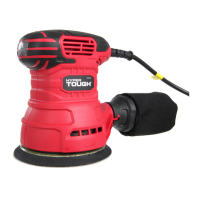
| Type | Random Orbit Sander |
| Power Source | Corded Electric |
| Voltage | 120V |
| No Load Speed | 12000 OPM |
| Pad Size | 5 inch |
| Dust Collection | Yes |
| Weight | 3.5 lbs |
| Amperage | 2.0A |
| Orbit Diameter | 3/32 inch |