To download this User’s Guide in English, Spanish, or French, or to get answers to frequently asked questions, visit the support section at:
www.iLiveElectronics.com
Para descargar este Manual del Usuario en inglés, español y francés, o para obtener respuestas a preguntas frecuentes, visite la sección de
apoyo en: www.iLiveElectronics.com
Pour télécharger ce guide de l’utilisateur en anglais, espagnol ou français, ou pour obtenir des réponses à des questions fréquemment
posées, consultez la rubrique d’assistance sur: www.iLiveElectronics.com
For Warranty Information and the most up-to-date version of this User’s Guide, go to www.iLiveElectronics.com
Customer Service: 1-888-999-4215 | Email Support: prodinfo@dpiinc.com | Email Parts: partsinfo@dpiinc.com
Copyright © 2020 Digital Products International (DPI, Inc.) All other trademarks appearing herein are the property of their respective owners.
Specications are subject to change without notice.
Customer Support
Protect for Today
Made
Green
Aux In
Requires a 3.5mm audio cable (not included).
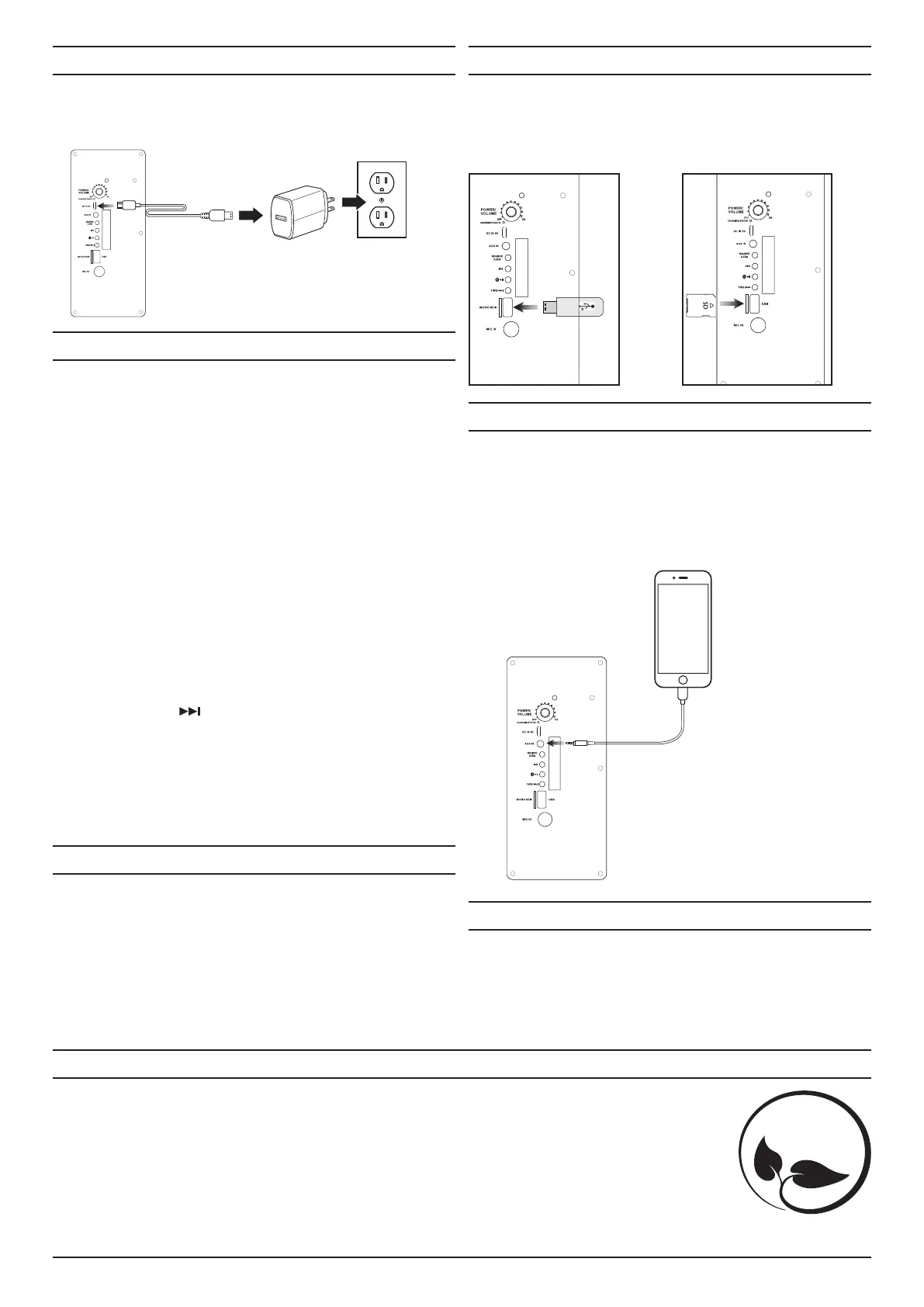
1. Connect a 3.5mm audio cable to the Aux In on the unit and the
audio output/headphone jack on an audio device.
2. Press Source/LEDs to switch to Aux in mode.
3. Use the controls on the connected device to select and play audio.
Note: Newer phone models may require an adapter (lightingto-3.5mm headphone
adapter for iPhone,) or (USB-C to 3.5mm audio adapter,) for android.
Bluetooth Wireless
Pairing & Playing Audio
1. Press the Source/LEDs button to select Bluetooth Mode.
2. When the speaker is ready to pair a voice prompt will sound. Using the
controls on your Bluetooth device, scan for and select ISB250 in your
Bluetooth settings to pair. Refer to the user’s manual for your specic device for
instructions on pairing and connecting Bluetooth devices.
3. When successfully paired, a voice prompt will sound from the unit.
4. Use the controls on the connected device to select and begin playing audio.
Audio played through the connected Bluetooth device will now be heard
through the speaker. Use the controls on the speaker or the connected
device to play, pause, and adjust volume.
Note: After initial pairing, the unit will stay paired unless unpaired manually by the
user or erased due to a reset of the device. If your device should become unpaired
or you nd it is unable to connect, press and hold the Play/Pause/Pair button to
pair manually and repeat the above steps.
USB & SD
1. Load a USB or SD memory card into the appropriate media port.
2. The speaker will automatically switch to USB/SD mode.
3. Use the controls on the speaker to select and play and pause audio from the
connected drive.
FM Radio
To use the FM radio, press the Source/LEDs button to switch to FM mode.
Auto Search and Saving Stations
1. To use the auto search function press and hold the Play/Pause/Party Plus
button while in FM mode.
2. The radio will auto search stations and save them.
3. To cycle through the saved stations press the Next/Previous buttons.
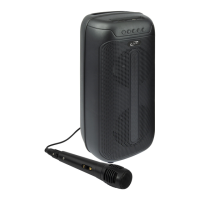
Using the Microphone
To use a microphone, plug a microphone into the Microphone Input and the
speaker will project your voice out loud. Use the Volume Wheel in order to control
the volume of the microphone.
Charging the Battery
To power the unit or charge the internal battery, connect the DC Power Input on
the speaker to a standard power outlet using an AC/DC power adapter. Note: For
best charging results, power o the speaker while it is charging.
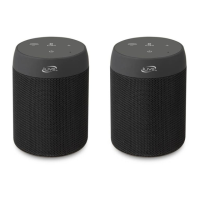
Party Plus Mode.
Party Plus Mode allows two identical “ISB250” speakers to pair together for a
stereo sound eect.
1. To enter Party Plus Mode, Power ON both speakers and set to Bluetooth
mode.
2. Press and hold the button on one of the units until an audible chime is
heard. The speakers will attempt to pair to each other.
3. When the 2 speakers are paired together a voice will announce the
connection.
4. Connect Bluetooth device to speakers using the steps from the “Pairing
and Playing Audio” section above.
5. Use your device to select and play tracks. The audio will now be heard
through both speakers.
Note: There is a bulit-in FM antenna.
To improve reception adjust the
position of the unit


 To Previous Page
 Loading...