EN_USER GUIDE // 4
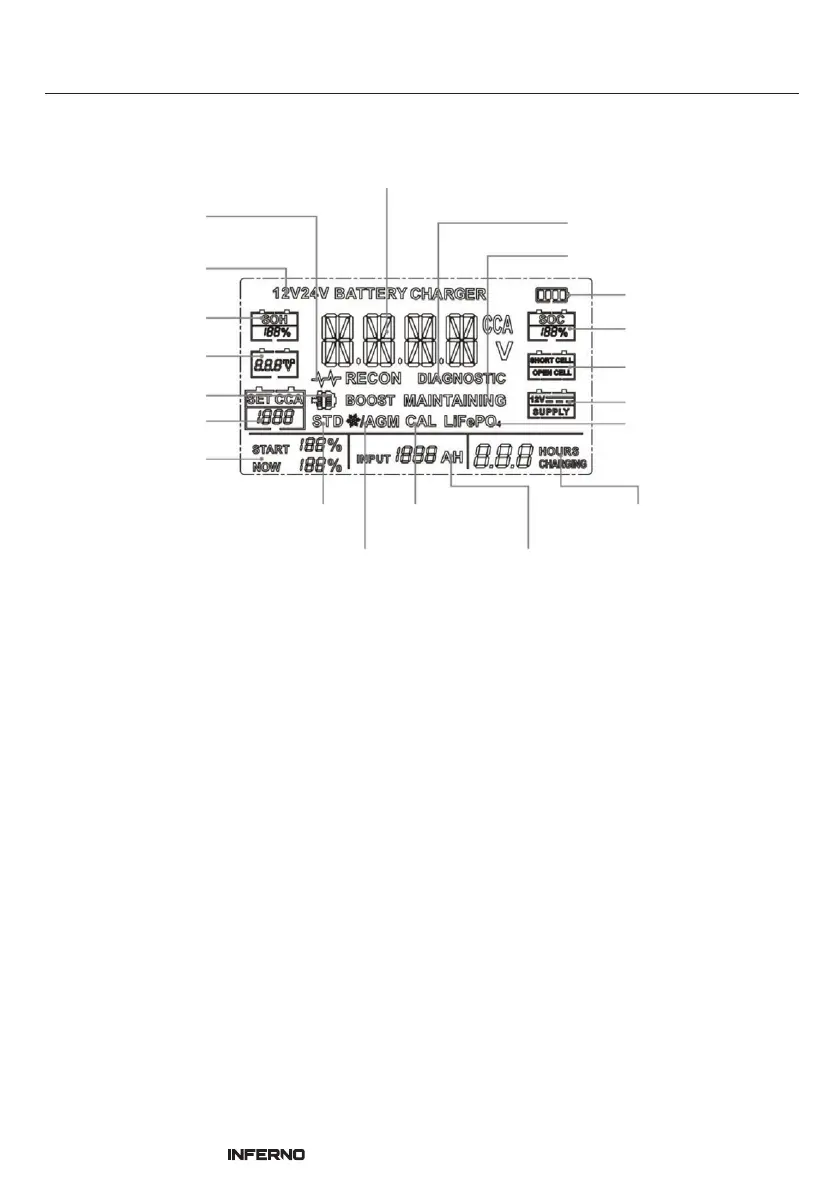
LCD-Icons
CONNECTING TO THE BATTERY
1) Identify polarity of battery posts. The positive battery terminal is typically
marked by these letters or symbol (POS, P, +). The negative battery terminal
is typically marked by these letters or symbol (NEG, N, -).
2) Do not make any connections to the carburetor, fuel lines, or thin metal parts.
3) Identify if you have a negative or positive grounded vehicle. This can be done by
identifying which battery post (NEG or POS) is connected to the chassis.
4) For a negative grounded vehicle (most common): connect the RED POSITIVE
clamp first to the positive battery terminal, then connect the BLACK
NEGATIV clamp to the negative battery terminal or vehicle chassis.
5) For a positive grounded vehicle (very uncommon): connect the BLACK
NEGATIV clamp first to the negative battery terminal, then connect the RED
POSITIVE clamp to the positive battery terminal or vehicle chassis.
6) When disconnecting, disconnect in the reverse sequence, removing the
negative first (or positive first for positive ground systems).
7) A marine (boat) battery must be removed and charged on shore. To charge
it on board requires equipment specially designed for marine use.
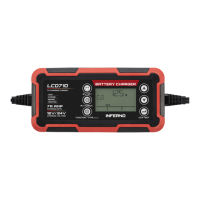
Battery charger >
8-STEP
Battery CCA detection display/ battery voltage display/ battery function display
Battery repair
function
Battery voltage
type display
Ordinary lead-
acid battery
Battery internal
resistance display
Battery health
percentage display
Fast battery charging
Low temperature charging
mode and AGM battery type
Total capacity of fully
charged battery
Battery desulphation
Short circuit warning
and battery
Battery remaining
capacity display
Power mode (13.SV 10A)
(LiFePO4)--12V lithium
battery (4-Cell LiFePO4)
CCA test of battery
Percentage of capacity
before and after
Calcium
battery (CAL)
Total time required for
charger charging
Battery charging
dynamic display
Battery maintenance


 To Next Page