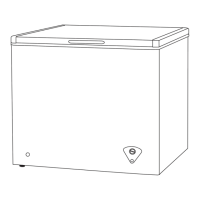
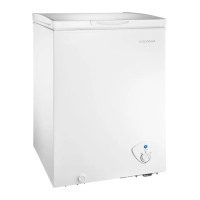
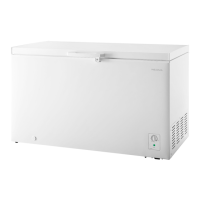
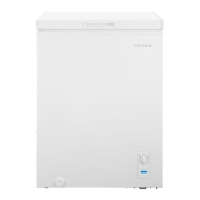
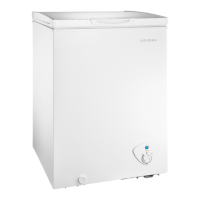
This document describes the Insignia 3.5 Cu. Ft. Chest Freezer (model NS-CZ35WH9), a high-quality appliance designed for reliable and trouble-free performance in household and similar environments.
Function Description
The Insignia 3.5 Cu. Ft. Chest Freezer is designed to store frozen foods, maintaining them at low temperatures to preserve their quality and extend their shelf life. It operates by continuously running a compressor to cool the interior, with a temperature control knob allowing users to adjust the internal temperature to suit their needs. The freezer is equipped with a 3-prong grounding plug to minimize the risk of electric shock, ensuring safe operation when connected to a correctly installed and grounded outlet. It is intended for freestanding use and should not be recessed or built-in, allowing for proper air ventilation. The freezer's design includes a removable storage basket for organizing odd-shaped items, making it easier to access contents.
Usage Features
Before initial use, the freezer requires a 24-hour upright stand time to allow the cooling system to settle after transportation. It should then be run for two to three hours (or four or more hours in high ambient temperatures) before any food is placed inside. The temperature control knob offers three marked settings: MIN (10.4°F ~ 5°F / -12°C ~ -15°C), MID (-0.4°F ~ -4°F / -18°C ~ -20°C), and MAX (-7.6°F ~ -11.2°F / -22°C ~ -24°C), allowing users to select an appropriate temperature based on ambient room temperature and the amount of food stored. It is crucial to place frozen food into the freezer as quickly as possible after purchase and to follow any storage time instructions on food packaging. In the event of a power failure, the freezer is designed to keep food frozen for several hours, and users are advised not to open the door more than necessary or add new food during this time. If the freezer is unplugged or loses power, a five-minute wait is required before restarting it to prevent damage. Users should avoid placing bottled food or drinks in the freezer.
Maintenance Features
Regular maintenance is essential for the freezer's efficient and odor-free operation. Defrosting is required when the frost on the freezer walls reaches .25 inches (6.4 mm) or more in thickness, a process that typically takes a few hours and can be sped up by leaving the top open. To defrost, the freezer must be unplugged, all food removed and stored in containers to prevent melting, and a shallow pan placed under the drain outlet after removing the drain plug. Defrosting can be accelerated by using a fan or placing containers of hot water inside. After defrosting, the interior should be wiped dry and cleaned with a damp, warm cloth and a baking soda solution (two tablespoons in a quart of water), then wiped dry with a clean cloth. The drain plug should be reinstalled before plugging the freezer back in and returning food. For general cleaning, the freezer should be unplugged, all food removed, and the storage basket washed with a mild detergent solution. The interior and exterior should be wiped with a damp, warm cloth and a baking soda solution, then dried with a soft cloth or towel. It is important to keep the door gasket (seal) clean to ensure a tight seal, which contributes to efficient operation. When storing the freezer for an extended period, it should be unplugged, emptied, cleaned, and the door left slightly open to prevent condensation, mold, or odor. When moving the freezer, it should be unplugged, emptied, all loose items secured with tape, and the door taped shut. The freezer should not be tilted more than 45° from the upright position during transportation. To save energy, the freezer should be located in the coolest area of the room, away from heat sources and direct sunlight. Hot foods should be cooled to room temperature before being placed in the freezer, and foods should be properly wrapped to prevent frost build-up. Overloading the freezer should be avoided, and the storage basket should not be lined with foil or paper, as this interferes with cold air circulation. Organizing and labeling food can help reduce door openings and extended searches.


 To Next Page
 General