The approach in this technique is to determine a fundamental parameter that is
not based on any assumptions. In this method a sample is vacuum-sealed inside
a bag and a sealed density,
1
is calculated. The same sample, while under
water, is opened and a second density,
2
is determined. Since the sample is
under complete vacuum prior to opening the bag,
2
will yield an apparent
density of the compacted sample. The density
2
includes the volume due to
inaccessible air voids. In this method, a standard equation can be used for
calculation of % Porosity,
% Porosity or
Where:
1
=
Bulk density of the compacted specimen (includes total volume of
specimen)
2
= Apparent density of the compacted specimen (includes only volume
impermeable to water)
Definitions:
% Porosity- the % air void in the compacted sample that is accessible to water
and that are interconnected.
Indications:
1. It is expected that the %P will increase as the air void content, which is
determined by the ratio of bulk specific gravity (G
mb
) and maximum specific
gravity (G
mm
), increases.
2. It is expected that increase in %P will indicate higher potential of mix
permeability. Studies have shown that mixtures with %P larger than 7% are
highly permeable.
3. %P can be correlated to field or laboratory parameters presently in use.
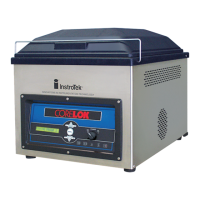
4. Since the CoreLok method is fast, %P can be a quick indicator of field
permeability.
5. This method can also be used during design to determine the permeability
potential of mixes.


 To Next Page