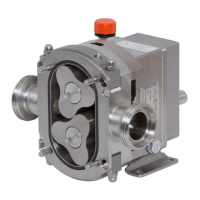
What to do if pressure at pump discharge is too high in IPP Pump Products iL115i Water Pump?
- LLeonard ThompsonAug 20, 2025
If the pressure at the pump discharge is too high, check the piping for obstructions and simplify the discharge line.
What to do if pressure at pump discharge is too high in IPP Pump Products iL115i Water Pump?
If the pressure at the pump discharge is too high, check the piping for obstructions and simplify the discharge line.
What to do if foreign particles are in the product of IPP Pump Products iL115i Water Pump?
If there are foreign particles in the product, clean the system or place a filter at the suction side.
What to do if the IPP Pump Products Water Pump is not filled with liquid?
If the pump isn't filled with liquid, vent the suction line and rotor case, then prime the rotor case with liquid.
What to do if air is entering into the suction line of IPP Pump Products Water Pump?
If air is entering the suction line, check the connections.
What to do if gas is in the suction line of IPP Pump Products Water Pump?
If there is gas in the suction line, vent the suction line or pump casing.
What to do if product viscosity is too high in IPP Pump Products Water Pump?
If the product viscosity is too high, reduce the speed or increase the product temperature.
What to do if product viscosity is too low in IPP Pump Products iL115i Water Pump?
If the product viscosity is too low, increase the speed or lower the product temperature.
What to do if the product temperature is too high in IPP Pump Products iL115i Water Pump?
If the product temperature is too high, cool the product or pump casing.
What to do if the product temperature is too low in IPP Pump Products iL115i Water Pump?
If the product temperature is too low, heat the product or rotor case.
How to fix insufficient NPSHA in IPP Pump Products Water Pump?
To address insufficient NPSHA, enlarge the diameter of the suction line, simplify and shorten the suction line, or reduce the speed and product temperature.
Essential information to prevent injury and ensure correct use and reliable pump performance.
Specifies that personnel must have received necessary training and qualification.
Lists essential precautions for maintenance and operation, including safety measures.
Covers requirements for foundation, ventilation, and space for pump unit installation.
Specifies requirements for a solid, flat, and level foundation.
Step-by-step instructions for assembling the pump unit onto a base plate.
Detailed procedure for checking and ensuring proper alignment of the pump coupling.
Table detailing tolerance limits for coupling alignment based on diameter.
Instructions for establishing the correct direction of rotation for the drive shaft.
Procedures for opening valves and starting the pump unit.
Lists regular checks for pump functioning, leaks, flushing, heating, oil level, and corrosion.
Critical safety warnings regarding pump cover, drive shut-off, harmful liquids, and depressurization.
Steps for dismantling the pump from the base plate and disconnecting peripherals.
Procedure for removing the pump case cover, rotors, and shaft seals.
Instructions for disassembling the gearbox components.
General guidance for assembling the pump, emphasizing cleanliness.
Section dedicated to the assembly of mechanical seals.
Procedure for assembling single mechanical seals.
Instructions for installing lip seals.
Procedure for assembling double mechanical seals.
Table of torque values for tightening pump components.
Recommended oil types for the pump gearbox.
Table specifying oil quantities for different pump models.
General overview of potential pump system malfunctions and initial checks.
| Horsepower | 1.5 HP |
|---|---|
| Voltage | 115V |
| Maximum Head | 90 ft |
| Material | Cast Iron |
| Phase | Single Phase |
| Outlet Size | 1.25 inches |
| Flow Rate | 45 GPM |