Need help?
Do you have a question about the Ivation IVAOZP001 and is the answer not in the manual?
Explains negative ions, their natural generation, and their effect on air quality and mood.
Defines ozone (O3) and its natural creation, use in odor neutralization, and potential health risks.
Details the device's function, producing negative ions and ozone to purify and freshen air.
Lists critical safety instructions for ozone generation, electrical safety, and unit placement.
Guides on installing the ozone plate, optimal placement, and setting ionizer and ozone levels.
Provides instructions for cleaning the ozone plate, needlepoint ionizer, and fan.
Offers solutions for common issues like plate cleanliness, power, and fuse replacement.
Lists key product details: ozone output, area coverage, dimensions, and weight.
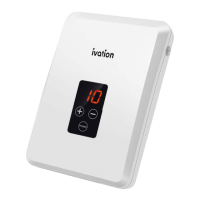
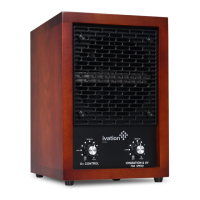
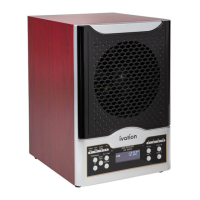
The Ivation Ozone Air Purifier/Ionizer is designed to improve indoor air quality by producing both ozone (O3) and negative ions. This device is not an air filter but rather works to bind to particulates and freshen the air, making it suitable for household use.
The core function of this device is to generate negative ions and ozone (O3) to neutralize odors and clear the air of various pollutants. Negative ions are oxygen atoms with an extra electron, naturally occurring from phenomena like waterfalls and lightning. They work by attaching to positively charged particles such as dust, mold spores, pollen, and other airborne pollutants, making them too heavy to remain airborne. This process not only purifies the air but can also contribute to an improved mood.
Ozone, also known as activated oxygen, is created through a chemical reaction between oxygen and solar ultraviolet (UV) radiation, similar to how it's produced during thunderstorms. In indoor environments, ozone is effective at neutralizing odors. The device allows for separate control of negative ion generation and ozone production. Negative ions can be continuously generated to manage dust and particulates, while ozone generation can be adjusted as needed for odor control.
To operate the device, you first install the ceramic O3 plate into the slot at the back of the unit. For optimal effectiveness, the purifier should be placed in a central location, ideally about four feet or more above the floor, as O3 is heavier than air, and elevated placement allows for better circulation. A minimum of three inches should be maintained between the back of the unit and the wall for proper airflow. The device works best when placed within 10 feet of a cold air return.
Once the unit is plugged in, the On/Off control switch activates the needle-point ionizer and controls the fan speed. The unit will not function unless the ionizer control is on. The fan speed can be set, with the medium range being normal for typical operation. The ionizer is designed to run independently from O3 production, allowing for continuous use to keep down dust and particulates.
For ozone generation, you should start with the lowest O3 setting and gradually increase it by one increment every two hours until you detect the smell of O3. Once detected, the setting should be turned down by one increment. The ideal amount of O3 will leave your room smelling clean and fresh. If the unit is set too high, you will notice too much O3, which can be harmful. High concentrations of ozone can irritate mucous membranes and harm the respiratory system, so it's crucial to adjust the setting accordingly, especially when the space is occupied. If you smell ozone when entering a room, the O3 dial should be turned down to a lower setting.
For thorough odor purging, such as in unoccupied spaces, the O3 setting can be set to its highest level. In this scenario, the space should be vacated, and pets should not be left in the vicinity. The device should run for approximately two hours and then be shut off. A plug-in timer can be used for convenience. It is advised not to return to the space immediately after treatment, as ozone typically dissipates within an hour after the purifier is turned off.
The device's effectiveness can be influenced by atmospheric and environmental conditions such as altitude, humidity, air movement, and the severity of existing odors. Generally, higher altitudes may require lower O3 settings, while higher humidity may require increased settings and additional cleaning. For whole-home treatment, the fan switch on your home's heating and cooling system can be set to the ON position (rather than AUTO), interior doors opened, and the O3 level adjusted. The unit should then be placed so its airflow goes directly into an air return vent.
Regular cleaning and maintenance are essential for the optimal performance of the Ivation Ozone Air Purifier/Ionizer. The ozone plate should be cleaned approximately once a month, as environmental factors can affect the duration of ozone output.
To clean the ozone plate, first turn off the unit and unplug it from the outlet. The plate is removed from the back of the unit by pulling it firmly from the center of the slot. While holding the plate securely, apply a solution of warm water and ammonia (a 50/50 solution is suggested) or a strong grease-cutting detergent. Use a stiff brush to scrub both the metal screen and the ceramic tile, being careful not to drop the plate or scrub off the silicon. After scrubbing, rinse the plate thoroughly in hot water and dry it completely before reinstalling. A hair dryer can be used to expedite drying. When reinstalling, ensure the plate is secured and flush with the back of the unit.
The needlepoint ionizer also requires cleaning. After turning off and unplugging the unit, remove the fan grill cover. The needlepoint ionizer consists of two pieces of wire located in front of the fan. Dip a cotton swab in alcohol and gently clean any dust that has accumulated on the needlepoints. This can be done concurrently with plate cleaning.
The fan blades can be cleaned by wiping them with a damp cloth or vacuuming them. The grill cover can be washed with warm soapy water, but it is crucial to ensure it is completely dry before reinstallation.
If you suspect a problem with the unit, a few checks can be performed:
For safety, it's important to note that the ionizer may create a slight charge, potentially causing a static electric discharge if you touch a metal object after standing near the unit. This unit is not a medical device and should not be used to alter medical therapy programs or medications without physician advice. The back cover should not be removed, as there are no user-serviceable parts inside, and electric shock may occur. The unit should always be plugged into a grounded electrical outlet. It should be placed on a flat, even surface in a well-ventilated area, ensuring the fan vent or back of the unit is not blocked. Avoid exposing the unit to direct sunlight, high humidity, or extreme temperatures, and do not place it near heat sources or open flames. The unit is for indoor use only and should not be used outdoors. Do not clean the unit with solvents, boiling water, or harsh cleaning agents, and do not place items on top of it. Do not attempt to repair or disassemble the unit. This appliance should only be used for its intended purpose, and children should be supervised if operating it.
 General
| Power Consumption | 50W |
|---|---|
| Color | White |
| Coverage Area | 3500 sq ft |
| Filtration | Ozone |
| Power Source | Corded Electric |
| Wattage | 50W |

 To Next Page