The Jadis DA88 Signature is an integrated amplifier designed for high-fidelity audio reproduction. This owner's manual provides essential information for its installation, operation, and maintenance, ensuring optimal performance and longevity of the device.
Function Description:
The Jadis DA88 Signature is an integrated amplifier, meaning it combines the functions of a preamplifier and a power amplifier into a single unit. Its primary purpose is to amplify audio signals from various sources (such as CD players, tuners, DVDs, tape decks, or auxiliary inputs) and drive loudspeakers to produce sound. The amplifier is designed with a focus on delivering high-quality audio, a characteristic often associated with Jadis products, which are known for their tube-based designs. The "Signature" designation suggests a premium version with enhanced performance or features.
Important Technical Specifications:
- Load Impedance: The amplifier is designed to work with loudspeakers having an impedance ranging from 1 to 16 Ohms. This wide range allows compatibility with a broad selection of speakers. The factory pre-adjustment for loudspeakers is typically from 4 to 8 ohms, but internal adjustments can be made for other impedances.
- Output Power: It delivers 60 Watts of output power at 1KHz with 2% Total Harmonic Distortion (THD). This indicates a robust power output suitable for driving many home audio systems.
- Bandwidth: The frequency response ranges from 10 Hz to 29 KHz at -3 dB. This broad bandwidth ensures that the amplifier can reproduce a wide spectrum of audible frequencies, from deep bass to crisp highs.
- Input Impedance: The input impedance is greater than 100k Ohms (> 100k Ohms). A high input impedance is generally desirable as it minimizes the loading effect on source components, allowing them to operate optimally.
- Input Sensitivity for Rated Output: An input sensitivity of 120 mV is required to achieve the rated output power. This specification helps in matching the amplifier with various audio sources.
- Consumption: The amplifier consumes 360 W of power. This is a typical power consumption for a tube amplifier of this output class.
- Dimensions: The physical dimensions of the unit are 50 x 40 x 22 cm. These dimensions suggest a substantial piece of audio equipment, which is common for high-end tube amplifiers.
- Weight: The amplifier weighs 40 kg. This significant weight is indicative of robust construction, often involving heavy transformers and chassis, which contribute to sound quality and stability.
- Tubes: The amplifier is a tube-based design, utilizing ECC83 and ECC82 tubes for drivers and power tubes (labeled A, B, C, D) for amplification. The specific type of power tubes is not explicitly mentioned but is implied by the tube layout.
Usage Features:
- Front Panel Controls:
- Power Switch (ON/OFF/STANDBY): Controls the main power to the unit. A green LED indicates when the unit is turned on.
- Volume Control: Adjusts the sound amplitude.
- Balance Control: Allows adjustment of the sound distribution between the left and right channels.
- Source Selector: Enables selection among multiple input sources, including CD, Tuner, DVD, Tape, and Aux.
- Rear Panel Connections:
- RCA Line Inputs: Multiple inputs are provided for connecting various audio sources, all sharing the same specification.
- Output Connectors: Two output connectors for each channel (left and right) are available for connecting to loudspeakers.
- Fuse (8A): A protective fuse is included to safeguard the amplifier from electrical overloads.
- Mains Connectors: For connecting the amplifier to the main power supply.
- Installation Instructions:
- Tube Placement: The amplifier comes with its tubes packed separately. Users must carefully place the tubes into their corresponding sockets as indicated in the manual, ensuring not to mix them up. Specific attention is required for power tubes (A, B, C, D) due to their stop pins. The tube cage must be removed for installation and replaced afterward.
- Placement: The amplifier should be placed on a flat, solid surface, away from carpets or inflammable materials, and with adequate open space for heat evacuation.
- Ventilation: It is crucial to avoid placing objects on top of the amplifier to ensure proper ventilation. The manual specifically warns against using fans or exposing the amplifier to sudden air currents, as this can cause microcracks on the tubes.
- Power On/Off Procedure: A quick, firm movement is recommended for operating the ON/OFF power switch. The mains cord should never be unplugged to turn off the unit. Before changing cables or modifying connections, the amplifier must be switched off for at least five minutes.
- Operation Procedure:
- Ensure the power switch is OFF and the volume control is at minimum before connecting loudspeakers and interconnect cables.
- Connect the mains cord (supplied or equivalent) to the unit before plugging it into the mains network.
- Turn on the amplifier using the power switch.
- When changing the source, ensure the volume is set to minimum.
- Optimal sound quality is achieved after approximately 30 minutes of operation, allowing the amplifier to reach its ideal temperature.
- It is recommended to turn off the amplifier when not in use for extended periods.
- Impedance Matching: The load impedance is factory pre-adjusted for 4 to 8 ohms loudspeakers. The manual illustrates how to internally adjust the impedance for 8 to 16 ohms or up to 16 ohms, if necessary.
- Phase Warning: The manual notes that the equipment reverses the phase of the input signal, which is an important consideration for audiophiles when connecting speakers.
Maintenance Features:
- Troubleshooting (Failure to Operate):
- Immediately turn OFF the unit.
- Unplug all cables, including the mains cord.
- Contact a Jadis dealer for diagnostic and repair services.
- Cleaning:
- Use a soft cloth with a non-abrasive cleaning product.
- Always unplug all connectors before cleaning the amplifier.
- Voltage Adjustment: The amplifier is adjusted for a nominal voltage corresponding to the country's electrical network, implying that it is configured for specific regional power standards.
- Packaging: The amplifier is packed in a specially designed box, which should be retained for re-packing if the unit needs to be returned for maintenance or upgrading. Incorrect packing can void the warranty.
- Tube Replacement: The manual provides instructions for removing the tube cage and carefully mounting the tubes, indicating that tube replacement is a user-serviceable task, though care must be taken.

 Need help?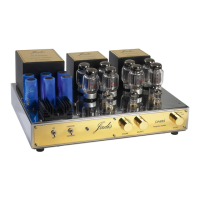

 To Next Page
 General