107
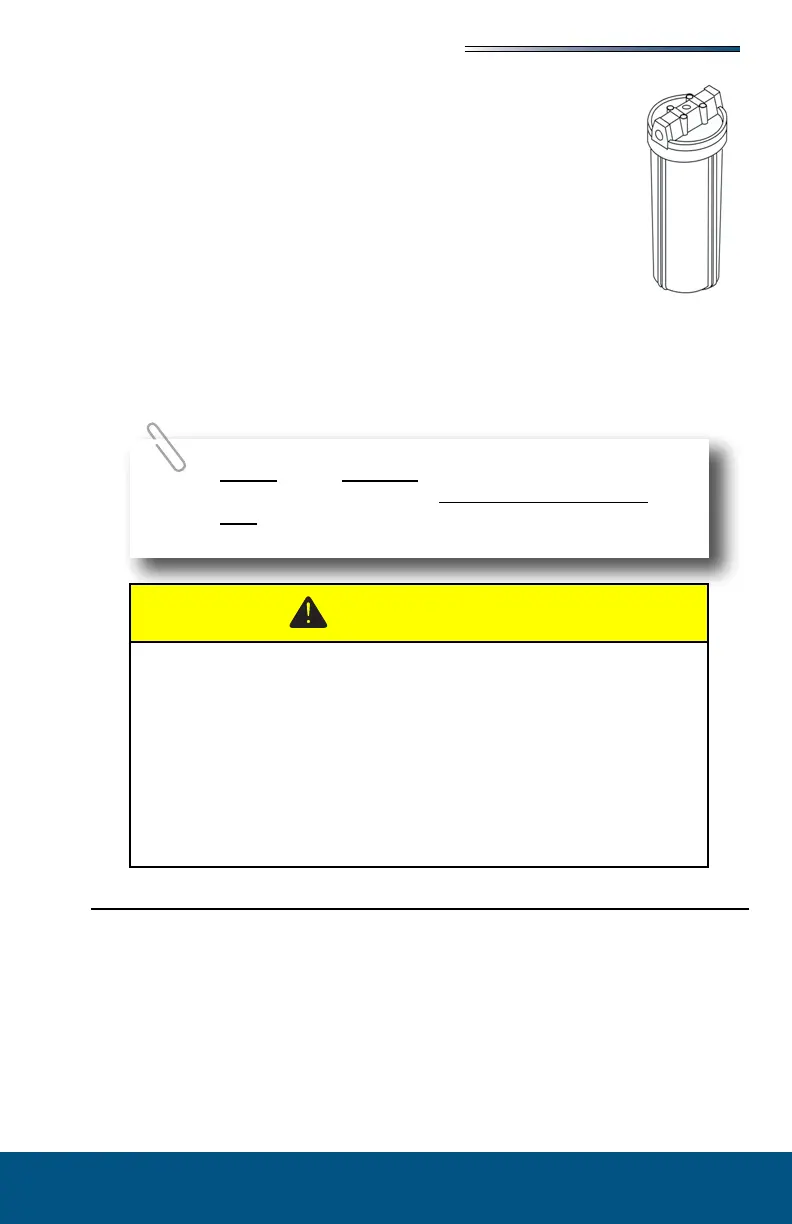
5. Clean the inside of the lter housing with mild detergent. Thor-
oughly rinse and wipe clean.
6. Remove the O-ring from the groove in the housing and wipe clean.
Coat with petroleum jelly.
7. Replace the O-ring in the groove, making sure it is properly seated.
8. Install the new lter cartridge.
9. Replace the canister housing (hand tighten is normally sucient).
10. Turn on the water supply, turn the pump ON, open a faucet and
check for leaks. Turn the pump OFF afterwards.
Each new recreational vehicle is winterized with RV antifreeze before it
is shipped to the dealer. To use the water purication system, full system
canister water lines need to be ushed of antifreeze and then the lter
installed in the canister before use.
Refer to the manufacturer’s owner’s manual and the label on the water lter cartridge for
further information.
There is feature on a canister style water lter.
The water lter must be removed
the RV.
Do not allow water in the canister housing to freeze.
Remove the lter before using anti-freeze to winterize the system or
chlorine solution to sanitize the system.
Flush canister housing thoroughly before it is put back into service after
winterizing or sanitizing.
For best results replace lter every 6-12 months.
Do not use carbon cartridges where water is microbiologically unsafe or
of unknown quality.
Maximum operating pressure is 125 psi (8.75 bar).
Maximum water temperature is 125° F (52° C).
Draining the Fresh Water System
Water tanks may be drained through a valve located near the tank. A recreational vehicle
with a demand pressure pump system will have low-point drains attached to the water lines
(normally located near the water tank).
These low-point drains will release water in the supply lines by opening the valves and all
faucets. The water heater has its own drain plug. To drain the permanent fresh water holding
tank and supply lines:
1. Turn the water heater power OFF (turn o the electric and LP gas switches).
2. Open all faucets, including the outside shower faucet (if so equipped).
3. Open the “fresh tank drain” valve. All fresh water tanks can be drained by one of two
types of drain valves. A white plastic drain is attached to the exterior wall or a valve




 To Next Page