response
at
the
expense
of efficiency, dynamic range and
transient
reproduction. Efficiency
is
important for two
reasons: it permits use of
a
relatively low power,
moderately
priced amplifier, and it allows the amplifier
to
operate
at a
lower distortion level, providing the
reserve power
necessary
to achieve
full
dynamic range
and
excellent transient reproduction.
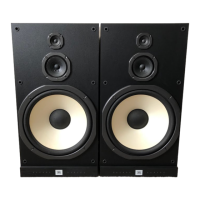
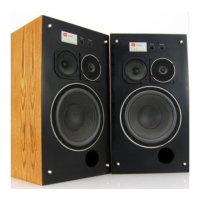
The
Decade
36
exhibits the strong
bass,
well
defined
midrange
and sparkling high frequency reproduction
characteristic of all JBL loudspeaker systems. However,
the
most
striking
characteristic of the system
is
its
exceptional clarity. Modern recordings contain auditory
effects
that can only
be
captured through the technology
•of
electronics applied in
a
recording studio or
at a
live
performance —delicate overtones captured by
close
microphone
placement and complex harmonics
produced by electronic synthesis. Such state of the art
techniques, used in both contemporary and
classical
recording,
place
rigorous demands on even the most
sophisticated loudspeaker systems — demands that JBL
has always met and surpassed.
A
number of loudspeaker systems can handle large
amounts
of power; others are highly efficient. JBL
products are unique in their ability to combine both
attributes.
The L36, for example,
will
convert
a
1-Watt
input
of
"white
noise"
1
into
a
sound pressure level
of
76
dB measured
at a
distance of 15 feet.
2
This
is
approximately
twice
as
loud
as
ordinary conversation
and
represents
a
comfortable listening level,
demonstrating
that the L36 delivers substantial sound
output
from
very
little
input power.
Rather than repeat the ambiguity of most technical
specifications, JBL has
traditionally
refrained
from
listing
data for which no widely
accepted
test procedure
has been established. In the
absence
of such standards,
any
well
equipped laboratory can legitimately produce
a
variety
of frequency response curves for
a
loudspeaker,
1.
"White noise" is a rigorous test simulating
average
musical
program material under laboratory conditions. It provides a
controlled
means
of energizing all the transducers of a
loudspeaker system simultaneously. "White noise"
encompasses all audible frequencies
just
as white light
includes
all the colors of the visible spectrum. Produced in
the laboratory by a signal generator, "white noise" sounds
very
much like the hiss
heard
between FM radio stations.
2.
A
decibel
(dB), in this context, is a
unit
expressing relative
loudness of sound. Three dB is approximately
equal
to the
smallest
change
in loudness of program material ordinarily
detectable
by the human ear.
2
PERFORMANCE
CHARACTERISTICS
SPECIFICATIONS



 To Next Page