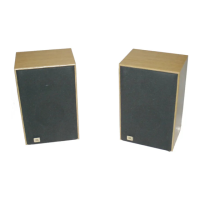
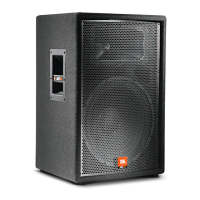
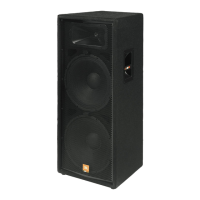
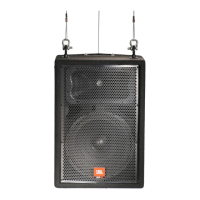
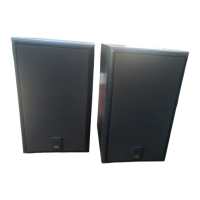
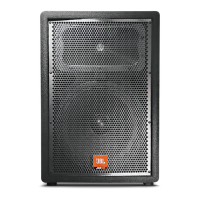
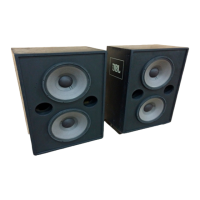
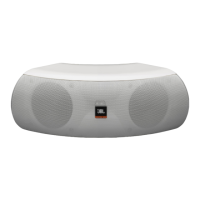
This document is an instruction manual for JBL loudspeakers, specifically models J216, J220, J320, J325, and J350. It provides guidance on placement, connections, and general care to ensure optimal performance and longevity of the speakers.
Function Description:
The JBL loudspeakers described in this manual are designed to provide high-accuracy, low-distortion, and wide dynamic range audio reproduction. They are intended for use in stereo audio systems, connecting to a receiver or amplifier to deliver sound. The manual emphasizes that these speakers are built with high-quality materials and attention to detail, promising many years of excellent performance. The core function is to convert electrical audio signals into audible sound, enhancing the enjoyment of recorded music.
Important Technical Specifications (Inferred and Explicit):
- Models Covered: J216, J220, J320, J325, J350.
- Audio Quality: High accuracy, low distortion, wide dynamic capabilities.
- Recommended Wire Gauge: Minimum #18 AWG (1 mm diameter) for distances up to 30 feet (10 m). Larger diameter wire is recommended for distances exceeding 30 feet (10 m) from the receiver/amplifier.
- Connection Type: Two-conductor insulated wire. Terminals accept banana plugs, spade lug connectors, or bare wire.
- Bare Wire Preparation: Strip approximately ½-inch (13 mm) of insulation.
- Polarity: Red (+) terminal on the loudspeaker connects to the red (+) terminal on the receiver/amplifier. Black (-) terminal on the loudspeaker connects to the black (-) terminal on the receiver/amplifier. This ensures speakers are in phase.
Usage Features:
- Stereo Placement: For optimal stereo reproduction, the two loudspeakers should be equidistant from the listening position. The angle between the speakers at the listening position should be between 40° and 60°. For example, if the listening position is 8 to 12 feet from each speaker, the systems should be about 8 feet apart.
- Bass Response: Placing loudspeakers in corners or against a wall will result in the strongest bass, though not necessarily the most accurate.
- Compact Systems: Compact systems benefit from placement on a stand or shelf.
- Stereo Imaging: For best stereo imaging, high-frequency drivers should be placed as close as possible to the ear level of a seated listener.
- Experimentation: Users are encouraged to experiment with placement in their specific room environment to achieve the best sound.
- Connection Process:
- Obtain suitable two-conductor insulated wire (e.g., #18 AWG minimum).
- Prepare bare wire by stripping ½-inch (13 mm) of insulation and twisting the strands.
- Partially unscrew the plastic nut on each binding post terminal located on the back of the loudspeaker.
- Insert the prepared wire through the hole in the post.
- Tighten the plastic nut by hand to secure the connection.
- Connect the red (+) terminal of the loudspeaker to the red (+) terminal of the receiver/amplifier.
- Connect the black (-) terminal of the loudspeaker to the black (-) terminal of the receiver/amplifier.
- Ensure correct polarity (in-phase connection) to avoid reduced bass and poor imaging.
- Grille Removal/Replacement: The grille is held in place by dowel pins. To remove, grasp it by both top or bottom edges and pull gently. To replace, reposition it on the dowel pins and press gently at the corners, avoiding pushing on the center area.
Maintenance Features:
- Cleaning Vinyl Finish: The loudspeaker systems have a vinyl finish on all sides and can be cleaned with a damp cloth.
- Cleaning Grille: The grille can be gently vacuumed. Stains can be removed with an aerosol cleaner, following the manufacturer's instructions.
- Solvent Warning: Never use any solvents to clean any part of the system.
- Service: Should service be required, return the system to the JBL dealer from whom it was purchased. If this is impractical, write directly to the JBL Customer Service Department, describing the problem fully. Do not return products to the JBL factory without prior authorization.
- Product Improvement: JBL continuously researches and implements product improvements, including new materials, production methods, and design refinements. Current products may differ from published descriptions but will always meet or exceed original design specifications unless otherwise stated.

 Need help?

 To Next Page
 General