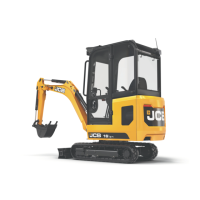
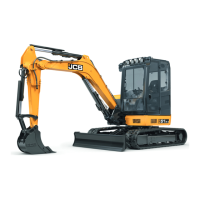
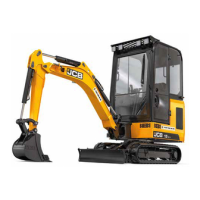
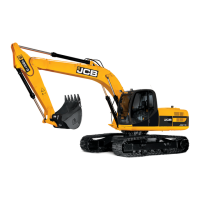
1. Park the machine on solid, level ground
2. Lower the dozer blade (if fitted)
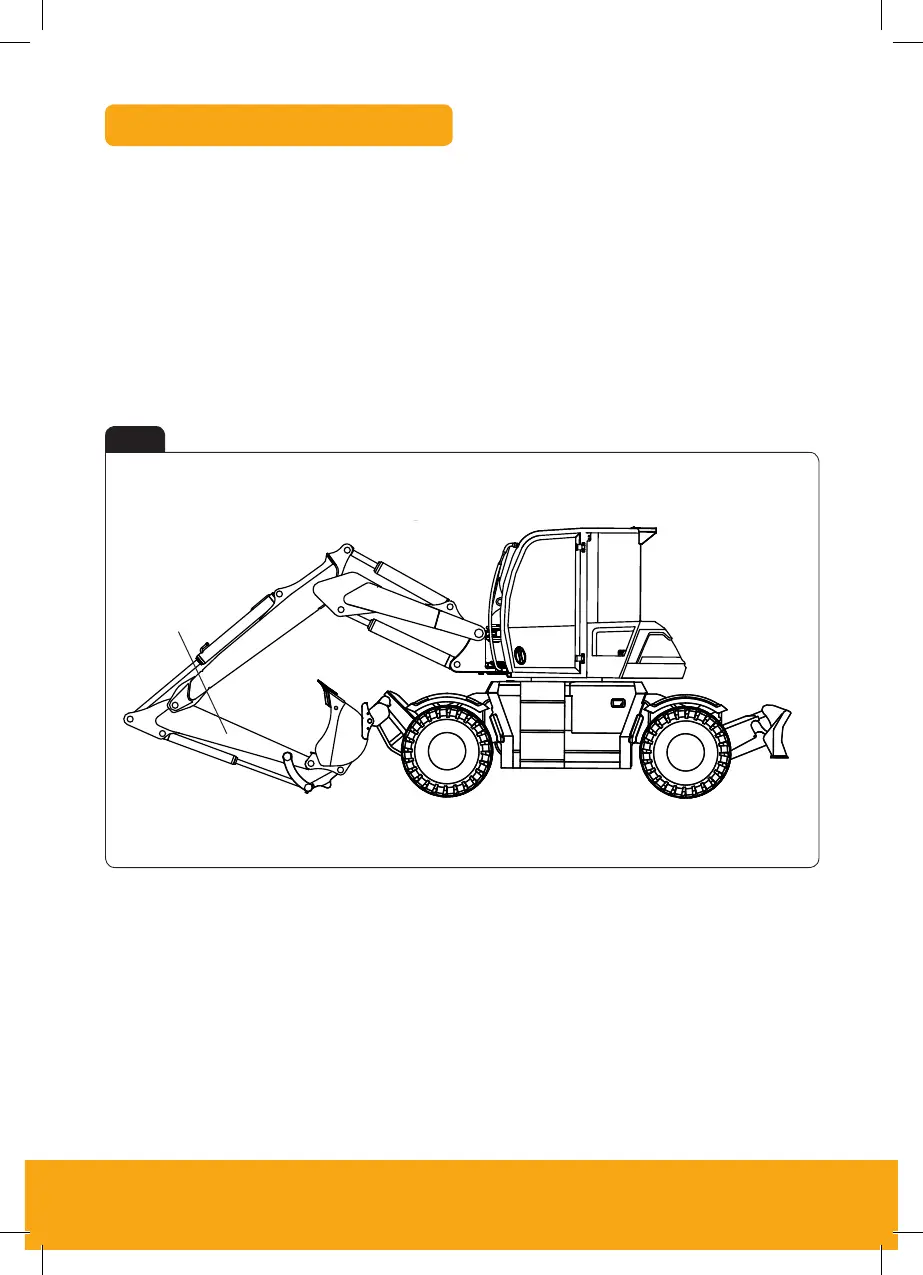
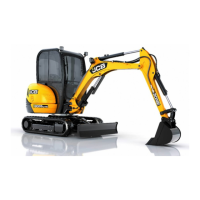
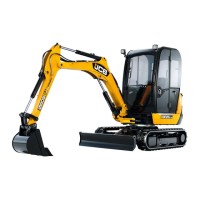
3. Lower the excavator so the attachment is flat on the ground (A)
4. Stop the engine
5. Discharge the hydraulic pressure (see aux venting operation)
6. Isolate the controls and remove ignition key
7. Isolate the battery to prevent accidental operation of the engine (Page 16, Fig 17-18)
Maintenance
Maintenance Positions
165 9831/3350-2 165
Maintenance Positions
General
WARNING A machine can sink into soft ground. Never work under a machine on soft ground.
WARNING Make the machine safe before getting beneath it. Make sure that any attachments on the
machine are correctly attached. Engage the park brake, remove the ignition key, disconnect the battery.
Make the machine safe before you start a maintenance procedure.
Unless a maintenance procedure instructs you differently, you must lower the arm.
Maintenance Position (Excavator Arm Lowered)
1. Park the machine on solid, level ground, with the upper structure parallel to the undercarriage.
Refer to: General (Page 50).
2. If necessary, lower the dozer blade.
Refer to: Dozer Blade Controls (Page 86).
3. Lower the excavator so the dipper is flat on the ground.
Refer to: Excavator Arm Controls (Page 82).
Figure 117.
A Excavator lowered with the dipper flat on the
ground
4. Stop the engine.
5. Release the hydraulic pressure and the tank pressure.
Refer to: Discharge (Page 198).
6. Remove the ignition key.
7. Isolate the battery to prevent the accidental operation of the engine.
Refer to: Check (Operation) (Page 203).
8. Attach a warning tag to the instrument panel to inform other service staff about on-going maintenance.


 To Next Page