4.0 Installation and maintenance
4.1 General
• Anchorthepumpproperly.
• Thepumpmustbeprovidedwithlockablecircuitbreakertoavoidinadvertant
starting.
• Beforeanyserviceormaintenanceinthepumporsystem,shutoffthepowerandlock
the starting device to prevent inadvertent start. Close the valves on the in- and outlet
line and drain the pump and system before it is separated from the system. Follow the
instructions for disassembly/assembly (see section 4.5).
4.2 Installation and piping
• Use at least the same diameter on pipes from and to the pump as for the diameter of
the in- and outlet ports.
• Flushallpipesbeforeinstallingthepump.
• Installthepumpclosestpossibletothetanktobepumpedfrom.
• Boltthepumpinplacehorizontally.
• Onlyuseplasticpipeconnections.
• Usecaretopreventscrapsortrashesfromenteringthepipingduringpipingwork.
• Onlyusepipesealantsformulatedspecicallyforplastics,i.e.Teontape,Permatex
no. 2, etc.
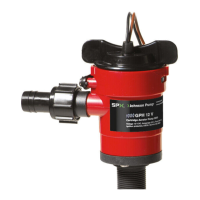
• Usethegriponthepumpoutletwhenassemb-
ling/disassembling the pipe connections to avoid
damaging the pump body (see fig).
• Installavalveonthesuctionandpressuresideto
be able to disconnect the pump from the system.
Make sure that the pump can be drained without
damaging persons, environment or equipment.
• Whenthepumpdoesnothaveaoodedsuction,installafootvalveonthesuction
line. Fill up the pump and evacuate all air. Make sure that it will never run dry.
• Ifthereisanyriskofairpocketsinthesystemorinthepumpbody,aventilatingvalve
must be installed on the pressure side.
• Ifthereisanyriskthatthedischargeheadwillnotreachtheminimumheadneeded
(see section 2.3), install a valve to adjust the head.
• Ifthereisanyriskofdryrunning,installasuitabledryrunningprotectiontoavoid
pump breakdown. This is absolutely necessary and required when pumping liquids that
are easily flammable.
Grip



 To Next Page