901-10113 - 21 - 9/16/2024
3.7 Defrost Instructions
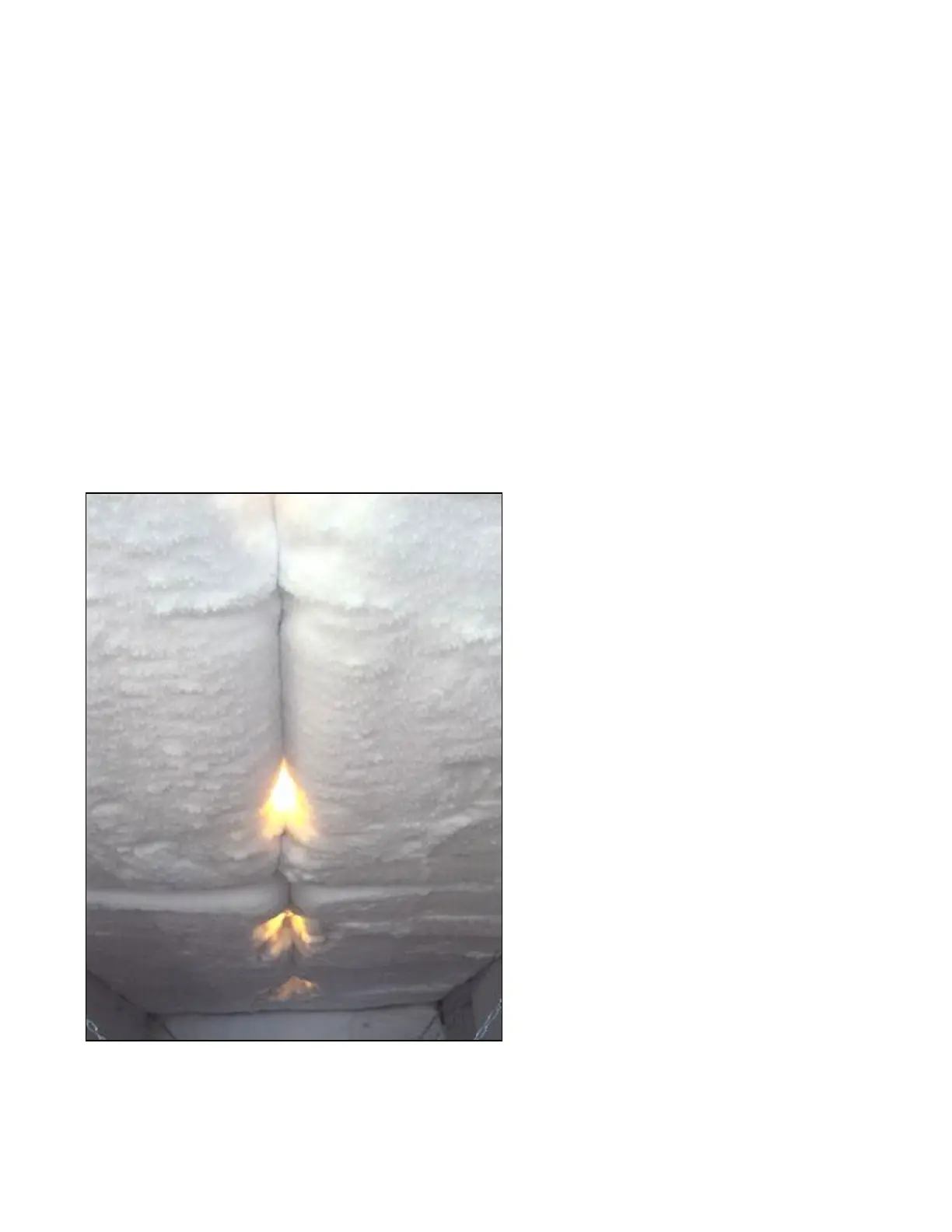
Cold Plates work best when there is little to no frost buildup on their surface. Excessive frost thickness
acts like insulation wrapped around the Cold Plate. This can cause slow temperature recovery after
door openings, or even prevent the system from cooling the refrigerated compartment to the design
temperature.
Frost is a result of humidity in the air that enters the refrigerated compartment when doors are
opened, or other air leaks. Frost accumulates fastest in hot, humid conditions. Frost accumulation is
also directly related to the number and duration of door openings.
Defrosting is required when frost thickness exceeds ½ inch.
Users should plan to defrost once a week, but defrosting may be needed less often during cold
seasons. Follow the defrosting processes presented in Table 3.
Note: Less or no frost accumulating on one or more plates can mean that those plates are not
functioning normally. Contact JTB Customer Service toll-free at 800.922.8360 Extension 6 for diagnosis.
Figure 3: Example of extreme frost accumulation.



 To Next Page