The fuel is taken from the fuel tank of the vehicle or
supplied from a special 10L fuel tank. The fuel pump and
fuel supply are adjusted by a special oil pump (provided
by the manufacturer). It is not allowed to extract fuel from
the return system of the vehicle engine or downstream of
the vehicle internal transfer pump.
Use only fuel hoses and tubing within the scope of
delivery for installation.
Fuel should meet national standards. GB19147-2013
Vehicle Diesel Standard.
Winter fuel should be used in accordance with low
temperature requirements, not allowed to use bio-
fuels.
Diesel Fuel Lines System
Oil pipeline installation
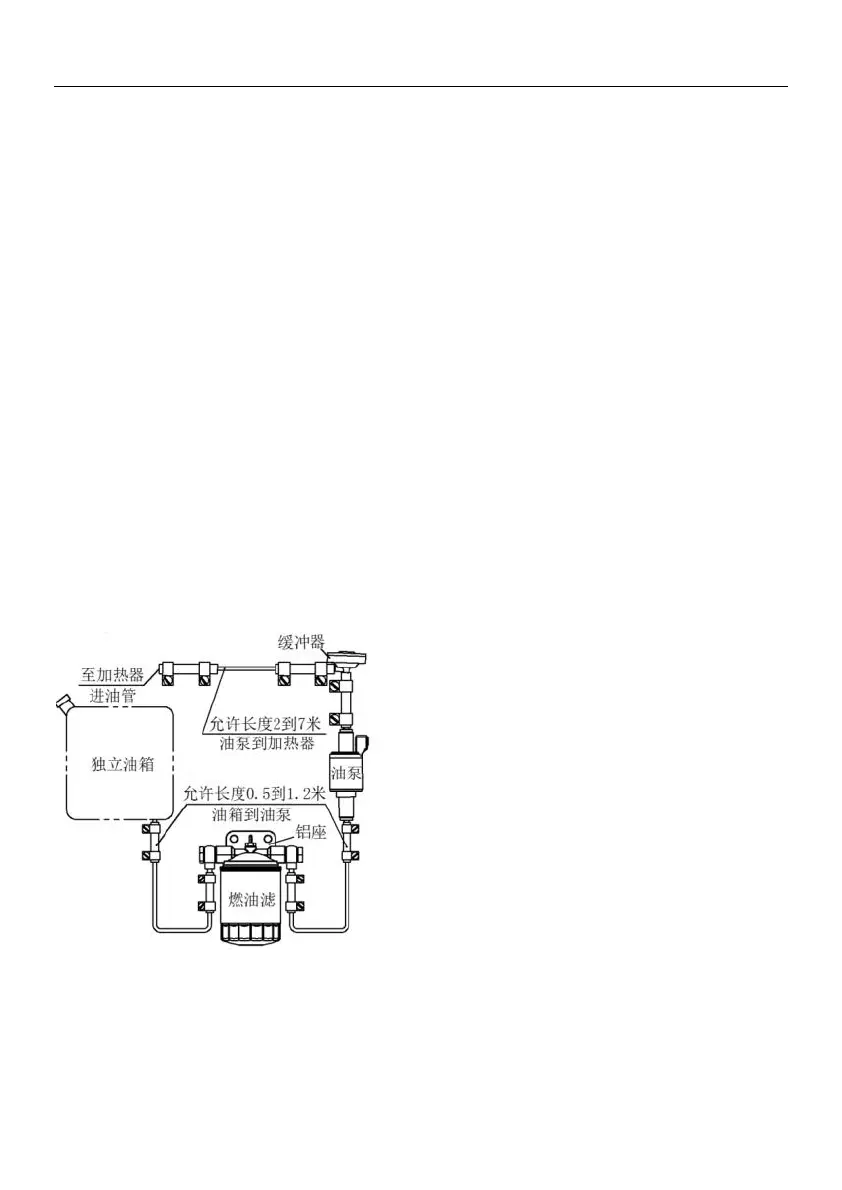
The tubing must use the kit's accessories, which are
nylon hoses that are resistant to light and heat. Allowable
fuel line length: The maximum fuel line length on the inlet
side is 2 meters and the pressure side is max 6 meters.
As Figure 13 shows.
Safety regulations for fuel lines
Always use a hose cutter or sharp tool to cut the fuel
hose and tubing to length. The area being cut cannot be
compressed and must be free of burrs. The fuel lines
must be securely connected to prevent damage and/or
noise due to vibration (the recommended distance
between the joints is approximately 50 cm). Fuel piping
must be protected from mechanical damage. The laying
of the fuel line will not adversely affect the stability of the
vehicle, engine operation and the like. Protect fuel-laden
components from high temperatures that may affect
operation (use a suitable fiberglass-lined aluminum heat
protection hose). Never set or secure fuel lines near the
exhaust pipe of the heater or vehicle engine.


 To Next Page
 Loading...