To Next PageTo Next Page
 Need help?
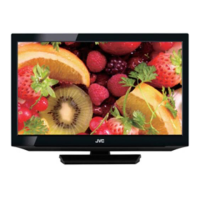
Do you have a question about the JVC LT-32A210 and is the answer not in the manual?
Read, keep, heed, and follow all safety instructions and warnings provided in the manual.
Precautions for handling the LCD panel and preventing injury or damage.
Ensuring proper ventilation, avoiding heat sources, and maintaining clearance around the unit.
Step-by-step instructions for attaching the TV stand securely.
Instructions for removing the stand for transport or wall mounting.
Overview of the TV's integrated digital tuner, closed captioning, V-Chip, and connectivity options.
Guide on connecting the AC power cord to the unit and the AC outlet.
Identification and function of front panel buttons and indicators, and left side controls.
Detailed diagram and description of all rear panel input and output jacks.
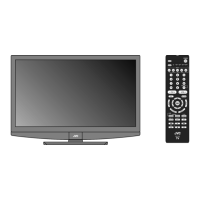
Detailed explanation of each button's function on the remote control.
Instructions for installing batteries and important precautions for battery usage.
Guidance for connecting combination or separate VHF/UHF antennas using various cable types.
Connecting for basic cable TV service and for scrambled service with or without premium channels.
Instructions for connecting VCRs and DVD players using various video and audio cables.
Diagrams for connecting camcorders and TV game consoles for display.
Guide for connecting a personal computer, including resolution and refresh rate adjustments.
Connecting an AV amplifier with digital surround sound for enhanced audio.
Connecting HDMI or DVI devices, including notes on audio input selection and resolution.
Instructions for connecting an audio amplifier and external speakers for improved sound.
Assists in setting up the TV, including signal type and channel programming.
Turning on the TV, adjusting volume, changing channels, and selecting input sources.
Step-by-step guide for navigating menus and making selections.
Using the DISPLAY, RECALL, MUTING, and SLEEP buttons for TV control.
Adjusting picture quality, color, brightness, contrast, and audio preferences.
Managing channels, setting V-Chip locks, and labeling inputs/channels.
Programming channels into memory for easy skipping and selection.
Steps to add new channels or delete unwanted channels from memory.
Using the DTV Signal meter to check and optimize antenna reception.
Creating custom labels for channels and video input sources.
Creating a password to enable and manage V-Chip restrictions.
Setting age and genre rating limits for content filtering.
Enabling and configuring closed captioning for analog and digital broadcasts.
Customizing digital caption display settings like text size, color, and background.
Choosing from Natural, Cinema Wide, Full, and Native picture size options.
Identifying common interference types like ignition, ghosts, snow, and RFI.
Guidelines for cleaning the TV cabinet and parts safely.
Checklist for diagnosing and resolving issues like no power, sound, picture, or reception.

 General