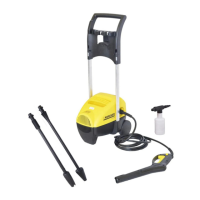
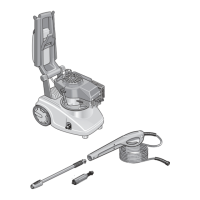
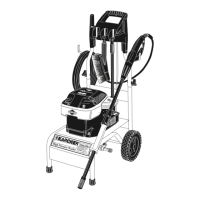
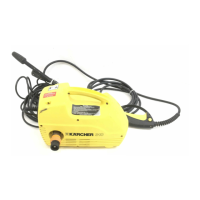
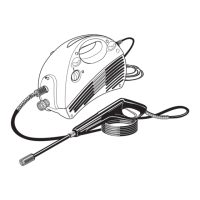
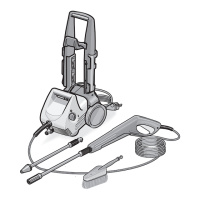
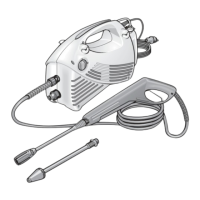
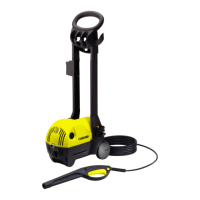
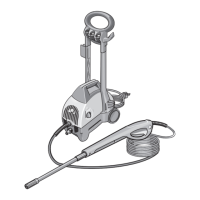
This document is a user manual for a Kärcher high-pressure cleaner, model 332. It provides comprehensive instructions for safe operation, maintenance, and troubleshooting, along with technical specifications and general information about the device.
Function Description:
The Kärcher 332 is a high-pressure cleaner designed for cleaning machines, vehicles, buildings, and tools. It can be used with or without cleaning detergents, offering versatility for various cleaning tasks. The device generates a high-pressure water jet to effectively remove dirt and grime. It is particularly suitable for cleaning facades, terraces, and garden equipment. For stubborn dirt, a dirt blaster attachment is recommended. The machine is designed to be used with cleaning chemicals supplied or recommended by the manufacturer, as using other chemicals may affect operation and void the warranty. Special attention is given to environmental protection, particularly when cleaning engines, which should only be done in locations with appropriate oil separators.
Important Technical Specifications:
- Power Connection:
- Voltage: 120 V
- Type of current: 1~60 Hz
- Amp. draw: 14 A
- Water Connection:
- Supply temperature (max.): 104 °F (40 °C)
- Supply rate (min.): 2.5 g.p.m. (gallons per minute)
- Supply pressure (max.): 170 psi
- Supply hose length (min.): 25 ft
- Supply hose diameter (min.): 1/2 in
- Suction height from open tank at 68 °F: 3 ft
- Performance Data:
- Pressure: 1300 psi
- Flow rate: 1.7 g.p.m.
- Detergent intake: 11 oz.p.m.
- Recoil force of hand-held spray gun at operating pressure (max.): 15 N
- Sound pressure level (DIN 45635): 74.5 dB(A)
- Dimensions:
- Length: 14.2 in
- Width: 11.0 in
- Height: 11.8 in
- Weight with accessories: 26 lbs
The device includes a safety valve/overflow valve that opens and directs water back to the pump's suction side when the spray gun is closed, preventing pressure buildup. The electrical circuit diagram shows components like a capacitor (C1), motor (M1), motor protective circuit breaker (Q1), and fuse (F1).
Usage Features:
- Starting: The manual details the steps for connecting the appliance, including the water supply and electrical connection. It emphasizes checking for correct voltage and ensuring the water supply meets minimum flow rates. Water can be drawn from mains or standing sources (like lakes or drums) using a filtered suction hose.
- Operation with High-pressure: Users connect the spray lance with an extension, release the safety ratchet, pull the trigger, and switch on the appliance. The vario nozzle allows for different spray types by rotating its front protective device.
- Operation with Detergent: For detergent application, the detergent nozzle is connected to the spray lance extension, and the detergent container is filled with suitable detergent. The manual advises using detergents sparingly and recommends Kärcher's own cleaning and detergent range to ensure fault-free operation and prevent damage. A two-step cleaning method is suggested: first, loosening dirt with detergent, then removing it with a high-pressure spray.
- Interrupting Operation: For breaks longer than 5 minutes, the pump should be switched off to prevent water overheating.
- Switching OFF: To switch off, the appliance is unplugged, the water inlet is closed, and the appliance is detached from the water connection. The trigger should be pulled to release residual pressure, and the safety ratchet engaged.
- Safety Instructions: The manual highlights critical safety warnings, including the risk of injection or injury from the high-pressure jet, which should never be directed at persons, animals, or the machine itself. It warns against using liquids containing solvents or unfiltered water, as these can damage seals, create flammable mists, or damage the cleaner and the object being cleaned. Proper extension cord usage is detailed, specifying types (12/3 AWG for up to 25 ft, 10/3 AWG for 25 to 50 ft) and emphasizing inspection for damage. A Ground Fault Circuit Interrupter (GFCI) is required for additional protection against electric shock. Local regulations for water supply connections must be observed, potentially requiring a receiver tank or backflow preventer to avoid chemical feedback into public drinking water. A filter (Order No. 6.414-389) is recommended for feed water to prevent damage from dirt. The safety ratchet only prevents unintentional opening of the gun lever, not locking it during operation.
Maintenance Features:
- Monthly or as Required:
- Nozzle Cleaning: Remove dirt from the nozzle hole with a needle and rinse with water from the front.
- Strainer Cleaning: Clean the strainer in the water connection, which can be easily removed with flat-nosed pliers.
- Sub-zero Temperature Protection: To prevent damage from frost, the appliance must be completely emptied of water and ideally stored in a frost-free room.
- Troubleshooting: A dedicated section helps users diagnose and resolve common issues.
- Appliance does not Work: Check mains voltage, connector cable for damage, and allow the motor to cool if overheated.
- Appliance does not reach Operating Pressure: Ventilate the appliance, clean the water connection strainer, check inlet water flow rate, and inspect inlet pipes for leaks or blockages.
- Strong Pressure Fluctuations: Clean the nozzle by removing dirt with a needle and rinsing.
- Pump Leaks: Up to 3 drops per minute are permissible; more serious leakage requires contacting authorized customer service.
- General Information: The manual provides information on warranty conditions, advising users to contact their original dealer or authorized customer service center with proof of purchase for any material or manufacturing defects. A list of common spare parts numbers is provided at the end of the instructions.
The manual emphasizes that all repair work, especially electrical components, should only be performed by authorized customer service personnel after disconnecting the appliance from the power mains.

 Need help?
 General

 To Next Page