8
case, it is recommended to discontinue use and, where appropriate, consult your
doctor.
APPLICATION OF THE VISOR TO THE HELMET:
When attaching only use KASK adapters
1) Identify the left and right adapter (identied by the letter R and L on the back
of the adapter) and insert them into the holes (g. 1) until they click(Figure 1A
and g. 2),
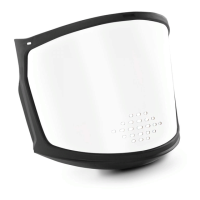
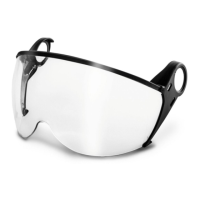
2) Attach the ZEN visor to the helmet (g. 3) rst placing the rear black hooking
clip on the adapter (g. 4) and subsequently the red cursor (g. 5),
3) To remove the visor pull the red cursor positioned on the visor adapter (g. 6)
and unhook,
4) To remove the adapters, press the corresponding hooking clip inside the shell
(g. 7) and extract them.
CLEANING
Remove the visor from the helmet and clean it using only water and mild soap.
Leave to dry naturally at room temperature. Avoid using chemical cleaners,
solvents, petrol or abrasive powders as aggressive materials could cause a
reduction in the structural strength of the visor. Never rub the lens when it is dry.
PRESERVATION
Store in a dry, warm place away from UV rays. When not in use, it is best to
keep the visor protected from direct sunlight and away from heat sources. We
recommend storing the visor in the original package. Do not apply adhesives,
solvents, stickers and paint if not in compliance with the manufacturer’s
specications. Any repair or modication not foreseen may adversely affect the
protective function of the visor.
TRANSPORTATION
There are no special precautions for transporting the device.
LIFESPAN
The KASK articles and accessories made of plastic may have a maximum
duration of 10 years starting from the year of manufacture stated on the product.
The lifespan of the visor depends on several degenerative factors, including
changes in temperature, the amount of exposure to direct sunlight and the more
or less intense use. Regularly check the visor for the presence of any damage.
Vision alteration, scrapes, and scratches are detectors of deterioration of the
EN


 To Next Page