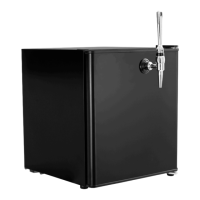
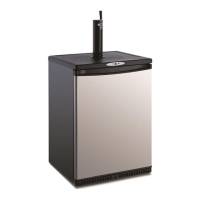
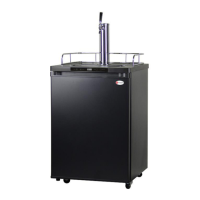
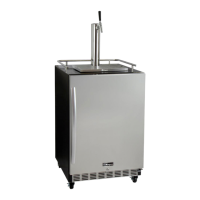
The Kegco HK-38 Built-In Refrigerator is a specialized appliance designed for cooling and dispensing beverages, particularly kegged beverages, and is suitable for both residential and light commercial use. Its primary function is to maintain a consistent, cool temperature for its contents, ensuring optimal beverage quality. The unit is engineered for built-in installation, allowing it to integrate seamlessly into existing cabinetry or bar setups, though it can also be used as a freestanding appliance.
Function Description
At its core, the Kegco HK-38 operates as a refrigeration unit, utilizing a compressor-based cooling system to achieve and maintain desired internal temperatures. The appliance is designed to accommodate various sizes of kegs, making it versatile for different beverage preferences. While the manual primarily details the refrigerator's general operation and maintenance, the visual representation on the cover suggests its capability to house and dispense from a single keg, often through a tap tower mounted on top. The cooling system is designed to be efficient, with features aimed at minimizing energy consumption while providing reliable temperature control. The unit's control panel, located on the front, allows users to easily monitor and adjust the internal temperature, switch between Fahrenheit and Celsius, and manually initiate defrost cycles. An interior light is also controllable via the panel, enhancing visibility of the contents.
Usage Features
The Kegco HK-38 is designed with user convenience and safety in mind. Before initial use, the manual emphasizes proper installation, including allowing the unit to stand upright for several hours to settle the refrigerant, and cleaning the interior. The appliance features rolling casters for easy maneuverability, which can be locked to secure the unit in place. For built-in applications, these casters facilitate positioning. A guardrail system is provided for the top of the unit, which can be installed to prevent items from falling off, adding a practical touch for countertop use. The door handle is designed for easy installation, requiring users to insert screws through the door and connect them to the handle, ensuring a secure and aesthetic fit.
The control panel is intuitive, offering straightforward operation. Users can turn the appliance on or off by pressing and holding the power key. The set temperature can be viewed and adjusted using dedicated up and down buttons, allowing for precise control over the cooling environment. The ability to switch between Fahrenheit and Celsius caters to different user preferences. A manual defrost function is available, which can be initiated and stopped via the control panel, providing flexibility in maintenance. The interior light can also be toggled on or off, which is useful for conserving energy or when ambient lighting is sufficient.
The refrigerator's design considers various environmental factors. It is recommended for placement in areas with ambient temperatures between 50°F (10°C) and 109.4°F (43°C) to ensure optimal performance. Avoiding direct sunlight and heat sources is crucial for maintaining cooling efficiency and preventing increased electrical consumption. The unit is also designed to be leveled for proper operation, which can be achieved by adjusting the rolling casters. The door gasket is critical for sealing the unit effectively, preventing cold air from escaping and warm air from entering, thus contributing to consistent temperatures and energy efficiency.
Maintenance Features
Maintaining the Kegco HK-38 is essential for its longevity and efficient operation. The manual provides clear instructions for routine cleaning and care. Before any cleaning, it is crucial to turn off and unplug the appliance to prevent electrical shock. The interior surfaces should be cleaned with a mild solution of warm water and baking soda, while the exterior cabinet can be wiped with warm water and a mild liquid detergent. Special care is advised to avoid using steel wool or steel brushes on stainless steel surfaces, as these can cause contamination and rust.
Regular dusting of the front grill and the back of the unit is recommended twice yearly to ensure proper ventilation and prevent the accumulation of debris that could hinder performance. A complete internal and external cleaning is suggested annually to maximize the product's lifespan.
For moving the refrigerator, the casters simplify relocation. Before moving, all items inside should be removed, and the door should be securely taped shut. The appliance should be kept in an upright position during transportation, and its exterior protected with a blanket or similar item to prevent damage.
Energy-saving tips are also provided to help users optimize the refrigerator's efficiency. These include placing the unit in the coolest area of the room, allowing heated items to cool before placing them inside, and avoiding overloading the refrigerator. Proper wrapping of items and wiping containers dry before storage helps reduce frost buildup. Ensuring that air can circulate freely around items and not leaving the door open for extended periods are also key to energy conservation. The manual also advises against lining shelves with materials like aluminum foil or wax paper, as these can impede cold air circulation. Finally, setting the thermostat to excessively cold temperatures should be avoided unless necessary, as this increases energy consumption.
In cases of extended non-use, such as vacations lasting several months, users are advised to remove all contents, turn off the appliance, and clean and dry the interior thoroughly. Leaving the door slightly ajar, blocked if necessary, helps prevent mold growth. For troubleshooting common issues, the manual offers a comprehensive guide, linking specific problems to possible causes and suggesting solutions, thereby empowering users to address minor issues without requiring professional service. This self-help approach covers problems ranging from the unit not operating or not being cold enough, to issues with lighting, excessive noise, or improper door closure.


 To Next Page
 General