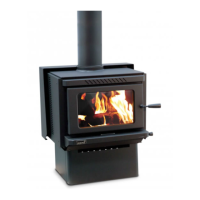
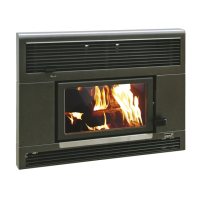
FOR FIRST FIRE
All Kent wood res are nished in a high temperature quality stove paint. The paint has not
been fully cured until it has been heated. If the re is run too hot, too fast, the paint will burn off
before it has had a chance to fully bond to the steel. When the re is rst used, it should be run
on “low” for the rst 4 hours to allow the paint time to fully cure.
CLEANING OUT THE WOOD FIRE
Your wood re should require minimum cleaning. If the wood re is operated correctly, and
according to the instructions most of the ash will be consumed by the re and a bed of ash will
be maintained that does not build up to any great extent.
If you nd that you have to clean out ashes every day or so, it indicates that the wood re is not
being operated correctly. Either excessively wet wood, unseasoned wood or foreign materials
are being burnt, or the air control is being turned down too much.
Don’t clean out the rebox completely during the heating season. Leave about 25mm of ash
in the bottom of the rebox after cleaning. These ashes in the bottom of the wood re assist the
burning process, by insulating the rebox and allowing air circulation under the re bed.
When emptying ashes use a metal container with a tight tting lid. Do not use this container for
any other purpose. The closed container of ashes should immediately be taken outdoors to a
location well away from any combustible materials, pending nal disposal. If the ashes are to
be disposed of by burial in the garden or otherwise locally dispersed, they should be retained
in the container until they are completely extinguished and cold. This may take several days.
CREOSOTE FORMATION AND NEED FOR REMOVAL
We recommend the ue of your wood re is inspected before use at the start of each heating
season and also periodically during the season. When you are able to operate the wood re
without creating creosote deposits, the interval between inspections may be increased, but
the ue must always be inspected and cleaned at least once a year.
The ue should be swept by a professional chimney sweep to remove any build-up of creosote
and soot. A professional sweep should also advise of any problems that may be detected in
the inspection of the ue and offer advice on any repair and replacements. Your Kent wood
re requires minimal maintenance, and will keep its good looks for a long time with just a little
attention.
RUST
Your Kent wood re is manufactured using steel components. Due to the extreme operating
temperatures and inconsistent fuel that wood res are subjected to, a small amount of rusting over
time on the inside of the re box is normal. Without adequate care it is realistic to expect that the steel
re box and internal components will show signs of corrosion.
All steel, including stainless steel requires a level of care and protection to retain its appearance. No
steel is immune to corrosion and neither is it maintenance free.
If your re box and internal components are showing signs of more than a small amount of surface
rust, and a water leak can be eliminated, moisture in the re box can only be due to the environment
the re is installed in, and or, through the fuel that is being used.
Seasoned wood is a very vague term as it depends on how the wood has been kept and stored
since it was felled. Just because a log was felled 2 years ago, does not mean that it is seasoned
enough to be considered “good wood” and suitable re wood.
Visual inspection takes a lot of experience to tell if a piece of wood is sufciently seasoned and dry
enough to be “good wood”. Wet or unseasoned wood is not good for heat output as it produces more
smoke. The moisture released from wet wood combined with the smoke is in most cases corrosive.
Purchasing a moisture meter is an inexpensive way to test how dry your wood is. Always test a new
load of re wood to gauge if it is “good wood”. This will help determine how your re wood needs
to be handled - use now, to be aired or stored for next season.
11



 To Next Page
 Loading...