Need help?
Do you have a question about the Kenwood KFCD55B15 and is the answer not in the manual?
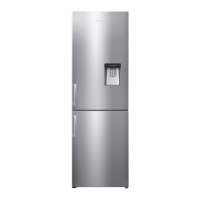
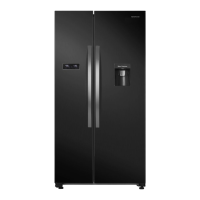
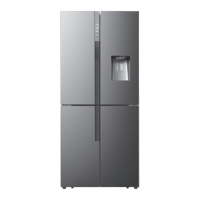
This document is an installation and instruction manual for a Kenwood 55cm Frost Free Fridge Freezer with a Water Dispenser, models KFCD55B15, KFCD55W15, and KFCD55X15.
The appliance is designed for indoor household use and similar applications such as farmhouses, hotels, motels, bed and breakfast environments, staff kitchen areas in shops, offices, and other working environments, and catering/non-retail applications. It is intended for use by individuals aged 8 and above, as well as those with reduced physical, sensory, or mental capabilities, or lack of experience and knowledge, provided they receive supervision or instruction on safe use and understand the associated hazards. Children should be supervised to ensure they do not play with the appliance, and cleaning and user maintenance should not be performed by children without supervision. If the unit has a lock, the key should be kept out of reach and not near the unit to prevent children from getting trapped inside.
Users are advised to read all instructions carefully before use and retain the manual for future reference. If the unit is passed to a third party, the manual must be included. The plug should be easily accessible for disconnection from the mains supply. If the mains cable is damaged, it must be replaced by the manufacturer, service agent, or a qualified technician. The unit should be located away from heat sources like radiators or fires, as the refrigerant and vesicant are burnable. The unit requires a minimum of two persons for maneuvering. Explosive substances, such as aerosol cans with flammable propellants, should not be stored in the appliance. Bottles or glass containers should not be stored in the freezer compartment, as their contents can expand when frozen, potentially breaking the bottle and damaging the compartment. Ventilation openings in the unit enclosure or built-in structure must be kept clear of obstructions. Mechanical devices or other means to accelerate defrosting, other than those recommended by the manufacturer, should not be used. Electrical appliances should not be used inside the food storage compartments unless they are of the type recommended by the manufacturer. The refrigerant circuit should not be damaged; in case of damage, avoid naked flames or ignition sources and ventilate the room. Servicing or repairs involving cover removal should only be carried out by authorized service personnel to avoid electrical shock.
Upon unpacking, all items should be removed, and the packaging retained for local regulation-compliant disposal. The main unit includes various components such as fridge glass shelves, a salad bin cover shelf, a salad bin, upper and lower fridge door shelves, a water tank, freezer glass shelves, freezer drawers, an egg tray, an ice tray, a bottle stopper, and a wine rack.
For installation, the unit should be placed on a flat, firm floor in a well-ventilated room with an average temperature between 16°C and 43°C. Direct sunlight and heat sources should be avoided to prevent increased electrical consumption or improper operation. The unit is not designed for garage or outdoor installation and should not be draped with any covering.
The unit is levelled by adjusting the two levelling feet at the front. Proper levelling ensures the doors and magnetic seal alignments are correctly covered.
During installation, 25mm of free space should be left on both sides, 50mm at the rear, and 25mm at the top. The door can be opened to the right or left, depending on the location, and requires more than twice the width and depth of the unit to open to a maximum angle of 160°.
If a fridge door shelf is in the middle of the fridge door, it must be removed first. The water tank valve is inserted into the water dispenser hole, and the tank is pushed down to securely attach. The fridge door shelf is then installed on top of the water tank. To remove the tank, the fridge door shelf is removed first, then the tank is held firmly on both sides and bottom and pushed up from the bottom. Care must be taken not to press on the valve. The rubber seal inside the hole must be in the proper position before installation. A tiny torn part of the rubber seal is normal and helps prevent it from turning inside out during removal.
This process requires a Philips style screwdriver, a flat-bladed screwdriver, and a hexagonal spanner. The unit must be unplugged and empty. To remove the door, the unit needs to be tilted backward and rested on a solid object. All removed parts must be saved for reinstallation. The unit should not be laid flat to avoid damaging the coolant system. It is recommended that two people handle the unit during assembly. For door swing reversal, contacting a qualified technician is advised unless the user is confident in their ability to perform the task. The steps involve removing fridge door shelves, the water tank, upper hinge cover, screws, and upper hinge, then lifting the upper door and placing it on a padded surface. The stopper from the bottom of the upper door is moved to the opposite side and screwed tightly. The middle hinge is removed, and the lower door is lifted and placed on a padded surface. The stopper from the bottom of the lower door is moved to the opposite side and screwed tightly. The unit is laid down, and both levelling feet, levelling feet fix board, and bottom hinge are removed. The position of the levelling feet fix board is swapped with the bottom hinge, and the bottom hinge pin is moved to the other hole and tightened. The levelling feet fix board, bottom hinge, and levelling feet are screwed tightly into their new positions. The unit is stood upright, and the middle hinge hole covers are swapped with the middle hinge, which is then reversed. The bottom hole of the lower door is placed onto the bottom hinge pin, the middle hinge pin is inserted into the upper hole of the lower door, and both pins are tightened. The middle hinge is screwed tightly, and remaining holes are covered with hole covers. The bottom hole of the upper door is placed onto the middle hinge pin. The upper hinge cover, screws, and upper hinge positions are swapped. The upper hinge pin is inserted into the upper hole of the upper door. The upper hinge is reversed and screwed tightly into its new position. The upper hinge cover is then placed over the upper hinge and screwed tightly. Throughout this process, ensure the doors are aligned horizontally and vertically so that the seals are closed on all sides before tightening the pins.
The inside of the unit should be wiped with a weak solution of bicarbonate soda, then rinsed with warm water using a sponge or cloth, and completely dried before replacing shelves and drawers. The exterior should be cleaned with a damp cloth and then wiped with standard furniture polish, ensuring the polish does not get on magnetic door seals or inside the unit.
Before plugging in, ensure the socket is compatible with the supplied plug. Do not turn on the unit until two hours after moving it to allow the coolant fluid to settle. Before placing any food, turn the unit on and wait 24 hours for it to reach the correct temperature and ensure proper operation. The unit should not be overfilled.
The mains cable is connected to the socket. The internal temperature is controlled by a thermostat with eight settings, where position 7 is the coldest and 0 turns the unit off. The thermostat control dial is adjusted to the desired position, with higher numbers indicating lower temperatures. Position 3 is recommended for normal room temperatures (16°C to 43°C). The unit may not operate at the correct temperature in very hot or cold rooms, or if doors are opened frequently. To ensure sufficient chilling, wait 24 hours before filling with food. A fridge/freezer thermometer can be used to check temperatures, which should be 0-8°C for the fridge and -18°C or lower for the freezer.
The internal temperature is controlled by a thermostat. Positions 1-4 are recommended for colder environments (e.g., winter), and 5-7 for hotter environments. Adjustment should be made according to the environment.
The water tank flap cover is lifted, and drinking water is poured into the tank through the hole. Do not fill above the level to prevent overflow. Ensure the water tank is steady and in the correct position before filling. Only drinking water should be used; other beverages like milk, juice, or carbonated drinks are not recommended, especially those with grain, as they can cause blockage or damage. Hot water should not be filled directly. Avoid touching other parts of the unit when filling to prevent leakage.
A container that fits under the water dispenser should be used. Place the container properly and push the lever for water to flow. Before dispensing, ensure the lock device is in the "Unlock" position. After each use, slide to "Lock" position to prevent children from playing with the lever. Do not push the lever with force when in "Lock" position, as it will damage the mechanism.
Unusual noises are normal and are caused by the circulation of refrigerant liquid in the cooling system, which has become more pronounced with CFC-free gases. These noises are not a fault and do not affect performance. They are due to the compressor motor pumping refrigerant.
Cooked meats/fishes should be stored on a shelf above raw meats/fishes to prevent bacterial transfer. Raw meats/fishes should be kept in a covered container on the lowest shelf. Leave space around food for air circulation. Pack or cover food separately to prevent flavour transfer and drying out, except for fruit and vegetables. Allow pre-cooked food to cool completely before placing it in the unit to maintain internal temperature. Limit door openings to prevent cold air escape. Hang the bottle stopper on any door shelf to secure bottles.
Use quality food and handle it minimally. Freeze food in small quantities for faster freezing and defrosting. Allow cooked food to cool completely and chill before freezing if possible. Consider how food will be cooked after freezing. Avoid freezing food in metal containers if microwaving directly from the freezer is intended. Use special freezer bags, film, polythene bags, plastic containers, and heavy-duty aluminium foil. Double wrap food if in doubt. Avoid aluminium foil for acidic foods and thin cling film, glass, or used food containers without cleaning. Exclude as much air as possible from the container; a vacuum pump can be used. Leave a small air space when freezing liquids for expansion. For efficient freezer use, freeze liquids or solids with liquids (e.g., stew) in square blocks (preforming) by pouring into a polythene bag inside a square container, freezing, then removing and sealing the bag. Label frozen foods with contents and date using special freezer tapes, labels, and pens to organize and prevent food poisoning. Refer to food packaging for recommended storage times. Add weight and cooking notes (e.g., "defrost first," "cook from frozen") and keep a separate log for each drawer to avoid unnecessary door openings and searching.
Remove frozen food from the freezer compartment and uncover it. Allow it to defrost at room temperature, but be aware that defrosting in a warm area encourages bacterial growth. Drain and discard any liquid lost during defrosting. Ensure no ice-crystals remain in the food before cooking, especially meat. Cook food as soon as possible after defrosting. Many microwaves and ovens have a defrost setting; use these only if cooking immediately afterwards. Never refreeze defrosted food unless cooked again to kill harmful bacteria. Never refreeze defrosted shellfish. Reseal packs properly after removing items to prevent drying, freezer-burn, and frost buildup.
Remove all shelves and drawers. Wipe the inside with a weak bicarbonate soda solution, rinse with warm water, and dry completely. Clean the exterior with a damp cloth and furniture polish, ensuring polish does not get on magnetic door seals or inside the unit.
Remove the water tank. Wash the tank, tank cover, flap cover, and valve lightly under water. Dry them thoroughly before reinstalling. Regularly wipe the receiving base of the water dispenser with a dry towel to prevent overflowing.
Before changing the bulb, turn the thermostat control dial to Position 0 and disconnect the mains supply. Unscrew and remove the bulb cover. Remove the old bulb. Replace with a new bulb (max. 15W), ensuring it is pushed to the bottom. Refit the bulb cover and screw tightly, reconnect to mains, switch on, and reset the thermostat.
Hold the unit around its sides or base when moving it. Do not lift by holding the edges of the top surface.
The unit should be serviced by an authorised engineer using only genuine spare parts. Do not attempt repairs yourself, as this may cause injury or malfunction. Contact a qualified technician.
If the unit is not in use for a long time, disconnect it from the mains supply, empty all food, clean the appliance, and leave the door ajar to prevent unpleasant smells.
Condensation may appear on the outside due to changes in room temperature. Wipe off moisture residue. If the problem persists, contact a qualified technician.
Old units have residual value. Environmentally friendly disposal ensures valuable raw materials are recovered. The refrigerant and insulation materials require special disposal procedures. Ensure no pipes on the back are damaged. Information on disposal options can be obtained from the local council office. When disposing of an old unit, break off any old locks or latches and remove the door as a safeguard.
 General
| Energy Rating/Class | A+ |
|---|---|
| Color | Black |
| Noise Level | 42 dB |
| Number of Shelves | 3 |
| Freezer Compartment | Yes |
| Type | Freestanding Fridge Freezer |

 To Next Page