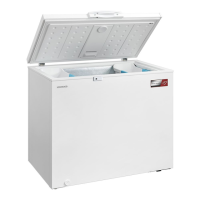
This document provides the installation and instruction manual for the Kenwood 55cm Undercounter Freezer, model KUF55X18. It covers safety warnings, unpacking, installation, operation, cleaning, maintenance, and disposal, along with technical specifications and a product fiche.
Function Description:
The Kenwood KUF55X18 is a 55cm undercounter freezer designed for indoor household use and similar applications. Its primary function is to freeze and store food items, maintaining a low temperature to preserve them. The unit features multiple freezer drawers for organized storage and an ice tray for making ice. The internal temperature is controlled by a thermostat with "Mid," "Cold," and "Colder" settings, allowing users to adjust the cooling performance based on ambient conditions and specific needs. The freezer is designed to operate efficiently within an ambient temperature range of 16°C to 43°C.
Important Technical Specifications:
- Model: KUF55X18
- Rated Voltage: 220-240V~, 50 Hz
- Rated Current: 0.7 A
- Dimensions (H x W x D): 845 x 555 x 575 mm
- Household Appliance Category: 8
- Energy Efficiency Class: A+
- Energy Consumption: 179 kWh per year (based on standard test results for 24 hours)
- Freezer Storage Volume: 81 L (4-star)
- Defrost Type: Manual Defrost
- Temperature Rise Time: 24 hours
- Freezing Capacity: 10 kg / 24 hours
- Climate Class: N, ST, T (suitable for ambient temperatures between 16°C and 43°C)
- Airborne Acoustical Noise: 40 dB(A) re 1 pW
- Refrigerant: Environmental-friendly gas (combustible, requiring careful handling)
Usage Features:
- Temperature Control: The unit's internal temperature is regulated by a thermostat with three settings: Mid, Cold, and Colder. The "Mid" setting is recommended for normal room temperatures (16°C to 43°C).
- Initial Setup: After connecting to the mains, the thermostat should be set to "Mid" after 20 minutes. It is advised to wait 24 hours before filling the unit with food to ensure it reaches the correct operating temperature (typically -18°C or lower for the freezer compartment).
- Food Freezing:
- Use quality food and freeze in small quantities for faster freezing and easier defrosting.
- Allow cooked food to cool completely before freezing.
- Use special freezer bags, freezer film, polythene bags, plastic containers, or heavy-duty aluminium foil for packaging. Double-wrapping is recommended for added protection.
- Exclude as much air as possible from containers.
- Leave a small amount of air space when freezing liquids to allow for expansion.
- Label frozen foods with contents and date to track storage time and prevent food poisoning.
- Avoid freezing acidic foods in aluminium foil.
- Defrosting Frozen Food:
- Remove frozen food from the freezer and uncover it.
- Defrost at room temperature, draining and discarding any liquid lost.
- Ensure no ice crystals remain in the food before cooking, especially meat.
- Cook food as soon as possible after defrosting.
- Avoid re-freezing defrosted food unless it has been cooked again to kill harmful bacteria. Never re-freeze defrosted shellfish.
- Re-seal packs properly after removing items to prevent drying or freezer burn.
- Door Reversal: The door swing can be reversed to suit the installation location. This process requires specific tools (Philips style screwdriver, flat bladed screwdriver, hexagonal spanner) and should ideally be performed by a qualified technician, though instructions are provided for self-reversal if the user is confident.
- Door Handle Installation: The door handle is installed by screwing it onto the door and covering the screw holes.
Maintenance Features:
- Cleaning Before Use: Wipe the interior with a weak solution of bicarbonate soda, rinse with warm water, and dry thoroughly. Clean the exterior with a damp cloth.
- Defrosting:
- The unit requires manual defrosting when the frost layer builds up to 10mm.
- Turn off the unit, remove food (ideally transferring to another freezer or wrapping in newspaper/towels), and leave the door open.
- Place a shallow bowl or pan below the unit to collect water.
- Scrape away frost using a plastic scraper (do not use metal or sharp instruments, or electrical appliances for aid).
- Speed up defrosting by placing a bowl of hot water inside the unit and closing the door.
- After defrosting, clean the interior and exterior.
- Regular Cleaning:
- Remove all drawers.
- Clean the interior with a weak bicarbonate soda solution, rinse, and dry.
- Clean the exterior with a damp cloth and standard furniture polish, avoiding magnetic door seals.
- Vacuum the condenser grille at the back of the unit with a soft brush attachment.
- Handling/Moving: Hold the unit by its sides or base; do not lift by the top surface edges.
- Servicing: The unit should only be serviced by an authorized engineer using genuine spare parts. Users should not attempt repairs themselves to avoid injury or malfunction.
- Switching Off for Long Periods: Disconnect from mains, empty all food, clean the appliance, and leave the door ajar to prevent unpleasant smells.
- Condensation: Wipe off any moisture residue on the exterior. If condensation persists, contact a qualified technician.
- Disposal: Old units should be disposed of in an environmentally friendly manner, ensuring valuable raw materials are recovered. Special disposal procedures are required for the refrigerant and insulation materials. Do not damage pipes on the back of the unit. Remove any locks or latches and the door as a safeguard before disposal. Information on disposal options can be obtained from local council offices.

 Need help?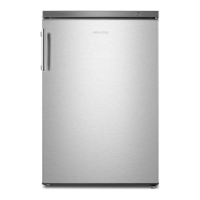

 To Next Page
 General