
 Need help?
Do you have a question about the Kia Sportage 2022 and is the answer not in the manual?
Details on using voice commands and pairing Bluetooth devices for seamless operation.
Tips for optimizing voice recognition performance and command usage in your vehicle.
Step-by-step guide for pairing your smartphone via Bluetooth for calls and audio.
Information on integrating your smartphone using Apple CarPlay and Android Auto.
How to connect your iPhone for access to calls, music, and navigation via the infotainment system.
Connect your Android phone for music, navigation, and voice commands on the infotainment display.
How the LKA system guides the vehicle and provides steering inputs to stay within lanes.
Alerts provided by the LDW system when the vehicle deviates from its lane.
How HBA automatically adjusts headlights based on detected light and road conditions.
Audible and visual alerts provided by FCW when a potential collision is detected.
How FCA-Ped can automatically apply brakes to mitigate collisions.
How the system assists drivers by providing audible alerts for nearby objects.
How DBC aids in safely negotiating steep slopes without excessive brake pedal force.
How HAC prevents the vehicle from rolling backward on inclines by holding brake pressure.
How the RVM displays the view behind the vehicle when in Reverse.
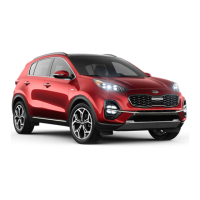
The 2022 Kia Sportage offers a range of advanced features designed to enhance convenience, safety, and driving experience.
The Voice Recognition (VR) system allows for hands-free control of various vehicle functions. To optimize VR performance, it's recommended to use full names for contacts (e.g., "John Smith" vs. "Dad"), avoid special characters, emojis, hyphens, acronyms, and all-caps words in contact names. Spelling words completely (e.g., "Doctor Smith" vs. "Dr. Smith") improves recognition. Always wait for the beep before speaking commands, and use a natural, moderate tone with clear pronunciation. Environmental factors like open windows, sunroof, or high-speed A/C fans can interfere with VR accuracy. The system may also have difficulty understanding certain accents or uncommon names. Pressing the talk button and saying "Help" provides a list of available commands.
For Bluetooth® pairing, select "Device Connections" on the infotainment display or use the "Call" button on the steering wheel. During pairing, accept all requests for phonebook download and future auto-connection. If auto-connection issues arise, try rebooting your phone, updating its operating system, deleting and re-pairing the device from both the infotainment system and your phone, and ensuring Bluetooth® is activated on your phone. If some contacts don't download, verify they are stored under supported categories (HOME, MOBILE, WORK, iPhone®3) and not social media or email lists. If the number of contacts exceeds the maximum, only a partial download will occur. Phone operating systems change frequently, and compatibility may vary. For vehicle feature questions, contact your Kia dealer or Kia Consumer Assistance. Bluetooth® reception is affected by carrier coverage and phone dependency. When streaming audio via Bluetooth®, ensure the device's listening volume is turned up.
The vehicle supports Apple CarPlay®3 and Android Auto™4. Apple CarPlay® allows seamless integration with compatible iPhones for calls, hands-free texts, app access, music, and Siri® voice control. Android Auto™ connects compatible Android phones for music, dialer, navigation, and voice commands, accessible via an intuitive interface and steering wheel controls. For wireless Apple CarPlay and Android Auto (on select models), refer to the provided YouTube links for connection instructions.
Kia Access App*5 The Kia Access App (formerly UVO link) requires both your cellphone and vehicle to be connected to a cellular network with good signal strength for remote commands to function effectively. Without a strong signal, commands may fail or take longer. For Remote Start or Remote Start with Climate Control, all doors, hood, and trunk/liftgate must be closed and locked. This feature operates for approximately 10 minutes. To get an accurate vehicle status, press the refresh icon in the app or web portal. It's recommended to activate Remote Start at least 10 minutes before use to allow the vehicle interior to reach the desired temperature. To preserve vehicle battery, Kia Connect will not work seven days after the ignition was last turned on; a vehicle restart with the key fob is required to re-enable the service.
Smart Cruise Control (SCC) with Stop and Go System*7 SCC helps maintain a predetermined distance from vehicles ahead by automatically adjusting speed. To set SCC, press the CRUISE button (A) to turn it ON (CRUISE indicator illuminates). Accelerate/decelerate to the desired speed, then press the (SET-) button (B) down to set the speed (SET indicator illuminates, speed and vehicle-to-vehicle distance display on LCD). Adjust speed by pressing button (B) up or down. To set vehicle-to-vehicle distance (C), press the SCC button (D) on the steering wheel (image changes on LCD). To cancel, press CANCEL (F) or the brake pedal (LCD displays "Smart Cruise Control Cancelled" (G)). To turn SCC OFF, press CRUISE button (A).
LKA guides the driver to stay within the lane by providing steering inputs when the vehicle deviates. With the engine start/stop button in ON, press the LKA button (A) to turn the system ON/OFF. When ON, the instrument cluster indicator illuminates white. It turns green when lane markers are detected and steering assistance is active. If the vehicle drifts out of its lane, an audible warning and LDW alert display on the instrument cluster. If drifting continues, LKA provides steering inputs to prevent lane departure. Standard LKA is the default mode; switch between modes (Standard LKA, Active LKA, LDW) via User Settings in the Instrument Cluster. Active LKA provides more frequent steering inputs. LDW only alerts the driver without providing steering inputs. All systems operate above 40 mph, when the vehicle is between lane markers, and when the system recognizes the lane. LKA/LDW state is retained after ignition cycle.
HBA automatically adjusts headlight range by switching between high and low beams based on detected light from other vehicles and road conditions. To enable HBA, toggle the light switch to the AUTO Light position (A) and turn on high beams by pushing the lever away from you (High Beam Assist indicator illuminates). HBA operates when vehicle speed exceeds 25 mph.
FCA-Ped alerts the driver and, under certain conditions, applies emergency braking when rapidly approaching a vehicle that is slowing, braking, or stopped. Initially, FCW provides an audible warning and visual alert (A) on the instrument cluster. Alert settings (Early, Normal, Late) can be adjusted or turned off in user settings. If collision risk increases, FCA-Ped automatically applies brakes to reduce speed. FCA-Ped can be turned ON in the User Settings menu. FCA-Ped/FCW activates when the vehicle is ON/running, traveling over 5 mph, and Electronic Stability Control (ESC) is ON. These systems are supplemental; always drive safely.
Smart-Power Liftgate Operation* With the Smart Key fob on your person and near the back of the vehicle, hazard lights will blink and a chime will sound for 3 seconds before the Smart-Power Liftgate opens. The alert system will blink and chime two additional times before opening. The Smart-Power Liftgate is off by default; enable it via User Settings in the LCD Instrument Cluster. To adjust opening height, manually position the liftgate, then press the Power Liftgate Close button (A) for over 3 seconds until a double beep confirms the setting is saved.
Accessory Mode with Smart Key* To enter Accessory mode without starting the vehicle, push the ENGINE START/STOP button once without depressing the brake pedal (ACC illuminates amber). If the button remains in ACC for over an hour, it automatically turns off to prevent battery discharge.
Eco Mode (Active Eco) improves fuel economy by controlling powertrain operations. To turn ON, press the DRIVE MODE button and scroll to Eco Mode (indicator light (A) illuminates green). Eco Mode remains on after ignition cycle. To turn OFF, press the DRIVE MODE button and select another mode.
The Trip Computer displays driver information. To cycle through LCD Instrument Cluster modes, press the Mode button (A). In Trip Computer mode, press the Move/Reset/OK button (B) to cycle through screens. To reset TRIP A or TRIP B screens, press and hold the OK button (B).
To open the fuel door, press its right edge. The fuel door opens only when the driver's door is unlocked. Tighten the fuel cap until it clicks once; otherwise, the Check Engine Light may illuminate.
Parking Distance Warning-Forward and -Reverse*7 This supplemental system assists the driver by chiming if objects are detected within sensor areas behind the vehicle (in R) or in front (in D). It activates when the ignition is ON and the vehicle is in R. To deactivate, press the Parking Distance Warning-Forward and -Reverse button (A) (LED illuminated). It may not activate correctly at speeds over 3 mph. When multiple objects are sensed, the closest one is recognized first. This system is not a substitute for safe backing-up procedures. Always drive safely and use caution. It may not detect every object.
Panoramic Sunroof Operation with Power Sunshade* Sunroof operation requires the ignition or Engine Start/Stop button to be in ON. The sunroof is controlled via a multidirectional switch/lever (A). To slide sunshade and sunroof: Auto Open: Slide lever (A) backward to farthest position. Auto Close (sunroof only): Slide lever (A) forward to farthest position. To slide sunshade only: Open: Slide lever (A) partially backward to first detent. Auto Close: Slide lever (A) partially forward to first detent. To slide sunroof (with sunshade open): Open: Slide lever (A) backward to farthest position. Close: Slide lever (A) forward to first detent to close sunroof glass only; slide lever (A) backward to farthest position to close sunroof glass and sunshade. To tilt sunroof: Raise: Push lever (A) upward. Lower: Push lever (A) forward.
Electronic Parking Brake (EPB)* The EPB system uses an electric motor for the parking brake. Applying the Parking Brake: Depress the brake pedal and pull up the EPB switch (A). Ensure the indicator light is illuminated. On steep inclines/declines, pull up the EPB switch for over 3 seconds for firmer application. Releasing the Parking Brake: The EPB automatically releases when the shifter is in R or D. To release manually, depress the brake pedal, then press the EPB switch (A) with the ignition switch in ON. Ensure the indicator light is OFF.
Heated Steering Wheel*8 With the Engine Start/Stop button* in ON, press the Heated Steering Wheel button (A) to turn the heater ON/OFF. It automatically turns off in 30 minutes, or when button (A) is pressed again.
DBC helps maintain a slow, safe speed down steep slopes without excessive brake pedal use. Activate DBC by pressing the DBC select button (A) before descent. It can be cancelled by pressing the button again or automatically if the vehicle accelerates above 38 MPH. A slight spring-type noise or mild vibration is normal during DBC operation.
The vehicle may contain USB port(s) for data transfer or music playback (A), and USB port(s) for fast charging (B). Devices only charge when the vehicle is in ACC/ON/Start position. If a USB device is difficult to plug in, change its orientation. Always use USB charging cables certified by the device manufacturer; aftermarket cables are not recommended as they may impact functionality.
HAC prevents the vehicle from rolling backward on an inclined surface. It holds braking pressure for 2 seconds after releasing the brake pedal, allowing time to press the accelerator. This is a supplemental system; always apply brakes and drive safely.
Wireless Smartphone Charging System*10
Exterior lights with clear lenses are vented to the atmosphere. Humid/moist air can cause condensation (fogging or water droplets) on the lens surface. This is normal and will evaporate when the lights are turned ON or when the temperature increases.
RVM displays the view behind the vehicle through the audio head unit screens when the vehicle is in Reverse. It activates when the vehicle is ON/running and the Gear Shift Lever is in R. Through normal use and after inclement weather/washing, the rear camera may become dirty. Use a clean microfiber cloth to remove dirt/debris. While RVM is active, audio volume will be lowered.
 General
| Brand | Kia |
|---|---|
| Model | Sportage 2022 |
| Category | Automobile |
| Language | English |







 To Next Page
