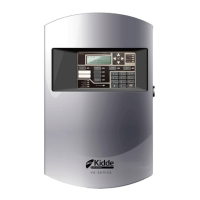
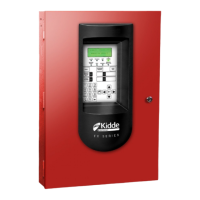
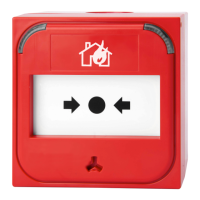
The Scorpio™ Fire Control Panel is a microprocessor-based, low-cost, versatile, single-hazard control panel designed to supervise and control one fire suppression system. It incorporates state-of-the-art microprocessor technology for increased reliability and is compatible with various Kidde suppression systems, including FM-200®, FE-13™, CO2, Industrial Dry Chemical, and Restaurant Wet Chemical systems. The panel meets NFPA 72 requirements and is UL listed per Standard 864, as well as approved for use in suppression systems covered by NFPA codes 12, 12A, 17, 17A, and 2001. It is also FM Approved, MEA Accepted (MEA #339-94-E), CSFM Listed (#07165-1076:119), and ULC listed (for Canadian options).
Technical Specifications:
- Input Power: 120 Vac, 50/60 Hz, 0.5 A max; 240 Vac, 50/60 Hz, 0.25 A max. An impedance of 25K ohms from any field wiring terminal to ground (except AC input power and relay outputs) will cause a ground fault condition.
- Panel 24 VDC Power Requirements: Standby Current: 35mA; Alarm Current: 200mA.
- Auxiliary Power: 24 Vdc at 0.25A in alarm only.
- Output Circuit: One Style-Y signal circuit, 10K ohm EOL. Rated at 24 Vdc 0.5 A (max). Open circuit fault impedance: 13.5K ohms. Short circuit fault impedance: 4.5K ohms. When programmed for two-zone operation, it pulses on first alarm and provides steady output on second alarm.
- Relay Outputs: Alarm 1 relay (activates on 1st zone in alarm), Alarm 2 relay (activates on 2nd zone in alarm or start of release). Note: When set up for a single zone release, S1=ON, Alarm 1 and Alarm 2 relays will both activate on first alarm. Trouble relay (normally energized). All are Form C, rated 2A @ 250 Vac/30 Vdc. For ULC installations, the form C relays are rated for 120 V AC (150 V max to ground).
- Release Output, Solenoid Style: Output circuit capable of activating 2 of the following control heads: P/Ns 48650001, 890181, 899175. Output held ON for 90 seconds. Circuit is power limited and supervised on terminals 28-31. Open circuit fault impedance: 1.7K ohms.
- Two Detection Circuits: Output voltage: 17.3 - 26.0 Vdc. Max. number of 2-wire smoke detectors per circuit: 15. Maximum line resistance: 50 Ohms. Operation: Style B, 10K ohm EOL. Open circuit fault impedance: 22K ohms.
- Auxiliary Inputs: Supervisory Input, Style B, 10K ohm EOL. Manual Release Input, Style B, 10K ohm EOL. Abort Input, Style B, 10K ohm EOL. Open circuit fault impedance for Abort, Supervisory and Manual release: 22K ohms.
- Isolation Switch: Disconnects the release output. Available by cutting jumpers W1 and W2.
- Standby Batteries: Requires (2) 12 Vdc 1.2A-H sealed lead acid batteries for 24-hour standby operation/5-minute alarm operation at maximum rated load. Order separately.
- Battery Charger Output: Nominal Standby Load: 35 mA. Maximum Charging Current 0.48 A.
- Time Delay to Discharge: 0, 10, 20, 30, 40, 50, or 60 seconds field selectable.
- Dimensions (nominal): 13.25"H x 11.0"W x 2.30"D.
- Enclosure: Rugged, 18 gauge steel painted red. A steel door is held closed by a key lock.
Usage Features:
- Detection: The control panel has two independent Style "B" initiating circuits. Each circuit can connect up to 15 FENWAL® smoke detectors or contact-type devices like FENWAL DETECT-A-FIRE® heat detectors. Total lead resistance of 50 ohms allows extended detection circuit wire runs. The unit can be programmed for single-zone or two-zone (cross-zoned) input to activate output functions, offering flexibility for various applications.
- Alarms: Provides a single Style "Y" supervised alarm output circuit for polarized signaling devices. The output pulses on first alarm and is steady on second alarm. An independent form "C" dry contact is associated with each of the two alarm levels when programmed for two-zone release. Alarm Relay 2 can also be configured to operate when agent release starts. The alarm silence switch on the operator interface board silences the alarm signal output, but a subsequent alarm overrides the silence switch.
- Suppression Agent Release: Drives a control head operated release valve, suitable for Pre-Engineered or Engineered suppression systems. The release circuit activates two 24 Vdc control heads (Kidde P/N 48650001, 899175 or 890181).
- Manual Release: Features a fully supervised Style "B" manual release circuit for normally open contact devices. This circuit can be programmed for "No Time Delay" or "Time Delayed" operation. Manual release overrides the abort function.
- Abort Function: Incorporates a fully supervised Style "B" abort circuit monitoring N.O. contact devices. Three modes of abort are available:
- Mode 1 (UL 864 compliant): Timer counts down to and holds at 10 seconds; upon release, timer continues to count down to zero.
- Mode 2: Timer resets to initial value upon activation; upon release, timer continues to count down to zero.
- IRI Mode: Similar to Mode 1, but abort only functions if held prior to the second alarm.
- Activating the abort input causes a trouble condition. Agent release can be aborted, except for manual release.
- Time Delay: Programmable delay from 0 to 60 seconds (in 10-second increments) between alarm or manual release and release circuit activation. Manual release delay stops at 30 seconds.
- Programming: An 8-position DIP switch (S2) sets programmable functions:
- S2-1: Programs release output activation for one alarm zone (ON) or both alarm zones (OFF).
- S2-2: Not used.
- S2-3: Programs manual release input circuit delay (OFF = immediate, ON = delayed).
- S2-4, S2-5 & S2-6: Set the appropriate delay (0, 10, 20, 30, 40, 50 or 60 seconds).
- S2-7 & S2-8: Program the desired Abort mode (Mode 1, Mode 2, IRI Mode). Note: Mode 2 and IRI Mode do not comply with UL 864.
- Isolate Switch (S4): Wire jumpers W1 & W2 enable or disable the isolate switch. When jumpers are installed, the isolate switch will not disable the release output circuit.
- Programmable Alarm Relay: Wire jumper W8 programs Alarm Relay 2 to activate on second alarm (cut W-8) or at the start of release (jumper installed).
Maintenance Features:
- Installation Precautions: Disconnect all power sources before servicing. Avoid damaging control unit and equipment by removing/inserting cards or cables while energized. Read and understand the manual before installation or service.
- System Re-acceptance Test: After any programming, component change, addition, deletion, modification, repair, or adjustment, re-acceptance testing per NFPA - 1996 Chapter 7 is required. All affected components and circuits must be 100% tested, and at least 10% (up to 50 devices) of non-directly affected initiating devices must also be tested.
- Environmental Conditions: Meets NFPA requirements for 0 to 49°C and 85% RH (non-condensing) @ 30°C. For extended life of batteries and electronic components, installation in a nominal room temperature of 60-80°F is recommended.
- Lightning Transients: Proper grounding reduces susceptibility to lightning-induced transients. Overhead or outside aerial wiring is not recommended.
- Enclosure Modification: Remove all electronic assemblies before drilling, filing, reaming, or punching the enclosure. Make cable entries from the sides where possible.
- Screw Terminals: Do not overtighten screw terminals to prevent damage.
- Static-Sensitive Components: Always use a wrist strap when handling circuits. Use static suppressive packaging for electronic assemblies.
- Supervision: The control panel is fully supervised, including AC Power, Alarm Output, Ground Fault (±), Supervisory (N.O.), Releasing Output, Manual Release (N.O.), Battery Connection, Battery Voltage, Abort Circuit (N.O.), and Detection Circuits.
- Troubleshooting/Indications: Trouble conditions result in an audible signal and illumination of the trouble LED. The audible signal can be silenced by the silence switch. A diagnostic mode (activated by holding the silence switch for 2 seconds) identifies specific trouble conditions via LED illuminations (e.g., POWER LED for AC Fault, ZONE 1 ALARM LED for Ground Fault, TROUBLE LED for Battery Fault, SUPERVISORY ON LED for Signal Circuit Open, SILENCE LED for Signal Circuit Short). These conditions also activate the trouble relay form C contacts.
- Lamp Test: Hold the RESET Switch down; all LEDs should light up. Release the RESET Switch; all LEDs should return to Normal.
- Battery Maintenance: Batteries provide 24-hour standby supervision plus 5-minute alarm load. They must be ordered separately and placed in service within 3 months of shipment if stored at 70°F (1 month if stored at 100°F). Batteries require charging per manufacturer's specification for longer storage. Disconnect AC power before servicing batteries. Batteries should be replaced at least every 36 months or as directed by local authority. Do not install a battery set with an open circuit voltage less than 22 volts. An optional battery cutout circuit is available (mandatory for Canada) to protect batteries from long-term power failure. AC must be applied before connecting batteries when using the cutout circuit.
- Wiring: All installation wiring must adhere to NFPA 70 (NEC) and all State and Local codes. Recommended wiring color code: Black=BK (AC power hot), White=WH (AC neutral), Green=GR (Ground). End of line resistors (10K ohm, 1/2 watt) are not supplied but available as part no. 06-129520-001.
- Mounting: Position the system in a readily accessible and easily visible location, approximately 4-1/2 feet from the floor. Ensure a one-foot clearance in front of the system for the door. The mounting surface must be flat and in a relatively clean and dry area. Remove knockouts, insert mounting hardware into wall, mount box, and tighten screws. An optional dead-front enclosure (P/N 06-235500-001) is available (mandatory for Canada) to protect users from exposed wiring.
- Release Circuit Notes: P/N 48650001 is a polarized control head; improper wiring will cause device failure. The release circuit activates for 90 seconds, then de-energizes. When resetting an alarm, the reset switch should be held for five seconds to ensure smoke detector reset. All solenoid control heads must be removed from cylinders prior to testing to prevent accidental discharge.

 Need help?
 General

 To Next Page