

 To Next PageTo Next Page
 Need help?
Do you have a question about the Kohler Command PRO CH940 and is the answer not in the manual?
Warns about explosive fuel, flammability, vapor ignition, storage, and cleaning uses.
Warns about CO in exhaust fumes, odorless, colorless, and potentially fatal.
Advises disabling engine by disconnecting spark plug lead and battery before servicing.
Warns that moving parts can cause severe injury; keep clear and use guards.
Cautions against touching wires while engine is running due to risk of shock.
Warns that hot engine parts can cause severe burns; avoid touching during/after operation.
States engine exhaust contains chemicals known to cause cancer or birth defects.
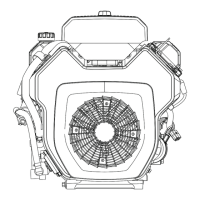
Diagram labeling key engine components like air cleaner, dipstick, and oil filter.
Essential checks before starting the engine, including oil, fuel, cooling, and air cleaner.
Step-by-step guide for starting the engine, including throttle, choke, and key switch usage.
Tips for starting the engine in cold temperatures, including oil, loads, and fuel type.
Instructions on how to properly stop the engine, including disengaging PTO and throttle position.
Advises referring to equipment instructions and not exceeding maximum angle for lubrication.
Warns against tampering with governor and overspeeding, which voids warranty.
Discusses potential need for high altitude kits above 4000 ft and risks of incorrect installation.
Recommended maintenance tasks at various hour intervals and frequencies.
Guidance on selecting appropriate oil types and viscosity based on temperature.
Procedure for accurately checking engine oil level using the dipstick.
Detailed steps for performing an oil and filter change, including torque specifications.
Instructions for checking, gapping, installing, and torquing spark plugs.
Procedures for cleaning and replacing low-profile and heavy-duty air cleaner elements.
Guidelines for preparing the engine for long-term storage to prevent damage.
Requirements for gasoline, including octane rating, ethanol content, and freshness.
Identifies potential causes for issues like no start, low power, or overheating.
Details on engine bore, stroke, displacement, oil capacity, spark plug gap, and operation angle.
Warns about explosive fuel, flammability, vapor ignition, storage, and cleaning uses.
Warns about CO in exhaust fumes, odorless, colorless, and potentially fatal.
Advises disabling engine by disconnecting spark plug lead and battery before servicing.
Warns that moving parts can cause severe injury; keep clear and use guards.
Cautions against touching wires while engine is running due to risk of shock.
Warns that hot engine parts can cause severe burns; avoid touching during/after operation.
States engine exhaust contains chemicals known to cause cancer or birth defects.
Diagram labeling key engine components like air cleaner, dipstick, and oil filter.
Essential checks before starting the engine, including oil, fuel, cooling, and air cleaner.
Step-by-step guide for starting the engine, including throttle, choke, and key switch usage.
Tips for starting the engine in cold temperatures, including oil, loads, and fuel type.
Instructions on how to properly stop the engine, including disengaging PTO and throttle position.
Advises referring to equipment instructions and not exceeding maximum angle for lubrication.
Warns against tampering with governor and overspeeding, which voids warranty.
Discusses potential need for high altitude kits above 4000 ft and risks of incorrect installation.
Recommended maintenance tasks at various hour intervals and frequencies.
Guidance on selecting appropriate oil types and viscosity based on temperature.
Procedure for accurately checking engine oil level using the dipstick.
Detailed steps for performing an oil and filter change, including torque specifications.
Instructions for checking, gapping, installing, and torquing spark plugs.
Procedures for cleaning and replacing low-profile and heavy-duty air cleaner elements.
Guidelines for preparing the engine for long-term storage to prevent damage.
Requirements for gasoline, including octane rating, ethanol content, and freshness.
Identifies potential causes for issues like no start, low power, or overheating.
Details on engine bore, stroke, displacement, oil capacity, spark plug gap, and operation angle.



 General