EasyManua.ls Logo

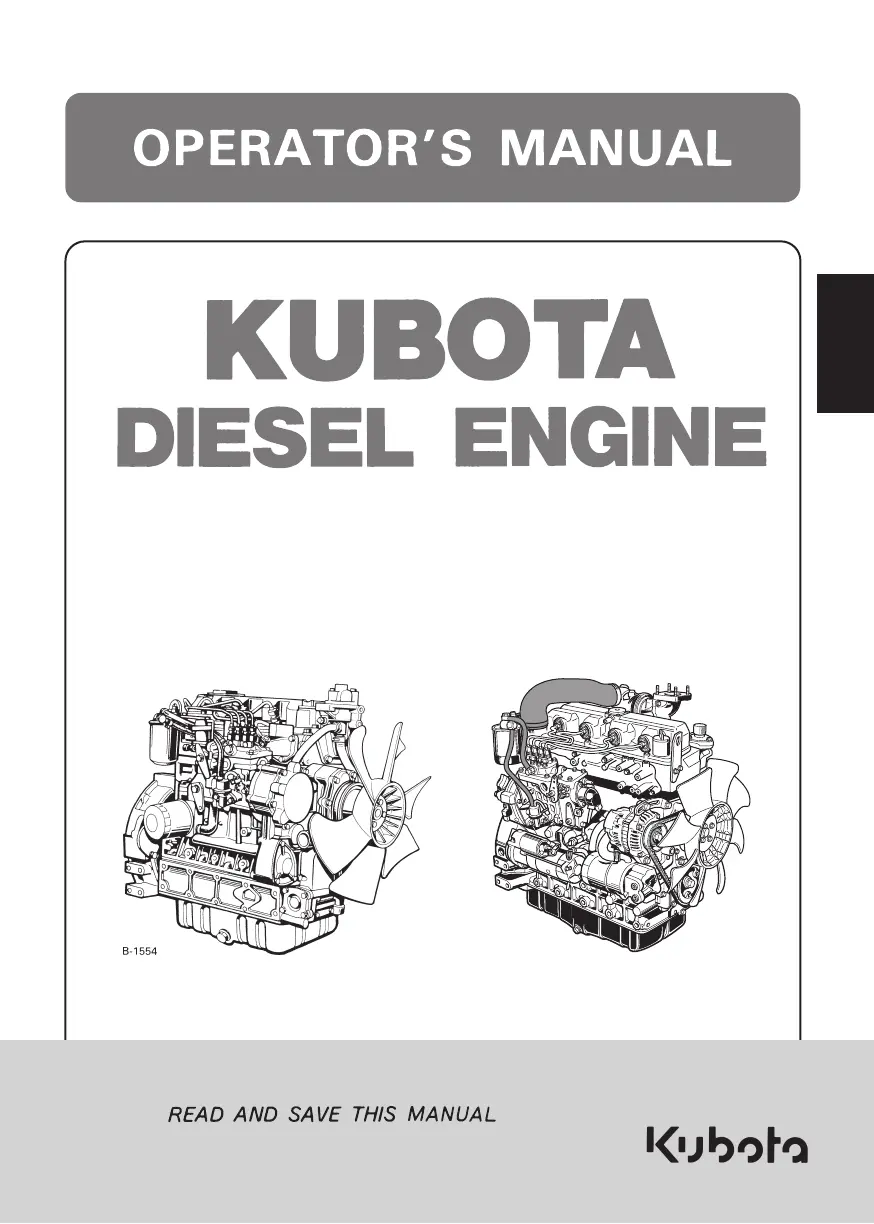
Kubota V3300-E - User Manual

Kubota V3300-E
46 pages
Print Icon
To Next Page IconTo Next Page
Loading...
ENGLISH
MODELS
V3300-E · V3300-TE
V3300-DI-E · V3300-DI-TE
V3307-DI-TE
V3800-DI-E · V3800-DI-TE
V3300-EBG · V3300-T-EBG
1ABAHAAAP0180
1K929-8911-1

Questions and Answers

  • J
    Joseph OwensJul 28, 2025
    Why is my Kubota Engine difficult to start?
    • M
      Matthew FieldsJul 29, 2025
      If you're having trouble starting your Kubota Engine, several factors could be at play. Insufficient compression due to leaking valves or worn rings, pistons, and liners may be the cause; consider replacing these parts or grinding the valves. A dirty air cleaner, which should be cleaned every 100 hours, can also be the culprit. Ensure the fuel injection pressure is correct and that you're using No. 2-D diesel fuel to prevent injection pump wear. Also, verify that the valve clearance is properly adjusted when the engine is cold. Overheating of moving parts may also make it difficult to start the engine, in this case, check the lubricating oil system and injection timing.
  • J
    Joshua Green IIAug 7, 2025
    Why is my Kubota V3300-E Engine overheating?
    • K
      Katherine TateAug 7, 2025
      If your Kubota Engine is overheating, several issues could be responsible. Insufficient engine oil or coolant levels should be checked and replenished as needed. A broken or elongated fan belt requires adjustment or replacement. The radiator net or fins might be clogged with dust, necessitating careful cleaning. Also, ensure you are using the specified fuel and not running an overload. Other potential causes include excessive antifreeze concentration (correct by adding water), a defective thermostat (check and replace if needed), or incorrect injection timing (adjust to the proper timing).
  • X
    xsmithAug 18, 2025
    Why does my Kubota Engine suddenly stop?
    • L
      lisa77Aug 18, 2025
      If your Kubota Engine suddenly stops, the problem could stem from a lack of fuel; check the fuel tank and system for leaks or air. A bad nozzle may also be the cause, and it should be replaced if necessary. Shortage of lubrication oil or improper lubrication may lead to the moving parts overheating, so check the oil level and lubricating system.

Summary

FOREWORD

DANGER

Indicates an imminently hazardous situation which, if not avoided, will result in death or serious injury.

WARNING

Indicates a potentially hazardous situation which, if not avoided, COULD result in death or serious injury.

CAUTION

Indicates a potentially hazardous situation which, if not avoided, MAY result in minor or moderate injury.

SAFETY FIRST

SAFE OPERATION

OBSERVE SAFETY INSTRUCTIONS

Read and understand manual and labels before starting. Learn safe operation and limitations.

CHECK BEFORE STARTING & OPERATING THE ENGINE

Inspect engine, ensure guards are in place, check safe distance, keep away from buildings.

CAUTIONS AGAINST BURNS & BATTERY EXPLOSION

Be cautious of hot components. Do not remove radiator cap when hot. Battery gases are explosive.

ESCAPING FLUID

Relieve pressure before disconnecting lines. Do not check leaks with hand. High pressure fluid can penetrate skin.

KEEP HANDS AND BODY AWAY FROM ROTATING PARTS

Stop engine before checking rotating parts. Keep hands away from fan, belts, pulleys.

CONDUCTING SAFETY CHECKS & MAINTENANCE

Service on level surface, engine off, key removed. Disconnect battery. Use proper tools.

PRE-OPERATION CHECK

OPERATING THE ENGINE

NORMAL ENGINE STARTING

Set fuel lever ON, stop lever to START, speed lever > half. Do not use ether. Warm up engine.

COLD WEATHER STARTING

Preheating procedure for low temperatures. Battery removal in extreme cold.

CHECKS DURING OPERATION

Check coolant, oil pressure lamp, and charge lamp during operation.

STOPPING THE ENGINE

Return speed control to idle, stop engine via switch. Remove key. Turbo-charger cooldown.

REVERSED ENGINE REVOLUTION AND REMEDIES

MAINTENANCE

GENERAL MAINTENANCE CAUTIONS

Perform maintenance on level surface with engine off. Use proper tools. Do not touch hot parts.

SERVICE INTERVALS

Table detailing maintenance tasks and their frequencies.

ENGINE OIL AND FILTER MAINTENANCE

Change engine oil, replace oil filter cartridge.

COOLING SYSTEM MAINTENANCE

Change coolant, check hoses, clean radiator fins.

PERIODIC SERVICE

FUEL HANDLING AND LEVEL CHECK

Handle fuel with care. Do not mix gasoline or alcohol. Check fuel systems. Check fuel level and refuel.

AIR BLEEDING THE FUEL SYSTEM

Procedure for bleeding air from the fuel system for gravity feed and low tank systems.

ENGINE OIL

CHECKING OIL LEVEL AND ADDING ENGINE OIL

Check oil level when engine is cool. Wipe gauge, reinsert, check again. Add oil if low.

RADIATOR

RADIATOR SAFETY WARNING

Do not stop engine suddenly. Let it cool down. Remove hot radiator cap carefully.

TROUBLESHOOTING

ENGINE OVERHEATING

Lists causes and countermeasures for engine overheating.

IMMEDIATE ENGINE STOP

Lists causes and countermeasures for immediate engine shutdown.

Kubota V3300-E Specifications

General IconGeneral
Engine ModelV3300-E
Number of Cylinders4
Displacement3.318 L
Fuel SystemDirect Injection
Lubrication SystemForced lubrication
Starting SystemElectric Starter
Fuel TypeDiesel
Coolant Capacity9.5 L
TypeDiesel
AspirationNaturally Aspirated
Cooling SystemWater Cooled

Related product manuals