EasyManua.ls Logo

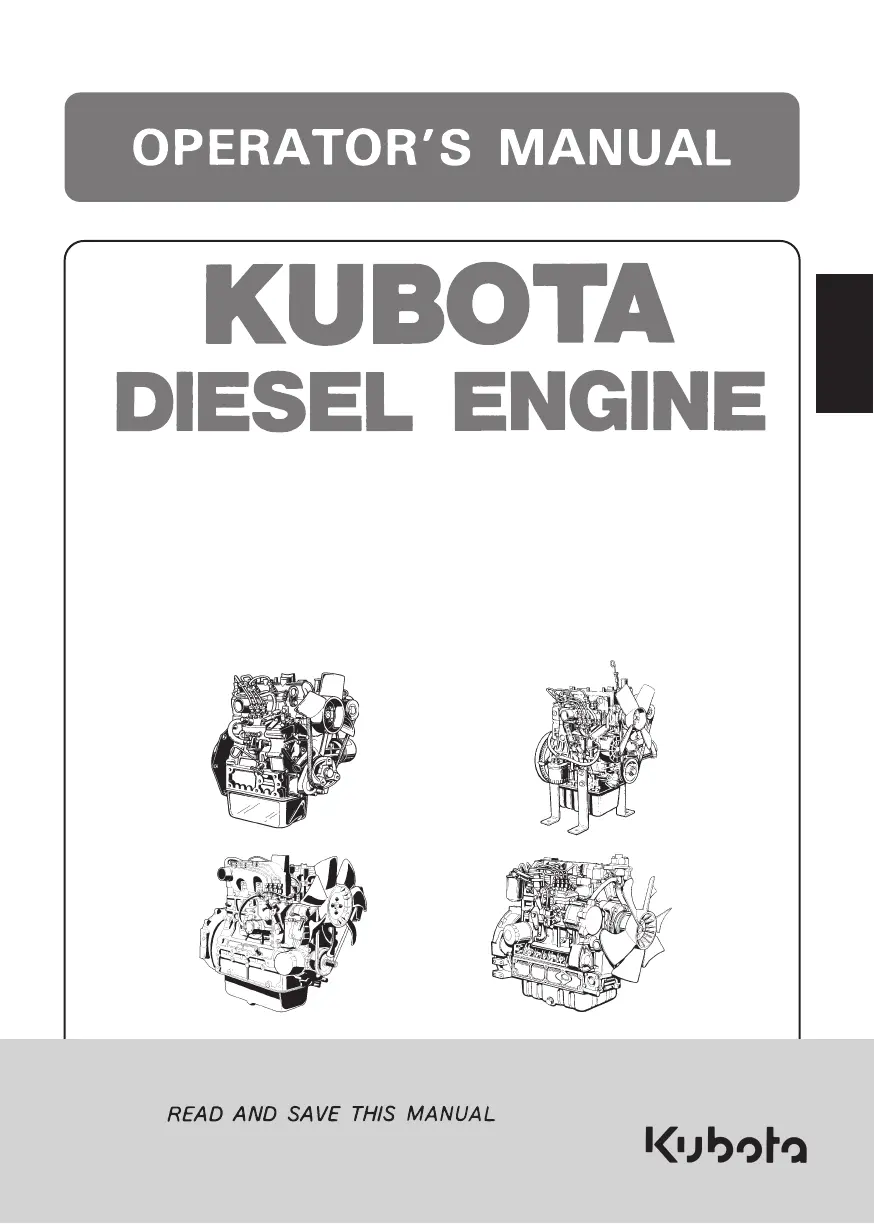
Kubota V3300-E3BG - User Manual

Kubota V3300-E3BG
74 pages
Print Icon
To Next Page IconTo Next Page
Loading...
ENGLISH
Z482-E3
·
Z602-E3
D722-E3
·
D782-E3
·
D902-E3
D1005-E3
·
D1105-E3
D1105-TE3
·
D1305-E3
V1505-E3
·
V1505-TE3
·
D1005-E3BG
D1105-E3BG
·
V1505-E3BG
D1503-M-E3
·
D1703-M-E3
·
D1803-M-E3
V2003-M-E3
·
V2203-M-E3
·
V2403-M-E3
·
V2403-M-T-E3
D1803-M-DI-E3
·
V2403-M-DI-E3
V3600-E3
·
V3600-T-E3
·
V3300-E3BG
·
V3600-T-E3BG
MODELS
1ABABAAAP15001ABAAAAAP1560
B-1554D-2357
1J412-8911-1

Other manuals for Kubota V3300-E3BG

Questions and Answers

Summary

Safe Operation

General Safety Practices

Understand safety instructions, wear appropriate PPE, keep engine clean, and avoid rotating parts.

Hazard Awareness and Prevention

Handle fuel, exhaust, fluids, burns, batteries, and anti-freeze safely. Avoid fire and chemical hazards.

Safety During Maintenance and Labels

Follow safety checks, maintenance procedures, and care for warning labels.

Servicing of the Engine

Names of Parts

Pre-Operation Check

Engine Break-In Procedures

Follow break-in procedures, change oil/filter at 50 hours, and warm up in low temperatures.

Daily Checks Before Operation

Perform daily checks before starting to prevent trouble. Includes visual inspection and functional checks.

Operating the Engine

Starting the Engine (Normal Procedure)

Set fuel lever to ON, stop lever to START, and speed control lever to OPERATION.

Cold Weather Starting Procedures

Follow specific preheating steps for starting in cold ambient temperatures below -5°C (23°F).

Stopping the Engine

Return speed control to idle, set stop lever to STOP, and remove the key.

Checks During Operation

Monitor engine status while running, including coolant, oil pressure, fuel, and exhaust.

Reversed Engine Revolution and Remedies

Identifying Reversed Operation

Identify reversed operation by oil pressure drop, sound changes, and exhaust from air cleaner.

Remedies for Reversed Operation

Stop engine immediately, check air cleaner and related parts.

Maintenance

Service Intervals

Follow the recommended service intervals for various maintenance items.

Fuel Filter Cartridge Replacement

Replace fuel filter cartridge every 400/500 hours. Apply oil to gasket and vent air.

Engine Oil

Procedures for checking, adding, and changing engine oil and filter.

Replacing the Oil Filter Cartridge

Stop engine, allow to cool, remove old filter, apply oil to new gasket, and tighten by hand.

Radiator

Coolant Level and Changes

Check and add coolant. Follow procedures for changing coolant and its volume.

Radiator System Maintenance

Address coolant loss, check hoses, prevent overheating, and clean radiator.

Anti-freeze Handling and Usage

Handle anti-freeze safely, do not mix types, and use 50/50 mix with clean water.

Air Cleaner

Dust Indicator (Optional)

Clean air cleaner element when red signal appears on dust indicator and reset.

Evacuator Valve Operation

Open evacuator valve weekly to remove dust and dirt from air cleaner.

Cleaning Primary Air Filter Element

Clean primary element with compressed air or cleaner. Replace every year or 6 cleanings.

Air Cleaner with Dust Cup (Optional)

Clean dust cup when half full. Install with 'TOP' mark upright.

Battery

Battery Charging Safety

Do not charge if fluid is low. Add distilled water. Handle batteries with care due to explosive gases.

Battery Storage for Long Term

Remove battery, store in dry place, and recharge periodically to maintain charge.

Electric Wiring

Fan Belt Adjustment

Check and adjust fan belt tension according to specifications to prevent overheating or charging issues.

Carriage and Storage

Engine Carriage Safety

Securely fix engine during carriage to prevent falling. Handle heavy engine with care.

Engine Storage Procedures

Prepare engine for storage by draining fluids, changing oil, and storing battery separately.

Troubleshooting

Engine Difficulty Starting

Troubleshoot causes like fuel flow, air/water in fuel, valve clearance, and low compression.

Insufficient Engine Output

Troubleshoot insufficient output due to low compression, fuel issues, overheating, valve clearance, or dirty air cleaner.

Engine Performance Issues

Address sudden speed changes, unusual sounds, dark exhaust, overheating, or oil lamp warnings.

Poor Exhaust Color

Identify causes of bad exhaust color like fuel governing issues, poor fuel quality, or bad nozzle.

Engine Overheating Causes

Troubleshoot overheating from oil, belt, coolant issues, clogged radiator, or defective thermostat.

Specifications

Wiring Diagrams

EU Standard Alternator Wiring (Energize to Stop)

Wiring diagram for EU standard alternator, energize to stop system.

KEA Standard Alternator Wiring (Energize to Stop)

Wiring diagram for KEA standard alternator, energize to stop system.

EU Standard Dynamo Wiring (Energize to Stop)

Wiring diagram for EU standard dynamo, energize to stop system.

KEA Standard Dynamo Wiring (Energize to Stop)

Wiring diagram for KEA standard dynamo, energize to stop system.

EU Standard Wiring (Energize to Run)

Wiring diagram for EU standard system, energize to run.

KEA;SAE Standard Wiring (Energize to Run)

Wiring diagram for KEA/SAE standard system, energize to run.

Summary

Safe Operation

General Safety Practices

Understand safety instructions, wear appropriate PPE, keep engine clean, and avoid rotating parts.

Hazard Awareness and Prevention

Handle fuel, exhaust, fluids, burns, batteries, and anti-freeze safely. Avoid fire and chemical hazards.

Safety During Maintenance and Labels

Follow safety checks, maintenance procedures, and care for warning labels.

Servicing of the Engine

Names of Parts

Pre-Operation Check

Engine Break-In Procedures

Follow break-in procedures, change oil/filter at 50 hours, and warm up in low temperatures.

Daily Checks Before Operation

Perform daily checks before starting to prevent trouble. Includes visual inspection and functional checks.

Operating the Engine

Starting the Engine (Normal Procedure)

Set fuel lever to ON, stop lever to START, and speed control lever to OPERATION.

Cold Weather Starting Procedures

Follow specific preheating steps for starting in cold ambient temperatures below -5°C (23°F).

Stopping the Engine

Return speed control to idle, set stop lever to STOP, and remove the key.

Checks During Operation

Monitor engine status while running, including coolant, oil pressure, fuel, and exhaust.

Reversed Engine Revolution and Remedies

Identifying Reversed Operation

Identify reversed operation by oil pressure drop, sound changes, and exhaust from air cleaner.

Remedies for Reversed Operation

Stop engine immediately, check air cleaner and related parts.

Maintenance

Service Intervals

Follow the recommended service intervals for various maintenance items.

Fuel Filter Cartridge Replacement

Replace fuel filter cartridge every 400/500 hours. Apply oil to gasket and vent air.

Engine Oil

Procedures for checking, adding, and changing engine oil and filter.

Replacing the Oil Filter Cartridge

Stop engine, allow to cool, remove old filter, apply oil to new gasket, and tighten by hand.

Radiator

Coolant Level and Changes

Check and add coolant. Follow procedures for changing coolant and its volume.

Radiator System Maintenance

Address coolant loss, check hoses, prevent overheating, and clean radiator.

Anti-freeze Handling and Usage

Handle anti-freeze safely, do not mix types, and use 50/50 mix with clean water.

Air Cleaner

Dust Indicator (Optional)

Clean air cleaner element when red signal appears on dust indicator and reset.

Evacuator Valve Operation

Open evacuator valve weekly to remove dust and dirt from air cleaner.

Cleaning Primary Air Filter Element

Clean primary element with compressed air or cleaner. Replace every year or 6 cleanings.

Air Cleaner with Dust Cup (Optional)

Clean dust cup when half full. Install with 'TOP' mark upright.

Battery

Battery Charging Safety

Do not charge if fluid is low. Add distilled water. Handle batteries with care due to explosive gases.

Battery Storage for Long Term

Remove battery, store in dry place, and recharge periodically to maintain charge.

Electric Wiring

Fan Belt Adjustment

Check and adjust fan belt tension according to specifications to prevent overheating or charging issues.

Carriage and Storage

Engine Carriage Safety

Securely fix engine during carriage to prevent falling. Handle heavy engine with care.

Engine Storage Procedures

Prepare engine for storage by draining fluids, changing oil, and storing battery separately.

Troubleshooting

Engine Difficulty Starting

Troubleshoot causes like fuel flow, air/water in fuel, valve clearance, and low compression.

Insufficient Engine Output

Troubleshoot insufficient output due to low compression, fuel issues, overheating, valve clearance, or dirty air cleaner.

Engine Performance Issues

Address sudden speed changes, unusual sounds, dark exhaust, overheating, or oil lamp warnings.

Poor Exhaust Color

Identify causes of bad exhaust color like fuel governing issues, poor fuel quality, or bad nozzle.

Engine Overheating Causes

Troubleshoot overheating from oil, belt, coolant issues, clogged radiator, or defective thermostat.

Specifications

Wiring Diagrams

EU Standard Alternator Wiring (Energize to Stop)

Wiring diagram for EU standard alternator, energize to stop system.

KEA Standard Alternator Wiring (Energize to Stop)

Wiring diagram for KEA standard alternator, energize to stop system.

EU Standard Dynamo Wiring (Energize to Stop)

Wiring diagram for EU standard dynamo, energize to stop system.

KEA Standard Dynamo Wiring (Energize to Stop)

Wiring diagram for KEA standard dynamo, energize to stop system.

EU Standard Wiring (Energize to Run)

Wiring diagram for EU standard system, energize to run.

KEA;SAE Standard Wiring (Energize to Run)

Wiring diagram for KEA/SAE standard system, energize to run.

Kubota V3300-E3BG Specifications

General IconGeneral
Engine ModelV3300-E3BG
TypeDiesel
Number of Cylinders4
Displacement3.318 L
AspirationNaturally Aspirated
Fuel SystemDirect injection
Governor TypeMechanical
Engine TypeVertical, water-cooled, 4-cycle diesel
Rated Output55.4 kW (74.3 HP) @ 2600 rpm
Starting SystemElectric starter
Lubrication SystemForced lubrication
Cooling SystemWater-cooled

Related product manuals