Maintenance
7.
Fill the test tank with fresh water to above
the level of the anti-cavitation plate.
NOTICE: If
the fresh water level is be-
low the level of the
anti-cavitation
plate, or if the water supply is
insufficient, engine seizure may occur.
8.
Start the engine, operate it for 10-15 min-
utes at engine idle speed. WARNING!
Do not
touch or remove electrical
parts when starting
or during operation. Keep hands, hair, and
clothes
away from the flywheel and other
rotating parts while the engine is running.
9.
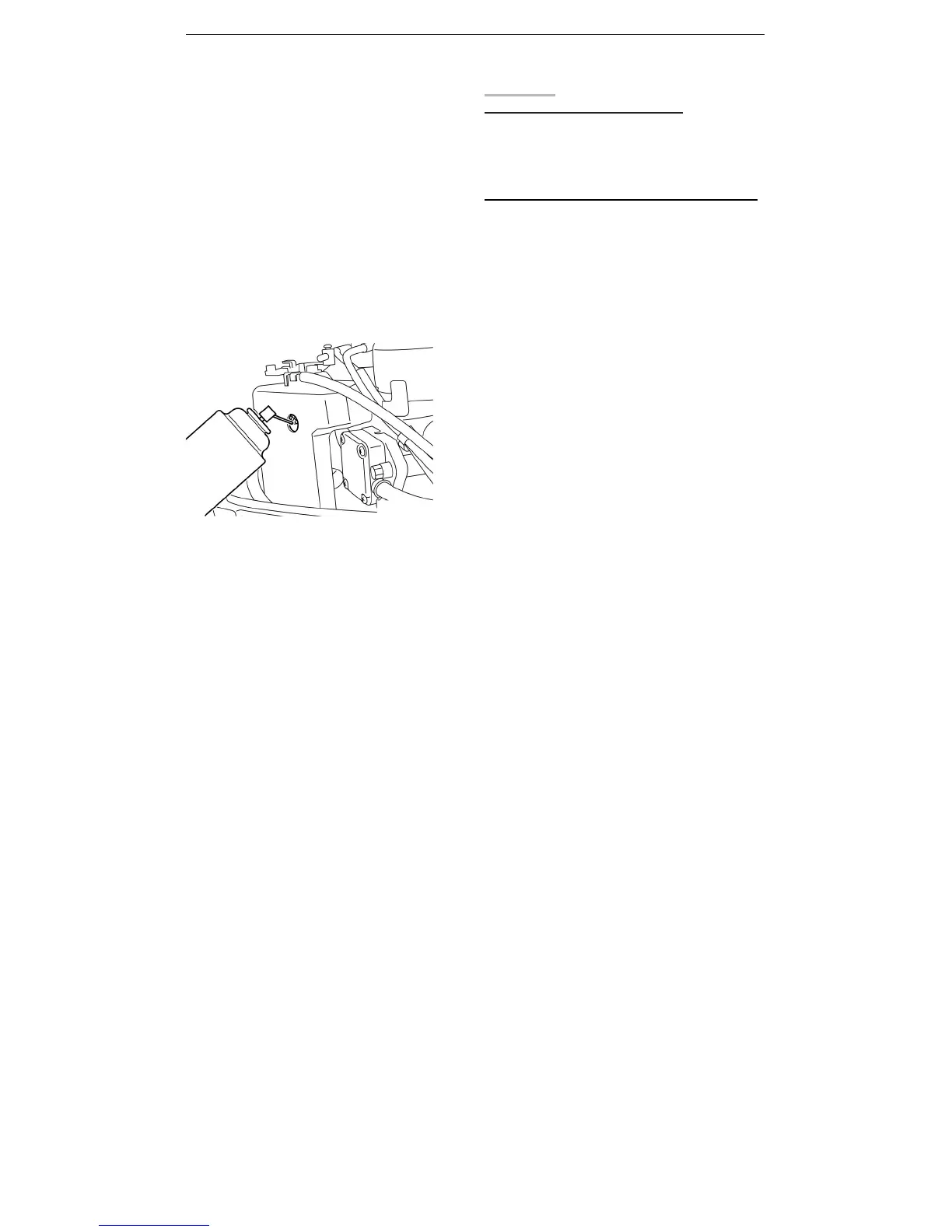
Quickly spray "Engine
Fogging Oil" into
the fogging hole of the
silencer. When properly
done, the engine
will smoke excessively and
stop.
10.
Remove the outboard motor from the test
tank.
11.
Drain the cooling water completely out of
the outboard motor. Clean the body thoroughly.
12.
Install the fogging hole cap and top cowling.
13.
Align the fuel cock with the closed position
and tighten the air vent screw.
14.
Install the propeller.
48
Flushing with the water flush plug (option
al)
NOTICE
Before starting the engine, make sure to
supply water to the cooling water passag
es.
Otherwise, the engine could overheat
and be
damaged.
Cooling system flushing is essential to pre-
vent the cooling system from clogging up with
salt, sand, or dirt. In addition, fogging of the
engine is mandatory to prevent excessive
engine damage due to rust. Perform the
flushing
and fogging at the same time.
1.
Wash the outboard motor body using
fresh water. NOTICE: Do not spray water into
the air intake.
2.
Fill the built-in fuel tank with fresh fuel and
add " Fuel Conditioner and Stabilizer". Remove
the top cowling and fogging hole cap.
3.
Remove the propeller.
4.
Remove the screw located beside the
"wAsH" (wash) mark on the lower case.
Install the water flush plug and connect it
to a
fresh water tap.
5.
Cover the cooling water inlet with tape.


 To Next Page