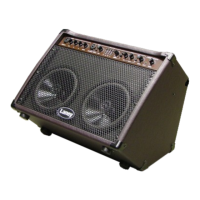
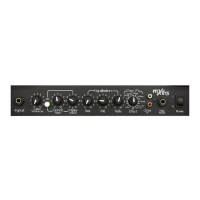
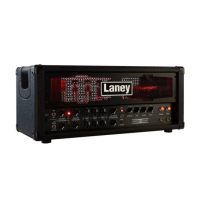
This document serves as a user manual for the Laney BC Series Bass Amplification, providing essential information for operating and maintaining these bass amplifiers. The manual, dated March 1994, covers several models including BC30, BC50, BC5015, BC75, and BC120, each with specific control layouts and features tailored for bass amplification.
The primary function of the Laney BC Series amplifiers is to amplify bass guitar signals, offering a range of tonal shaping capabilities and output options for various performance and practice scenarios. These amplifiers are designed with ease of operation in mind, aiming to provide users with a straightforward experience while still offering comprehensive control over their sound.
Before initial use, the manual emphasizes critical safety and setup procedures. Users are instructed to verify that the amplifier is fitted with a three-pin 'grounded' (earthed) plug and to ensure connection to a properly grounded outlet. For those who might need to change the factory-fitted plug, strict adherence to local wiring conventions is advised, with an example provided for the United Kingdom's cable colour codes (Green/Yellow for Earth/Ground, Blue for Neutral, and Brown for Live). This highlights Laney's commitment to user safety and proper electrical installation.
General information sections further stress the importance of keeping amplifiers away from moisture or wetness to prevent shock, fire hazards, and potential damage. In the event of a fuse blowing, the manual explicitly states the necessity of using a correctly rated replacement, with details typically found on the amplifier's rear panel or adjacent to the fuse. This underscores the importance of proper maintenance and component replacement for the longevity and safe operation of the device.
The manual is structured for easy access to information, employing graphical illustrations of the front and rear panels for each model. Each control and facility is numbered, with corresponding descriptions provided in a detailed glossary of terms. This systematic approach allows users to quickly identify and understand the function of every knob, switch, and input/output jack.
Preamplifier Controls and Usage Features:
The preamplifier section is where users shape their sound. Key controls include:
- INPUT (1): The primary input jack for connecting an instrument.
- ACTIVE (2): An input jack specifically designed for active or high-output instruments that have built-in preamplifiers. This ensures proper signal matching and prevents overloading.
- PASSIVE (3): An input jack for most passive instruments, which do not have built-in preamplifiers. This provides the appropriate impedance and gain staging for such instruments.
- GAIN (4): This control sets the overall input gain of the amplifier, allowing users to match the amplifier's sensitivity to their instrument's output. The manual advises setting it as high as possible without distortion, then adjusting the master volume. It also notes that this may need resetting after EQ changes, indicating the interactive nature of the controls.
- BASS (5), MIDDLE (6), TREBLE (7): These are standard equalization controls that allow users to adjust the low, mid, and high-frequency responses of their sound. These are fundamental for tone shaping.
- MIDSWEEP (8) and MIDGAIN (9): Found on models like the BC50, these controls offer more advanced mid-frequency shaping. MIDSWEEP allows users to select a specific frequency range within the mids, while MIDGAIN boosts or cuts the gain of that selected frequency. Moving MIDSWEEP anticlockwise targets lower mids, and clockwise targets higher mids. MIDGAIN, when moved anticlockwise, cuts the selected mid-frequency, and clockwise boosts it, providing precise control over the crucial midrange.
- GRAPHIC EQ (10): Available on models like the BC75 and BC120, this is a six-band graphic equalizer. It provides granular control over specific frequency bands within the middle range. The manual recommends setting sliders to gradual curves and avoiding extreme settings for the best sound, suggesting a nuanced approach to equalization.
- COMPRESSOR (11): Featured on the BC120, this control compresses the input signal, resulting in a punchier sound. It is recommended to use this in conjunction with the GAIN control (4) to achieve the desired effect.
- HI (12) and LO (13): These controls, also on the BC120, boost high and extreme low frequencies, respectively. The LO boost is noted as particularly useful for 5-string bass guitars, catering to instruments with extended low-frequency ranges.
- BRIGHT (14): This control adds brightness to the overall EQ, enhancing the high-frequency presence of the sound.
- VOLUME (15): This is the master volume control, setting the overall listening level of the amplifier.
- LED (16): An indicator light that signals when the amplifier is powered on.
Rear Panel Controls and Connectivity Features:
The rear panel offers various input and output options for integration into larger sound systems, external effects, and alternative monitoring.
- DIRECT INJECT (17) (Stereo 1/4" Jack): This output provides a low-impedance, balanced signal for direct injection of the amplifier's signal to a mixing desk or power amplifier. It uses a standard 1/4" jack with specific wiring for balanced output (sleeve: ground, tip: hot, ring: cold). This is crucial for live sound reinforcement or studio recording, allowing the bass signal to be captured or amplified without needing to mic the speaker.
- DIRECT INJECT (18) (XLR Socket): Similar to the 1/4" DI, this XLR socket also provides a low-impedance, balanced output for professional mixing desks or power amplifiers. The standard XLR pinout is specified (pin 1: ground, pin 2: hot, pin 3: cold), ensuring compatibility with professional audio equipment.
- SUPPLY (20): This refers to the mains/power lead with a factory-fitted plug, connecting the amplifier to the electrical supply.
- FUSE (21): The mains/power fuse, which is a critical safety component. The manual reiterates the importance of replacing it only with the correct type and rating, details of which are printed on the amplifier.
- POWER (22): The mains/power on/off switch.
- HEADPHONES (23): A headphone output for silent practice or tuning. For BC30 and BC50 models, plugging in headphones automatically disconnects the onboard speakers. For all other models, users must physically unplug the speaker jack. A reminder is included to reconnect the speaker after headphone use, preventing accidental silent operation.
- SPEAKER (24): The main speaker output. This can be disconnected if a larger external speaker enclosure is required. The manual specifies a minimum load impedance of 4 ohms, which is vital for preventing damage to the amplifier's power section.
- RETURN (25): An effects return jack that accepts the output of an external effects processor. It is designed for a nominal signal level of -6dB.
- SEND (26): An effects send jack that transmits the preamplifier signal to an external effects processor. It also operates at a nominal signal level of -6dB, allowing users to integrate their favorite effects pedals or rack units into the amplifier's signal chain.
- MAINS (27): Another designation for the mains/power input socket, specifically for models like the BC50 (USA only) and BC75 (USA only).
- DI/LINE (28): A 1/4" mono jack socket providing a direct injection or line-level output. This offers a low-impedance signal for connecting to a mixing desk or power amplifier for further sound reinforcement, similar to the dedicated DI outputs but potentially offering a mono, unbalanced option.
- MAINS (29): A mains/power input socket that includes a combination fuse carrier. This reiterates the importance of replacing the fuse with one of a similar value, with the correct value marked adjacent to the carrier.
Maintenance Features:
While the manual primarily focuses on operation, it implicitly covers maintenance through its safety warnings and fuse replacement instructions. The emphasis on using correctly rated fuses (21, 29) is a key maintenance aspect, ensuring the amplifier's electrical protection. The general advice to keep the amplifier away from moisture also falls under preventative maintenance, extending the life and safe operation of the unit. The clear labeling of components and the structured manual itself facilitate easier troubleshooting and maintenance by providing a clear reference for all controls and connections.
In summary, the Laney BC Series Bass Amplification manual provides a comprehensive guide for users to maximize their experience with these bass amplifiers. It covers everything from initial setup and safety precautions to detailed explanations of tone-shaping controls and versatile connectivity options, all while subtly guiding users towards proper care and maintenance of their valuable equipment.

 Need help?
 General

 To Next Page