Need help?
Do you have a question about the Leixen VV-898 and is the answer not in the manual?
Defines radio frequency (RF) and its common uses in various fields.
Details standards and expert recommendations for safe RF exposure.
Outlines FCC requirements for radio communication product marketing in the U.S.
Provides guidance for optimal performance and compliance with RF exposure limits.
Advises on safe operating environments, conditions, and handling precautions.
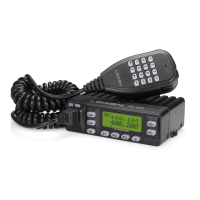
Lists all items included in the transceiver package.
Lists additional accessories available for purchase.
Instructions for correctly connecting the transceiver to a DC power supply.
Guidance on ensuring adequate airflow to prevent overheating.
Instructions for attaching the transceiver using the supplied adjustable bracket.
Details on connecting the microphone, earphone, and antenna.
Diagram and identification of components on the transceiver's upper panel.
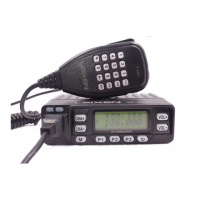
Diagram and identification of components on the transceiver's front panel.
Diagram and identification of components on the transceiver's rear panel.
Detailed description of front panel controls and their functions.
Step-by-step guide to powering the transceiver on and off.
Instructions on how to adjust the audio volume level.
Methods for selecting an operating channel (VFO/MR mode).
Procedure for transmitting and receiving, including power level advice.
Automatically turns off the transceiver after a set period of inactivity.
Saves custom frequencies as memory channels for quick recall.
Configures DTMF signaling for individual and group calls.
Allows efficient monitoring of multiple channels.
Enables voice-activated transmission, eliminating the need to press the PTT key.
Assigns shortcut functions to programmable keys for quick access.
Allows selection of transmit power level for optimal communication range.
Swaps transmit and receive frequencies, useful for direct contact with repeaters.
Resets the transceiver to all factory settings, excluding DTMF dial list.
Resets transceiver functions to defaults, retaining memory channels.
Limits transceiver usage time and requires programming software for reset.
Enables remote programming of new frequency information via air commands.
Controls receiver/transmitter activity using specific enable/inhibit codes.
Limits the number of transmissions allowed within a one-minute period.
Information on calibration, testing, and the importance of authorized service.
Instructions for cleaning the transceiver and general upkeep.
 General
| Channels | 199 |
|---|---|
| Voltage | 13.8V DC ±15% |
| Frequency Stability | ±2.5 ppm |
| Operating Temperature | -20°C to +60°C |
| Antenna Impedance | 50Ω |
| Frequency Range | VHF: 136-174 MHz |
| Channel Spacing | 12.5/25 kHz |
| Output Power | 25W/10W(VHF) 20W/10W(UHF) |
| Modulation | 16K0F3E (FM) |


 To Next Page