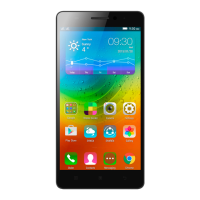
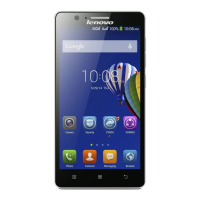
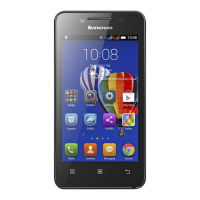
This document serves as a comprehensive guide for using a Lenovo Phone, covering its basic functionalities, communication features, multimedia management, network connectivity, and essential settings, along with important safety and maintenance information.
Function Description
The Lenovo Phone is a mobile device designed for communication, multimedia consumption, and internet access. It operates on a home screen interface that serves as the central hub for accessing applications and widgets. Users can make and receive calls, manage contacts, send and receive text and multimedia messages, capture photos and videos, browse the internet, and configure various device settings. The phone supports WLAN and mobile network connections for internet access and offers features like hotspot sharing.
Usage Features
Home Screen Management:
The home screen is customizable, allowing users to add, move, or delete widgets and apps. The "Screen Manager" feature, accessible by pressing and holding the Menu button or pinching the screen, displays thumbnails of home screens. Users can add new screens, rearrange existing ones by dragging, delete empty screens, and set a default home screen. In "edit mode," users can add widgets by sliding them onto the screen, move apps or widgets by dragging their enlarged icons, and create app folders by dragging one app onto another. Apps can be uninstalled by dragging them to the uninstall icon at the top of the screen edge, though most preloaded apps cannot be removed.
Wallpaper Customization:
The phone allows users to change the wallpaper. This can be done by pressing and holding the Menu button and tapping "Wallpaper." Users can choose a photo from the gallery, crop it, and apply it, or select from a list of pre-installed wallpapers.
The phone features three main screen buttons:
- Menu button: Pressing and holding this button displays menu options. Pressing it briefly shows currently running apps.
- Home button: Pressing this button returns the user to the default home screen. Pressing and holding it opens Google search.
- Back button: This button returns to the previous page or exits the current application.
Screen Lock:
To manually lock the screen, users press the On/Off button. Pressing it again displays the lock screen, which can be unlocked by sliding up from the bottom. The default locking method is "Slide," but users can change this in the "Settings" under "Lock screen."
Notifications:
The Notifications panel provides information on missed calls, new messages, and ongoing activities like file downloads. It also offers quick access to shortcut switches such as WLAN. To open the Notifications panel, users slide down slightly from the top of the screen. Sliding down again opens the Quick Settings panel. The panel can be closed by sliding up from the bottom or pressing the Back button. Users can tap shortcut switches to toggle functions like WLAN on or off, view notification details, dismiss all notifications, or view the Notification log.
USB Connection:
When connected to a computer via a USB cable, the Notification panel prompts "Touch for other USB options." Users can select from:
- Media device (MTP): For transferring media files (photos, videos, ringtones) between the phone and computer.
- Camera (PTP): For transferring only photos and videos.
- USB debugging (ADB): Intended for development purposes, allowing data copying between the phone and computer.
Calls:
- Making a call: Numbers can be dialed manually using the Dialer app's keypad. Calls can also be initiated from the Call Log tab by tapping an entry, or from the Contacts tab by selecting a contact and then tapping their phone number.
- Receiving calls: When a call comes in, the incoming call screen appears. Users can answer by dragging the contact image to one side or reject by dragging it to the other.
- Silencing a call: Calls can be silenced by pressing the volume buttons, the On/Off button, or by placing the phone face down.
- Options during a call: During a call, options include "Add call" (to call another person), "Hold/Unhold" (to put the current call on hold), "Mute" (to turn the microphone on/off), "Record" (to start/stop recording), "Dialpad/Hide" (to show/hide the keypad), and "Speaker" (to turn the speaker on/off). The call can be ended by tapping the end call icon. Volume can also be adjusted using the volume buttons.
Call Log:
The call log stores missed, outgoing, and received call entries. Users can press and hold an entry to access options, such as "Add to contacts."
- Creating a contact: In the Contacts app, tap the "+" icon, enter contact information, and tap "Save."
- Searching for a contact: Contacts can be found by scrolling the list or by using the search box to enter a name. The Contacts list has an index for quick navigation.
- Deleting a contact: Press and hold a contact in the Contacts app, then tap "Delete contact."
- Importing contacts: In the Contacts app, press and hold the Menu button, tap "Import/Export contacts," then "Import from storage," select files, and tap "Import."
- Exporting contacts: In the Contacts app, press and hold the Menu button, tap "Import/Export contacts," then "Export to storage," and tap "OK."
Messaging:
- Sending a message: Open the Messaging app, tap "+," enter recipient(s) by name or number, type the message, and tap the send icon. To send a multimedia message, tap the attachment icon to select media like pictures or video clips.
- Searching for a message: In the Messaging app, tap the search text box and enter all or part of a contact's name or phone number.
- Deleting messages: In a conversation thread, press and hold a message until it's selected, then tap the delete icon. Multiple messages can be selected for deletion.
Camera:
- Camera basics: The Camera app allows users to take photos and record videos. Icons are available to choose camera mode, take a photo, record a video, choose a shot mode, choose a flash mode, use HDR, switch between front and rear cameras, and configure settings.
- Viewing photos/videos: Thumbnails of captured media can be tapped to view them in the Gallery app.
- Taking a screenshot: Press and hold the On/Off button and the volume down button simultaneously. Screenshots are saved in internal storage and can be viewed in the Gallery app's "Screenshot" album or in the File Browser under "Internal Storage > Pictures > Screenshots."
Gallery:
- Viewing photos and videos: Open the Gallery app, tap an album. Photos and videos are grouped by album by default, but can be viewed in a timeline by selecting "Time." Tap a photo or video to view it full screen. Users can swipe left/right for next/previous, pinch/stretch to zoom, and tap the play icon for videos.
- Sharing photos and videos: When viewing a photo or video, tap the share icon and select a channel like Messaging or Bluetooth. To share multiple items, press and hold an item until selected, then tap more items, then the share icon, and choose a channel.
- Deleting photos and videos: When viewing an item, tap the delete icon. To delete multiple items, press and hold an item until selected, then tap more items, then the delete icon.
Network:
- WLAN connection: Go to "Settings > WLAN," turn on the WLAN switch. Tap "Refresh" to scan for hotspots. Tap a hotspot to connect. Secure links require login credentials.
- Data connection: Go to "Settings > SIM management," turn on the Data connection switch. A valid SIM card with data service is required.
- Setting up a hotspot: Go to "Settings > More > Hotspot," turn on the WLAN hotspot switch. Users can also share via Bluetooth or USB. For first-time setup, tap "WLAN configuration information" to view or change settings. Users should share the Network SSID and password for others to connect.
Chrome:
- Visiting websites: Open the Chrome app, tap the address box, enter a website address or search keywords, and tap the go icon. Full "http://" is not required.
- Refreshing a page: When viewing a web page, press and hold the Menu button, then tap the refresh icon.
- Saving an image: Press and hold an image on a web page, then tap "Save image" to save it to internal storage.
- Adding a bookmark: When viewing a page, press and hold the Menu button, then tap the star icon. Bookmarks can be accessed later by tapping the star icon in Chrome.
- Clearing browser history: Open Chrome, press and hold the Menu button, tap "History," then "CLEAR BROWSING DATA."
Settings:
- Date and time: In "Settings > Date & time," users can select "Automatic date & time" (network-provided) or manually set date and time. Similarly, "Automatic time zone" can be used, or a time zone can be selected manually. Users can also switch between 24-hour and 12-hour formats and choose the date display format.
- Language: In "Settings > Language & input > Language," select the desired display language.
- Input method: In "Settings > Language & input > Default," select the preferred input method.
- Screen lock: In "Settings > Lock screen > Screen lock," choose a screen lock option and set it up.
- App installation: To install apps from unknown sources, go to "Settings > Security" and select the "Unknown sources" check box.
- Ringtone: In "Settings > Ringtones and volumes," define default ringtones for calls, messages, and notifications, and adjust volume levels.
- Factory reset: In "Settings > Backup & reset > Factory data reset," tap "Reset phone" to perform a factory reset.
Maintenance Features
Users are advised to read all safety information before using the product to prevent personal injury, property damage, or accidental damage.
Handling:
- Care: Handle the Lenovo Phone with care; avoid dropping, bending, puncturing, inserting foreign objects, or placing heavy objects on it, as sensitive internal components can be damaged.
- Moisture: Prevent the phone and its adapter from getting wet or immersed in water or other liquids.
Repairing:
- Disassembly: Do not disassemble or modify the phone. It is a sealed unit with no end-user serviceable parts. All internal repairs must be performed by a Lenovo-authorized repair facility or technician; attempting self-repair voids the warranty.
- Screen damage: The phone's glass screen can break if dropped, subjected to high impact, or crushed. If the glass chips or cracks, do not touch the broken glass or attempt to remove it. Stop using the phone immediately and contact Lenovo technical support for repair, replacement, or disposal.
Charging:
- Temperature range: Charge the phone within a temperature range of 0°C (32°F) to 45°C (113°F).
- Charging methods: The phone can be charged via an AC adapter or a USB connection to a personal computer or other USB 2.0 compliant devices. Charging is slower when the display is on, but the battery will still charge. When the display is off or in screen lock mode, charging is supported, but still slowly with USB.
- Charger warmth: Charging devices may become warm during normal use. Ensure adequate ventilation. Unplug the charger if it has been exposed to rain, liquid, excessive moisture, or shows signs of physical damage.
- Approved accessories: Use only Lenovo-approved AC adapters and batteries. Lenovo is not responsible for the performance or safety of products not manufactured or approved by Lenovo. The adapter should be installed near the equipment and be easily accessible. USB 2.0 or higher connections should be used.
Distraction:
- Safety: Prioritize safety when using the phone in a motor vehicle or on a bicycle. Follow local laws and regulations regarding mobile electronic device use while driving or riding.
Choking Hazard:
- Children: Keep the phone and accessories away from small children due to small parts that can pose a choking hazard. The glass screen can also break or crack if dropped.
Explosive Atmospheres:
- Restricted areas: Do not charge or use the phone in potentially explosive atmospheres (e.g., fueling areas, areas with chemicals, grain dust, metal powders). Obey all signs and instructions.
Radio Frequency Interference:
- Restrictions: Observe signs and notices prohibiting or restricting mobile phone use (e.g., healthcare facilities, blasting areas). While designed to comply with regulations, emissions can affect other electronic equipment. Turn off the phone or use Airplane Mode when use is prohibited (e.g., during flights).
Medical Devices:
- Electromagnetic fields: The phone emits electromagnetic fields that may interfere with pacemakers or other medical devices. Maintain at least 15 cm (6 inches) separation from pacemakers. If interference is suspected, stop using the phone and consult a physician.
Cleaning:
- Stains: Clean the phone immediately if it comes into contact with staining substances like dirt, ink, makeup, or lotions.
- Procedure: Disconnect all cables and turn off the phone (press and hold Sleep/Wake button, then slide the on-screen slider). Use a soft, lint-free cloth.
- Moisture: Avoid getting moisture in openings.
- Products: Do not use cleaning products or compressed air.
Operating Temperature:
- Heat: Be aware of heat generated by the phone. Keep it away from hot or high-voltage environments (e.g., electric appliances, heating equipment, cooking equipment). Use the phone only within -10°C (14°F) to 45°C (113°F) to avoid damage.
- Body contact: When the phone is on or charging, some parts may become hot. The temperature depends on system activity and battery charge. Extended contact with the body, even through clothing, can cause discomfort or skin burns. Avoid prolonged contact with hot sections of the phone.
Protecting Data and Software:
- File integrity: Do not delete unknown files or change names of files/directories not created by the user, as this can cause software malfunction.
- Network security: Accessing network resources can expose the phone to viruses, hackers, spyware, and other malicious activities. Users are responsible for adequate protection (firewalls, antivirus, anti-spyware software) and keeping such software up to date.
- Magnetic fields: Keep electrical appliances (e.g., electric fan, radio, high-powered speakers, air conditioner, microwave oven) away from the phone, as strong magnetic fields can damage the screen and data.

 Need help?
 General
 Weight and Dimensions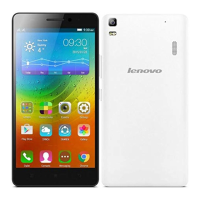

 To Next Page