506305-01 Page 5 of 36Issue 0938
Confined Space
A confined space is defined as “a space whose volume is less
than 50 cubic feet per 1000 BTU per hour of the combined
input rating of all appliances installed in that space.”
If the furnace is installed in a confined space within the
building and combustion air is taken from a heated space,
the combustion air and ventilating air must enter and leave
the space through two permanent openings of equal area.
One opening shall be located within 12" of the ceiling and
the other within 12" of the floor, each having a free area of
1 square inch per 1000 BTU/HR of total input rating of all
appliances within the space and not less than 100 square
inches each.
If the furnace is installed in a space within a building of tight
construction, makeup air must be supplied from outdoors. In
this case, one opening shall be within 12" of the ceiling and
one opening within 12" of the floor. If combustion ducts are
vertical, each opening shall have a free area of 1 square inch
per 4000 BTU/HR of the total input rating of all appliances
within the enclosure. If horizontal combustion ducts are run, 1
square inch per 2000 BTU/HR is required.
Contaminated Combustion Air
Excessive exposure to contaminated combustion air will result
in safety and performance related problems. The
recommended source of combustion air is outdoor air.
However, the use of indoor air in most applications is
acceptable if the following guidelines are followed:
1. If the furnace is installed in a confined space, it is
recommended that the necessary combustion air come
from the outdoors by way of an attic, crawl space, air duct,
or direct opening.
2. If indoor combustion air is used, there must be no exposure
to the substances listed in item 5.
3. All provisions for indoor combustion air must meet the
requirements for combustion air indicated in the
National
Fuel Gas Code, ANSI Z223.1/NFPA 54 (latest edition),
and/or any applicable local codes. In Canada, see CSA
B149.1, Natural Gas and Propane Installation Codes
(latest edition).
4. The following types of installation may require outdoor
air for combustion, due to chemical exposures:
• Commercial buildings
• Buildings with indoor pools
• Furnaces installed in laundry rooms
• Furnaces installed in hobby or craft rooms
• Furnaces installed near chemical storage areas
5. Exposure to the following substances in the combustion
air supply may also require outdoor air for combustion:
• Permanent wave solutions
• Chlorinated waxes and cleaners
• Chlorine-based swimming pool chemicals
• Water softening chemicals
• Deicing salts or chemicals
• Carbon tetrachloride
• Halogen-type refrigerants
• Cleaning solvents (such as perchloroethylene)
• Printing inks, paint removers, varnishes, etc.
• Cements and glues
• Antistatic fabric softeners for clothes dryers
• Masonry acid washing materials
• Chlorinated laundry products
• Hydrochloric acid
Venting
The high efficiency of this furnace is accomplished by the
removal of both sensible and latent heat from the flue gases.
The removal of latent heat results in the condensation of
moisture in the flue gases. This condensation occurs in the
secondary heat exchanger and in the vent system. Therefore,
this furnace requires special venting considerations and the
instructions must be followed to insure proper operation. All
venting must be in accordance with the codes having
jurisdiction in the area and these instructions.
G1D91BU, G1D91BT, G1D93BU, G1D93BT and G1D93BC
models can be installed as either direct vent or non-direct
vent units. A direct vent (two pipe) installation requires that
all the air necessary for combustion be supplied from outside
the dwelling through an air intake pipe. A non-direct vent
(one pipe) installation uses air from inside the dwelling for
combustion.
The furnace is shipped with the air inlet pipe terminated to the
top panel for either inside or outside combustion air. An inlet
air restrictor plate (see Figure 2) is supplied with this furnace
and can be found in the plastic bag containing these Installation
Instructions and the User’s Information Manual. The inlet
restrictor plate must be used in all installations using inside
air for combustion (non-direct vent).
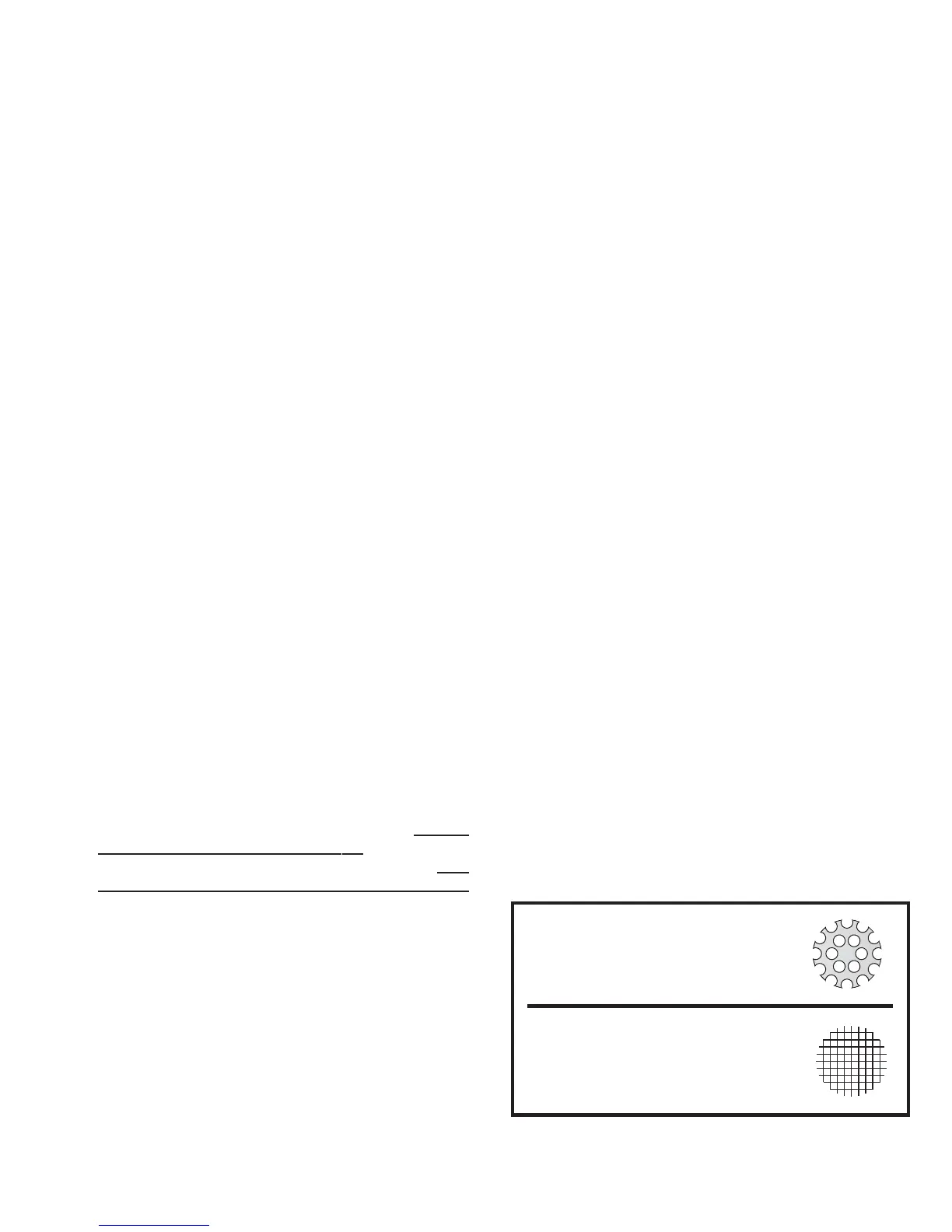
Figure 2
Inlet Air Restrictor Plate
The inlet air restrictor plate must be
installed in all installations using inside
air for combustion (non-direct vent).
The flue pipe screen should be
installed at the termination of the flue
pipe in all installations.
Flue Pipe Screen


 To Next Page
 Loading...