Need help?
Do you have a question about the LG Chem EM048063P3S and is the answer not in the manual?
Defines warning, fault 1, and fault 2 levels for module instability and failure.
Details issues like cell overvoltage, undervoltage, and module voltage differences.
Covers over-charged and over-discharged current and power conditions.
Explains high, low, and differential temperature issues within the module.
Addresses communication loss between modules and with the higher level system.
Describes alerts for low and high State of Charge (SOC) conditions.
Procedures for identifying and replacing battery modules without system shutdown.
Instructions for inspecting and replacing the fuse within a battery module.
Steps to increase the Energy Storage System capacity by adding modules.
Steps to decrease the Energy Storage System capacity by removing modules.
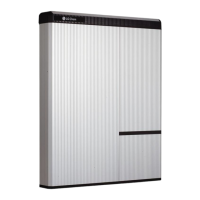
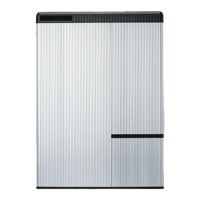
The LG Chem 48 V Standalone Battery Module is a sophisticated energy storage solution designed for various applications, with a particular focus on residential use for models like EM048063P3S2 and EM048126P3S7. This service manual provides comprehensive guidance on its operation, maintenance, and troubleshooting.
The battery module serves as a standalone energy storage system (ESS), capable of charging and discharging to provide power. It incorporates a Battery Management System (BMS) that monitors and controls various parameters to ensure safe and efficient operation. Key components of the BMS include:
The module's front panel features status indicators that provide visual cues about its operating state, including normal operation, state of charge (SOC) levels (≥75%, ≥50%, ≥25%, <25%), voltage imbalance, warning, Fault 1, and Fault 2 states. These indicators are crucial for quick diagnosis of potential issues.
While specific numerical values for all technical specifications are not explicitly detailed for all models, the manual highlights critical thresholds and operational limits:
Voltage:
Current:
Power (for residential models EM048063P3S2 and EM048126P3S7):
Temperature:
State of Charge (SOC):
Communication:
The battery module is designed for integration into a larger ESS, requiring communication with a higher-level system. The manual emphasizes the importance of proper configuration of the higher-level system to manage charge and discharge currents, especially during abnormal states, to prevent failures.
The manual details several maintenance procedures and troubleshooting steps to address common issues and ensure the longevity of the battery modules.
Troubleshooting Abnormal States: For each warning and fault state (voltage, current, temperature, communication, SOC), specific troubleshooting steps are provided. These generally involve:
Fuse Checking and Replacement: A detailed procedure is provided for checking and replacing the fuse of a battery module:
Battery Module Replacement: For faulty modules, the replacement procedure includes:
Fault 2 State Handling: Battery modules in a Fault 2 state require inspection by LG Chem. Faulty modules can be recovered if the cell voltage is not less than 2.0 V. Unrecoverable modules must be replaced immediately to prevent decreased lifespan of other modules and safety problems.
The manual serves as an essential resource for anyone involved in the service and maintenance of LG Chem 48 V Standalone Battery Modules, providing clear instructions and critical safety information.
 General
| Brand | LG Chem |
|---|---|
| Model | EM048063P3S |
| Category | Camera Accessories |
| Language | English |


 To Next Page