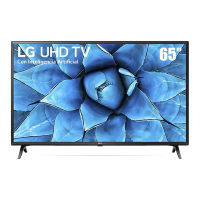
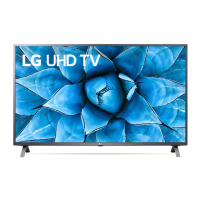
This document is an owner's manual for an LG LED TV, model 65UN7000PUD, providing essential information for its safe and proper operation, maintenance, and troubleshooting.
The manual begins with important safety instructions, emphasizing the need to read and follow all warnings to prevent injury or damage. It advises against using the apparatus near water, blocking ventilation openings, or installing it near heat sources. Users are cautioned to protect the power cord from physical abuse and to use only manufacturer-specified attachments and accessories. The document highlights the importance of using a cart, stand, tripod, bracket, or table that can safely support the TV to avoid tip-over injuries. It also recommends unplugging the TV during lightning storms or when unused for extended periods and referring all servicing to qualified personnel.
Further safety instructions detail specific warnings, such as the risk of electric shock if the cover is removed and the danger of fire or electric shock if the product is exposed to rain or moisture. It strictly prohibits placing candles or open flames near the TV and lists environments to avoid, including direct sunlight, high humidity areas, near heat sources, kitchen counters, areas exposed to rain or wind, and places with flammable objects or excessive dust. Proper ventilation is crucial, and users are advised not to install the TV in confined spaces or block its openings. The manual stresses the importance of handling the power cord carefully, avoiding damaged cords, and grasping the plug when unplugging. Connecting too many devices to a single AC outlet is discouraged due to fire and electric shock risks. Children should not be allowed to climb or cling to the TV to prevent it from falling.
For outdoor antenna grounding, the manual refers to Section 810 of the National Electrical Code (NEC) in the U.S.A. for proper grounding procedures. It warns against touching the apparatus or antenna during a lightning storm and emphasizes securing the power cord to prevent damage or fire. Inserting metallic or inflammable objects into the product is prohibited. If any issues like damage, liquid entry, smoke, or odors occur, the product should be unplugged immediately, and customer service contacted. Modifying the product without authorization from LG Electronics is forbidden, as it could lead to fire, electric shock, malfunction, or void the warranty. The manual also provides guidelines for battery safety, including storing them out of reach of children, not short-circuiting or disassembling them, and avoiding excessive heat or fire.
When moving the TV, users are instructed to turn it off, unplug it, and remove all cables. It is recommended that two or more people carry larger TVs, and care should be taken not to press or stress the front panel. The manual advises against placing the product face down on the floor without padding and to place the screen face down on a cushioned surface when attaching the stand to prevent scratches.
The "Preparing" section covers initial setup, noting that the TV's initialization may take about a minute. It mentions that images and OSD (On Screen Display) may vary by model and that new features might be added in the future. The manual specifies that HDMI cables and USB devices should have bezels within certain dimensions for optimal connection and recommends using certified HDMI cables.
Optional extras include the Magic Remote Control (MR20GA), with instructions to check for Bluetooth support in the TV's Wireless Module Specification. For wall mounting, the manual provides VESA standard dimensions and screw specifications, advising users to use appropriate screws and wall mount brackets. It emphasizes securing the TV to a solid wall and connecting cables before mounting.
The "Lifting and moving the TV" section provides detailed instructions for safely handling the TV, including keeping the screen facing away from the user to avoid damage and holding the top and bottom of the frame firmly. It warns against exposing the TV to jolts or excessive vibration and to keep it upright. The manual also advises against touching the screen to prevent damage.
For mounting on a table, the TV should be lifted and tilted into an upright position, maintaining a minimum of 10 cm (4 inches) space from the wall for proper ventilation. The power cord should then be connected to a wall outlet.
The "Securing TV to the Wall" section details how to prevent the TV from overturning. It involves inserting eye-bolts or TV brackets on the back of the TV, mounting wall brackets, and connecting them with a sturdy rope. It also advises using a strong platform or cabinet to support the TV.
The "Mounting to the Wall" section provides instructions for using an optional wall mount, emphasizing the need for a VESA standard-compliant mount and professional installation if needed. It warns against installing the TV by hanging power and signal cables and against installing it in areas exposed to oil or oil mist.
The "Other connections" section guides users on connecting external devices, recommending HDMI cables for the best picture and audio quality. It specifies supported HDMI audio formats and explains the "HDMI Ultra HD Deep Color" setting. The manual lists supported external devices such as Blu-ray players, HD receivers, DVD players, VCRs, audio systems, USB storage devices, PCs, and gaming devices.
For antenna/cable connections, users are instructed to connect an antenna, cable, or cable box to watch TV, ensuring the copper wire of the RF cable is not bent. It also mentions that the TV cannot directly receive ULTRA HD broadcasts due to unconfirmed standards.
The "Using Button" section describes how to operate the TV using the physical button, including power on/off, menu control, and menu selection. It explains how to adjust volume, change input source, and scroll through channels.
The "Remote RS-232C setup" section directs users to www.lg.com for information on external control setup.
The "Troubleshooting" section offers solutions for common issues like the remote control not working, no image or sound, or the TV turning off suddenly. It also addresses abnormal display issues like small flickers, minute dot defects, and image sticking, clarifying that these are usually normal or do not affect performance. Generated sounds like cracking noise or electrical circuit humming/panel buzzing are also explained as normal.
For cleaning, the manual advises unplugging the power cord and wiping gently with a soft/dry cloth. It warns against spraying water or other liquids directly on the TV and against using harsh chemicals like glass cleaner, air fresheners, insecticides, lubricants, wax, abrasives, thinner, benzene, or alcohol, as these can damage the product or panel.
The "Regulatory" section includes FCC and Industry Canada statements, detailing compliance with regulations for digital devices and wireless functions. It specifies radiation exposure limits and conditions for operation.
The "RSS-247 Requirement" section provides regulations for products with wireless functions using 5 GHz frequency bands in Canada, including indoor use restrictions and antenna gain limits.
The "NOTE TO CABLE/TV INSTALLER" section refers to Article 820-40 of the National Electric Code (U.S.A.) for proper grounding of the cable system.
The "WARNING!" section reiterates the dangers of an unstable television set and provides precautions to prevent it from falling, especially concerning children.
The "Symbols" section defines various symbols used in the manual, such as those for alternating current (AC), direct current (DC), class II equipment, standby, power on, and dangerous voltage.
The "LG Take-back & Recycling Policy" section outlines LG Electronics' commitment to e-waste take-back and recycling services, encouraging users to visit www.lg.com/recycling for more information.
The manual concludes with a "Supplier's Declaration of Conformity" and "LG Customer Information Center" details, including contact information for inquiries and product registration. It also provides space to record the model and serial number of the product.


 To Next Page

 General