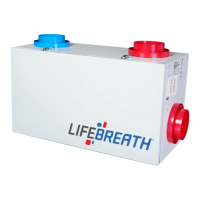
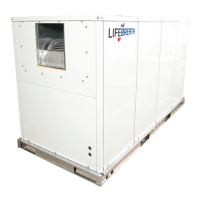
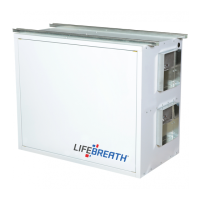
The Lifebreath Heat Recovery Ventilator (HRV) is an indoor air system designed to improve air quality and energy efficiency in modern, tightly constructed buildings. Its primary function is to continuously supply fresh outdoor air while exhausting an equal volume of stale indoor air, thereby ensuring a healthy indoor environment year-round. This process also facilitates energy savings by reducing the heating and cooling demands on a building's HVAC system.
Function Description
The HRV operates by transferring heat between the incoming fresh air and the outgoing stale air through a heat recovery core. During colder months, the warmer exhaust air preheats the cooler incoming fresh air, while in warmer months, the cooler exhaust air precools the incoming air. This heat exchange mechanism helps maintain a comfortable indoor temperature while minimizing energy loss. The unit automatically cycles through a defrost mode when outdoor temperatures drop below freezing to prevent frost buildup on the core, ensuring continuous operation.
Upon power-up, the HRV initiates a self-test function, cycling through available speeds and testing damper motor operation before resuming its selected mode. The system is designed to mitigate high indoor humidity during cooler winter months by exchanging humid indoor air with drier outdoor air.
Usage Features
The HRV offers various operating modes and fan speeds to allow users to customize ventilation rates based on their home's needs and personal preferences. These modes are typically controlled via a main wall control, with some features potentially varying by model.
- Continuous Ventilation: This mode provides constant air exchange within the home. Users can select low speed for normal operation and switch to high speed during periods of increased activity, such as cooking or showering.
- Intermittent Low Speed Operation (e.g., 20 ON / 40 OFF): This mode provides 20 minutes of air exchange followed by 40 minutes off. Some models may offer variations like 10 minutes on and 50 minutes off, useful for lower household activity levels or when the home is unoccupied.
- Continuous LOW/HIGH Fan Speed Operation: These modes operate the fan continuously at either low or high speed, ensuring constant air exchange. High speed is particularly useful during periods of high occupancy or activity.
- Recirculation Modes (e.g., 20 Minutes On, 40 Minutes Recirculation or Continuous Recirculation): These modes recirculate existing household air without introducing fresh air. They are generally not applicable if the HRV is connected to a forced air system, as the forced air system already circulates household air. Recirculation modes may not be available on all models.
- Dehumidistat Function: This feature helps reduce indoor humidity levels, especially effective when outdoor air is drier than indoor air (typically below 15°C/59°F). When the dehumidistat detects humidity above a set point, it overrides the current speed setting and initiates high-speed ventilation until humidity levels are reduced. The dehumidistat can be adjusted or turned off, and some models include an automatic disable/re-enable function based on outdoor temperature.
- Timers and Repeaters: Optional timers can be installed in specific exhaust locations (e.g., bathrooms) to initiate high-speed ventilation temporarily. These timers override the current operational mode. Wireless timers are available and can be paired with a digital wall control, allowing for remote placement. Wireless repeaters can extend the range of wireless timers, ensuring reliable communication within the home.
- Digital Wall Controls: Advanced digital controls offer a comprehensive interface for managing fan speed, operating modes, and dehumidistat settings. They may include features like a service indicator to alert users when routine maintenance is required and a reset button to restore default settings.
Maintenance Features
Regular maintenance is crucial to ensure the HRV operates efficiently and effectively. The manual outlines several procedures with recommended intervals:
- Inspect Exterior Hoods (Monthly): Users should check that exhaust and fresh air supply hoods are not blocked by leaves, grass, snow, or frost buildup on the wire mesh (bird screen).
- Clean Air Filters (Quarterly): The HRV is equipped with removable and washable air filters. To clean them, users must open the access door, carefully pull out the core, remove the filter clips (if present), and then remove the filters. The filters should be rinsed with cold water or a mild soap and water solution, shaken to remove excess water, and then reinstalled. It is important not to wring out the filters, clean them in a dishwasher, or use hot water.
- Clean HRV Core (Biennially): The heat recovery core also requires cleaning. After removing the air filters, the core should be soaked and rinsed in warm, soapy water. Users are cautioned against using cleaning solutions, bleach, chlorine, pressure washers, or placing the core in a dishwasher. The core should be carefully aligned and inserted back into the cabinet, ensuring it fits tightly.
- Clean Drain (Condensate) Line (Annually): The drain line, drain spout, and P-trap should be inspected for blockages, mold, or kinks. They should be flushed with warm, soapy water and replaced if worn or damaged.
- Clean Duct Work (As Necessary): The ductwork connected to the HRV may accumulate dirt over time. It is recommended to wipe and vacuum the ductwork annually, or contact a heating/ventilation company for professional cleaning.
- General Maintenance (Biennially): The inside of the cabinet should be wiped down with a damp cloth to remove any dirt, bugs, and debris.
- Motor: The motor is designed to be maintenance-free.
Safety warnings emphasize disconnecting power before any cleaning or servicing to prevent electrical shock and ensuring proper grounding of the unit. Users are also advised that blockage of hoods can cause an imbalance in the system.



 To Next Page
 General