EasyManua.ls Logo

Linortek Netbell-NTG - User Manual

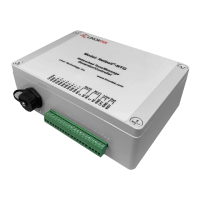
Linortek Netbell-NTG
9 pages
Print Icon
To Next Page IconTo Next Page
Loading...
1
Master-Slave Setting Instructions for Emergency Notification Using
Netbell-NTG and Koda100 Controllers
All of the devices we manufacture include a remote function that can deliver a signal from one controller to control
other device(s) in multiple locations. With the capability of playing live and pre-recorded messages on the Netbell-NTG
industrial PA system, you can use it with the Koda 100 Ethernet I/O controllers to build a network emergency
notification system. The feature is useful for schools or factories that have a need for audible signals in separate areas or
multiple buildings where running additional wiring is too expensive or not practical.
In this instruction, we use a Netbell-NTG PA system and two remote switches to activate the emergency sound. Each
remote switch is connected to a digital input of the Koda 100.
Environments:
The system will be installed on the same building, all network switches are on the same subnet.
Running wires across the buildings are not practical.
Functions required for the system:
Any person on the plant floor/office can press an alarm switch if an emergency is spotted and the speakers in
the facility will play the pre-recorded emergency sound.
After the pre-recorded message is played, it will turn off automatically unless you push one of the switches to
trigger the sound again.
Devices to use
One Netbell-NTG PA system: One Netbell-NTG tone generator controller, multiple horn speakers, one mixer-
amplifier.
Two Koda 100 Ethernet I/O controllers: Each push switch will need a Koda 100 controller to send the signals to
the Netbell-NTG controller to activate
the sound.
Two Push Switches.
Devices installation map
As shown on the map. Here are the devices
installed in the building, to better explain the
system setup process and software
configuration, the Netbell-NTG is used as the
Slave controller and named SLAVE in the
software configuration. The Koda 100 devices
are used as Master controller, named as
Master 1 and Master 2.

Other manuals for Linortek Netbell-NTG

Question and Answer IconNeed help?

Do you have a question about the Linortek Netbell-NTG and is the answer not in the manual?

Summary

System Overview and Installation Map

Devices Installation Map

Diagram showing the physical layout and connection points of Netbell-NTG and Koda 100 controllers in the system.

Wiring Procedures

Wire Netbell-NTG PA System

Instructions for connecting the Netbell-NTG to speakers and amplifier for audio output.

Wire Push Switch to Koda 100 Digital Input

Connecting alarm switches to the digital input ports of the Koda 100 controller.

Slave Controller Configuration (Netbell-NTG)

Network Configuration

Setting up network parameters like IP address and hostname for the Netbell-NTG controller.

Assign Tone to Relay

Configuring the Netbell-NTG to associate an audio file with a specific relay for activation.

Enable Audio File System

Activating the audio file system on the Netbell-NTG to allow playback of custom sounds.

Master Controller Configuration (Koda 100)

Link Slave Controller via IP Address

Configuring the Koda 100 master to recognize and communicate with the Netbell-NTG slave controller.

Activate Digital Input for Triggering

Setting up a Koda 100 digital input to act as a trigger for a specific relay event.

Master Relay to Trigger Slave Relay

Establishing the link between a master controller relay and a slave controller relay to activate the alarm.

Overview

The Netbell-NTG is a networked tone and message generator/controller designed for emergency notification systems, particularly useful in environments like schools or factories where audible signals are needed across separate areas or multiple buildings. This device can be integrated with Koda 100 Ethernet I/O controllers to build a comprehensive network emergency notification system.

Function Description:

The Netbell-NTG serves as a central component in an emergency notification system, capable of playing live and pre-recorded messages through multiple horn speakers connected via a mixer-amplifier. It functions as a "Slave" controller in a master-slave setup, receiving signals from "Master" Koda 100 controllers to trigger emergency sounds. The system is designed to allow any person on the plant floor or office to activate an alarm switch, which then triggers the speakers in the facility to play a pre-recorded emergency sound. Once the pre-recorded message has played, it automatically turns off unless one of the switches is pushed again to re-trigger the sound.

The Netbell-NTG's core function involves generating tones and playing messages. It supports custom messages up to 10 hours in length, provided they are converted to OGG format. These custom sounds can be assigned to specific relays on the Netbell-NTG, which then act as triggers for the audio playback. The device's network configuration allows for flexible deployment, supporting static IP addresses for stability in case of power outages and enabling remote access through port forwarding if devices are on different networks.

Usage Features:

  • Networked Operation: The Netbell-NTG is designed for network integration, allowing it to communicate with other controllers (like the Koda 100) over an Ethernet network. This eliminates the need for extensive wiring across large facilities or multiple buildings, making installation more cost-effective and practical.
  • Master-Slave Configuration: It operates effectively in a master-slave architecture. The Netbell-NTG acts as the "Slave" controller, responsible for playing the emergency sounds, while Koda 100 controllers function as "Masters," receiving input from alarm switches and sending trigger signals to the Netbell-NTG.
  • Customizable Audio Messages: Users can upload and utilize custom audio messages, such as emergency warnings, up to 10 hours in duration. These messages must be in OGG format. This feature allows for tailored alerts specific to the environment or type of emergency.
  • Relay-Triggered Audio Playback: The system uses relays on the Netbell-NTG to trigger the assigned audio tones. When a signal is received from a master controller, the corresponding relay activates, initiating the playback of the emergency message.
  • Digital Input Integration (via Koda 100): The Koda 100 controllers, acting as masters, have digital inputs (IN1, IN2) to which push switches can be connected. These inputs can be configured in "PULL UP (PU)" mode to work with push switches, ensuring that a simple press can activate the emergency system.
  • Remote Device Configuration: The Netbell-NTG can be linked to master controllers through its IP address, allowing for remote configuration and management of the entire system. This includes setting up device names, IP addresses, and login credentials for seamless communication between controllers.
  • User-Friendly Web Interface: The device features a web-based interface for configuration, accessible by logging into its webpage. This interface provides options for network settings, audio file system management, task scheduling, and remote device configuration, simplifying setup and ongoing management.
  • Scalability: The system is scalable, allowing for multiple Koda 100 master controllers to be connected to a single Netbell-NTG slave controller. This enables comprehensive coverage across various locations or buildings, with each master controller handling inputs from its local alarm switches.
  • Automatic Shutdown: After an emergency message is played, the system is designed to automatically turn off the sound, preventing continuous playback and ensuring the system is ready for the next activation.
  • Robust Network Settings: The network configuration page allows for detailed settings, including Host Name, Port Number, DHCP enablement, IP Address, Gateway, Subnet Mask, Primary DNS, and Secondary DNS. This ensures stable and reliable network connectivity for the device.

Maintenance Features:

  • Firmware Updates: While not explicitly detailed in the provided text, networked devices like the Netbell-NTG typically support firmware updates to introduce new features, improve performance, or address security vulnerabilities.
  • System Logs: The web interface includes a "Logs" section, which is crucial for monitoring system activity, troubleshooting issues, and reviewing event history. This helps in diagnosing problems and ensuring the system operates correctly.
  • Network Connectivity Monitoring: The device's network configuration allows for static IP addresses, which helps maintain connectivity even after power outages, reducing the need for frequent network reconfigurations. The ability to "PORT" the device is also a maintenance feature for remote access and troubleshooting across different networks.
  • Restore Defaults: In case of incorrect network settings or other configuration issues, the device likely offers a "Restore Defaults" option (mentioned in the context of IP address changes), which can help revert to factory settings and resolve configuration-related problems.
  • Clear Configuration Options: The web interface provides clear and organized settings for various functions, making it easier for administrators to manage and maintain the system. For example, the "SAVE CONFIG" and "CANCEL" buttons ensure that changes are applied intentionally or discarded if necessary.
  • Support Documentation: The availability of a user manual and video tutorials (as mentioned in the contact section) is a key maintenance feature, providing users with resources to understand, install, configure, and troubleshoot the device effectively.
  • Technical Support: Direct contact information for a support team (phone and email) is provided, offering a crucial resource for users encountering issues that cannot be resolved through documentation or self-troubleshooting.

Linortek Netbell-NTG Specifications

General IconGeneral
ModelNetbell-NTG
Network InterfaceEthernet
ProtocolsTCP/IP, HTTP
Power12V DC
SchedulingYes
Audio Output1 Channel
NetworkEthernet
Power Supply12V DC
Form FactorCompact
Web InterfaceBuilt-in web server for configuration and control