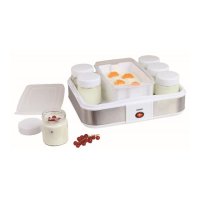
The Livoo Yoghurt Maker is an appliance designed to simplify the process of making homemade yoghurt. This device allows users to create fresh yoghurt in their own kitchen, offering control over ingredients and preparation.
Function Description
The primary function of the Livoo Yoghurt Maker is to ferment milk into yoghurt. It achieves this by maintaining a consistent and optimal temperature for the bacterial cultures to thrive and transform milk. The appliance is equipped with a heating element that ensures the milk mixture stays at the ideal temperature for the duration of the fermentation process. This controlled environment is crucial for successful yoghurt production, allowing the milk to solidify and develop the characteristic tangy flavor and creamy texture of yoghurt. The device is designed to be user-friendly, allowing for easy setup and operation.
Usage Features
The yoghurt maker comes with several features that enhance its usability and the quality of the yoghurt produced:
- Capacity: The appliance is designed to hold 7 individual jars, allowing for the preparation of multiple servings of yoghurt at once. This is convenient for families or individuals who consume yoghurt regularly.
- Control Panel: The device features a clear control panel with an LCD display. This panel allows users to set and monitor the operation time.
- Timer Function: A key feature is the adjustable timer, which enables users to set the desired fermentation duration. The default operation time is 8 hours, but it can be adjusted from 0 to 14 hours using "+" and "-" buttons. This flexibility is important because the ideal fermentation time can vary depending on the type of milk, starter culture, and desired consistency.
- On/Off Button: A dedicated On/Off button simplifies starting and stopping the fermentation process.
- Automatic Continuation: If the power supply is interrupted for a short period (not exceeding 10 minutes), the appliance will automatically resume its previous operation. This helps prevent spoilage and ensures the yoghurt-making process continues uninterrupted. If the pause exceeds 10 minutes, the device resets to default settings, requiring a manual restart.
- Ingredient Flexibility: The manual provides guidance on using various types of milk, including whole, semi-skimmed UHT, raw, pasteurized, milk powder, and soybean milk. It also suggests different starter cultures such as plain shop-bought yoghurt, previously made yoghurt, or freeze-dried ferment. This versatility allows users to experiment with different ingredients to achieve their preferred taste and texture.
- Temperature Recommendations: The manual emphasizes using ingredients at room temperature for optimal results. It also advises on cooling boiled raw or pasteurized milk to 40°C or less before use, and boiling soybean milk.
- Visual Cues for Yoghurt Quality: The manual describes the appearance of perfect yoghurt ("yellow and white luster" and "bean curd jelly" form) and explains that "ramification" (yellowy liquid) is normal if the operation time is too long, indicating a more acetous taste. This helps users understand the outcomes of their preparation.
- Stability during Operation: Users are advised to place the appliance on a stable, non-vibrating surface and avoid moving it or removing the jars during operation to ensure successful yoghurt production.
Maintenance Features
Proper cleaning and storage are essential for the longevity and hygiene of the yoghurt maker, especially since it comes into direct contact with food:
- Easy Cleaning of Plastic Parts: The lid, base, and other plastic surfaces can be cleaned with a moist sponge and mild detergent. It is crucial to dry them carefully after cleaning.
- Dishwasher-Safe Jars: The glass jars are dishwasher-safe, making their cleaning convenient. They should be dried thoroughly before being placed back into the appliance.
- No Immersion: The main appliance unit (base with heating element) must never be immersed in water to prevent electric shock and damage.
- Thorough Cleaning Before Use: It is emphasized that all parts must be thoroughly cleaned before making yoghurt to ensure hygiene and prevent contamination.
- Residual Heat Warning: The heating element surface will retain residual heat after use, so caution is advised during handling immediately after operation.
- Storage Recommendations: Yoghurt should be stored in the refrigerator and consumed within 8 to 10 days for best quality and safety. Users are encouraged to label jars with the production date or flavor.

 Need help?
 General

 To Next Page