Need help?
Do you have a question about the LSI LSI20320IE and is the answer not in the manual?
Unpack the HBA in a static-free environment and inspect it for damage. Contact support if any component is missing or damaged.
Turn off the computer, remove the power cord, and disconnect from power and networks before opening the chassis.
Locate an empty PCI Express slot, remove the blank bracket, and gently press down to seat the HBA in the slot.
Secure the HBA bracket with the screw and connect SCSI devices to internal/external connectors.
Replace the system cover, reconnect power and network cables, then turn on the system.
Copy appropriate driver files from the CD to a clean floppy diskette for use during Windows setup.
Boot the computer from the Windows installation CD-ROM to begin the operating system installation.
Press F6 when prompted for nonsupported drivers to load the driver diskette.
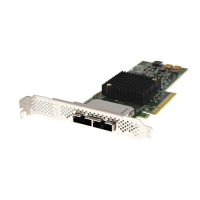
The LSI20320IE is a PCI Express SCSI Host Bus Adapter (HBA) designed to facilitate high-speed data transfer between a computer system and SCSI devices. This Quick Installation Guide provides essential information for setting up and using the device, including hardware installation, driver installation for Windows and Linux, and technical support contacts.
The LSI20320IE HBA serves as an interface card that allows a computer system to connect to and control SCSI (Small Computer System Interface) devices. It leverages the PCI Express bus for high-bandwidth communication, ensuring efficient data transfer rates. The adapter is designed to support Ultra320 SCSI, which is a high-performance SCSI standard. By installing this HBA, users can integrate various SCSI peripherals, such as hard drives, tape drives, and optical drives, into their systems, benefiting from SCSI's robust data handling capabilities and multi-device support. The adapter is part of LSI's Fusion-MPT™ (Message Passing Technology) family, which provides a common architecture for various I/O solutions, simplifying management and driver development.
mptlinux.txt file on the CD for detailed instructions.http://www.lsi.com/support) for the most recent drivers, indicating ongoing support and potential performance improvements or bug fixes through updated software.support@lsi.com) and phone (toll-free for North America and a separate number for Europe), providing a direct channel for assistance with installation, configuration, or operational issues. This ensures users have access to expert help if they encounter problems.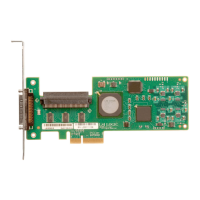

 To Next Page
 General