Need help?
Do you have a question about the LSI SAS 9300-8i and is the answer not in the manual?
Explains the PCI Express interface and its performance specifications.
Describes the SAS-3 interface and its performance specifications.
Covers the LED management capabilities for backplane implementation.
Describes the memory used for firmware and BIOS storage.
Explains the function of the HBA's heartbeat LED.
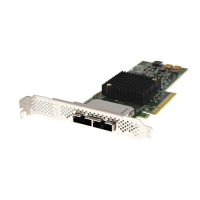
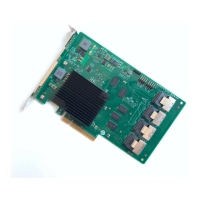
Details the PCIe and SAS connectors on the HBA.
Outlines the physical dimensions and board layout of the HBA.
Specifies the HBA's power requirements under normal operation.
Defines the operating temperature and humidity ranges for the HBA.
The LSI SAS 9300-8i PCI Express to 12Gb/s Serial Attached SCSI (SAS) Host Bus Adapter (HBA) is a high-performance internal storage connectivity solution designed for servers and workstations. This HBA facilitates robust data transfer and management within a system, leveraging advanced SAS and PCIe technologies.
The primary function of the LSI SAS 9300-8i HBA is to provide a bridge between the system's PCI Express bus and Serial Attached SCSI (SAS) or Serial ATA (SATA) storage devices. It acts as a host bus adapter, enabling the system to communicate with and manage connected storage. The adapter is built around the LSI SAS 3008 controller, which integrates the latest advancements in both PCIe 3.0 and 12Gb/s SAS technologies. This integration ensures high-speed data transfer and efficient operation.
The HBA supports eight lanes of 12Gb/s SAS connectivity, which is matched with eight lanes of PCIe 3.0 performance, offering a powerful combination for demanding storage environments. It can handle up to 1024 SATA or SAS end devices, making it suitable for systems requiring extensive storage expansion. The adapter also includes onboard Flash memory, which stores the firmware, BIOS, and NVSRAM, supporting Integrated RAID functionalities such as RAID 0, RAID 1, and RAID 10. This allows for basic data protection and performance enhancement at the hardware level.
The LSI SAS 9300-8i HBA is designed to be versatile, supporting various link rates for both SATA (3Gb/s and 6Gb/s) and SAS (3Gb/s, 6Gb/s, and 12Gb/s), ensuring compatibility with a wide range of storage devices. Its architecture is based on the Fusion-MPT™ design, which is known for its efficiency and reliability in storage solutions.
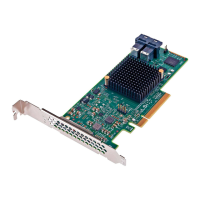
The LSI SAS 9300-8i HBA is designed for ease of integration and broad compatibility. Its low-profile design, accompanied by both full-height and low-profile vented mounting brackets, ensures a universal fit in various server and workstation chassis. This flexibility simplifies installation in different system form factors.
For connectivity, the HBA provides x4 internal mini-SAS HD connectors (SFF-8643). These connectors are compatible with passive copper cables, active copper cables, and optical cables, offering flexibility in cabling solutions depending on the specific application and distance requirements. The use of standard SFF-8643 connectors ensures broad compatibility with existing SAS/SATA infrastructure.
The adapter supports eight internal 12Gb/s SATA+SAS ports, allowing for direct connection to multiple storage devices. Its eight-lane, full-duplex PCIe 3.0 performance translates to high bandwidth, capable of up to 64Gb/s in a single direction and 128Gb/s in dual-direction, which is crucial for applications requiring rapid data access and transfer.
Operating system support is comprehensive, covering major platforms such as Windows, Linux (Red Hat, SUSE Enterprise Server SLES), Solaris, and VMware. For Solaris users, the HBA benefits from a built-in driver provided by Oracle, eliminating the need for separate driver installation. This broad support ensures that the HBA can be seamlessly integrated into diverse IT environments.
An important visual indicator for the HBA's operational status is the heartbeat LED (CR1). This LED blinks green to signify that the HBA is capable of general activity, providing a quick visual confirmation of its health and functionality. The HBA also offers LED management support for backplane implementations, adhering to the SFF-8485: Specification for Serial GPIO (SGPIO) Bus, Revision 0.7, which allows for integrated status monitoring within a storage enclosure.
Maintenance of the LSI SAS 9300-8i HBA primarily involves ensuring proper installation and monitoring its operational status. The device is designed for reliability and longevity, with robust electrical and thermal characteristics.
For installation, the process is straightforward: unpack the HBA in a static-free environment, inspect for damage, prepare the computer by powering it down and disconnecting it from power and networks, and then install the HBA into an available x8 PCIe slot. The provision of both full-height and low-profile brackets allows for easy adaptation to different chassis types. Once installed, the HBA bracket is secured to the system's chassis, and SAS cables are connected between the HBA and the storage devices or backplane. Finally, the system cover is replaced, and power and network cords are reconnected before powering up the system.
The HBA's design minimizes electromagnetic emissions and susceptibility to radio frequency energy, and it is resistant to electrostatic discharge, contributing to its stable operation and reducing the likelihood of maintenance issues related to environmental factors. It complies with various integrated electromagnetic interference (EMI) compliance labels, including CE mark, CISPR Class B, C-Tick mark, Canadian Compliance Statement, FCC Class B, Japan VCCI, Korean KCC, and Taiwan BSMI.
Environmentally, the HBA meets RoHS and WEEE directives, indicating its compliance with regulations regarding hazardous substances and waste electrical and electronic equipment.
The HBA's thermal and atmospheric limits are specified to ensure optimal performance and longevity. It operates within a temperature range of 0 °C to 55 °C (32°F to 131 °F) and a relative humidity range of 5% to 90% non-condensing. A minimum airflow of 200 linear feet per minute is recommended to maintain these conditions. For storage and transit, the temperature range is broader, from -45 °C to +105 °C (−49 °F to +221 °F), with the same relative humidity range. Adhering to these environmental guidelines is critical for the long-term reliability of the device.
In case of any issues during installation, configuration, or operation, technical support is available via email and phone, providing a resource for troubleshooting and assistance. The onboard Flash ROM for firmware and BIOS allows for potential updates, which can address bugs, improve performance, or add new features, contributing to the device's maintainability over its lifespan.
 General
| Interface | PCIe 3.0 x8 |
|---|---|
| SAS Ports | 8 |
| SAS Standard | SAS 3.0 |
| Form Factor | Low Profile |
| RAID Support | No |
| Devices Supported | Up to 256 SAS/SATA devices |
| Controller | LSI SAS 3008 |
| Data Transfer Rate | 12 Gbps per port |
| Connectors | 2 x SFF-8643 |
| Operating System Support | Windows, Linux, VMware |

 To Next Page