EasyManua.ls Logo

Lubeworks 171303 - User Manual

Lubeworks 171303
6 pages
Print Icon
To Next Page IconTo Next Page
Loading...
HEAVY DUTY OIL PUMP
MANUAL
171303
171305
171309
REV 01/12/15
1
WARNING SYMBOL
• This manual contains important warnings and information.
• Read and keep for reference.
CAUTION SYMBOL
This symbol alerts you to the possibility of serious injury or death if you do not follow the instructions
.
CAUTION
This symbol alerts you to the possibility of damage to or destruction of equipment if you do not follow
the instructions.
1 Summarize
1.1 Mainly propose
These pumps mainly provide power during oil transportation. Any other use maybe cause
un-safety problems and parts damage, fire explosion, and oil spark even serious fluid injection.
1.2 Description
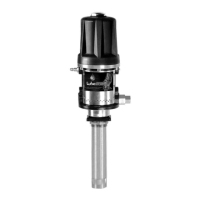
1.2.1 Model: 3:1 Pneumatic Oil Pump
1.2.1.1 Specification: 36barMax. fluid working pressure
1.2.1.2 Configuration:
Sheet 1: 3:1 Pneumatic Oil Pump
Remark: with 3/4"M to 1/2"F reducer.
1.2.1.3 Max. free flow rate: 45L/min.
1.2.2 Model: 5:1 Pneumatic oil pump
1.2.2.1 Specification: 60barMax. fluid working pressure
1.2.2.2 Configuration:
Sheet 2: 5:1 Pneumatic oil pump
Remark: with 3/4"M to 1/2"F reducer.
1.2.2.3 Max. free flow rate: 40L/min.
Model
1/4"quick plug
1/4"NPT
270mm
730mm
940mm
1190mm
Air inlet
Length
of
suction
tube
17130301 17130303 17130331 17130333 17130361 17130363 17130371 17130373
Model
1/4"quick plug
1/4"NPT
270mm
730mm
940mm
1190mm
Air inlet
Length
of
suction
tube
17130501 17130503 17130531 17130533 17130561 17130563 17130571 17130573
Question and Answer IconNeed help?

Do you have a question about the Lubeworks 171303 and is the answer not in the manual?

Summary

Summarize

Mainly Propose

Describes the primary purpose of the pumps for oil transportation and warns against other uses.

Description

Details the specifications and configurations of the 3:1 and 5:1 pneumatic oil pumps.

Safety Instructions

Oil Pump Misuse Hazard

Highlights risks associated with incorrect usage, modification, and fluid compatibility.

Skin Injection Hazard

Warns about severe injuries from fluid injection and outlines necessary precautions.

Moving Parts Hazard

Alerts users to the danger of pinching or amputation from moving components.

Fire and Explosion Hazard

Details risks related to improper grounding, ventilation, and ignition sources.

Technical Data

Grounding and Installation

Grounding

Explains the importance of grounding for safety and outlines procedures for various components.

Installation

Provides steps for standard installation of the oil pump system components.

Operation

Covers pressure relief procedures and basic pump operation steps.

Trouble Shooting

Ordinary Problems, Reason and Solution

Lists common issues like pump failure, air exhaust, and leaks with their causes and solutions.

Wall Installed

Proceed As Follows

Step-by-step guide for mounting the pump unit to a wall.

Limited Warranty

Details the manufacturer's warranty terms, coverage, and limitations.

Summary

Summarize

Mainly Propose

Describes the primary purpose of the pumps for oil transportation and warns against other uses.

Description

Details the specifications and configurations of the 3:1 and 5:1 pneumatic oil pumps.

Safety Instructions

Oil Pump Misuse Hazard

Highlights risks associated with incorrect usage, modification, and fluid compatibility.

Skin Injection Hazard

Warns about severe injuries from fluid injection and outlines necessary precautions.

Moving Parts Hazard

Alerts users to the danger of pinching or amputation from moving components.

Fire and Explosion Hazard

Details risks related to improper grounding, ventilation, and ignition sources.

Technical Data

Grounding and Installation

Grounding

Explains the importance of grounding for safety and outlines procedures for various components.

Installation

Provides steps for standard installation of the oil pump system components.

Operation

Covers pressure relief procedures and basic pump operation steps.

Trouble Shooting

Ordinary Problems, Reason and Solution

Lists common issues like pump failure, air exhaust, and leaks with their causes and solutions.

Wall Installed

Proceed As Follows

Step-by-step guide for mounting the pump unit to a wall.

Limited Warranty

Details the manufacturer's warranty terms, coverage, and limitations.

Overview

This document describes a heavy-duty oil pump, specifically pneumatic oil pumps available in 3:1, 5:1, and 9:1 pressure ratios. These pumps are primarily designed for power during oil transportation. Any other use may lead to safety issues, part damage, fire, explosion, or fluid injection.

Function Description

The pneumatic oil pump's main function is to transport oil using compressed air as power. It is designed to be integrated into an oil supply system, which typically includes a cut-off valve, filter, regulator, lubricator, control valve, and hose reel. The pump draws oil from a container via a suction tube and delivers it through an output line, controlled by a dispensing valve. The system can be configured for various applications, including wall-mounted installations.

Important Technical Specifications

The manual details three main models of pneumatic oil pumps, distinguished by their pressure ratios:

1. 3:1 Pneumatic Oil Pump (171303 Series)

  • Specification: 36 bar (Max. fluid working pressure)
  • Air Inlet: 1/4" quick plug or 1/4" NPT
  • Suction Tube Lengths: Available in 270mm, 730mm, 940mm, and 1190mm
  • Reducer: With 3/4"M to 1/2"F reducer
  • Max. Free Flow Rate: 45 L/min
  • Air Inlet Working Pressure: 5-10 bar
  • Max. Air Inlet Pressure: 12 bar
  • Air Motor Effective Diameter: 108mm

2. 5:1 Pneumatic Oil Pump (171305 Series)

  • Specification: 60 bar (Max. fluid working pressure)
  • Air Inlet: 1/4" quick plug or 1/4" NPT
  • Suction Tube Lengths: Available in 270mm, 730mm, 940mm, and 1190mm
  • Reducer: With 3/4"M to 1/2"F reducer
  • Max. Free Flow Rate: 40 L/min
  • Air Inlet Working Pressure: 5-10 bar
  • Max. Air Inlet Pressure: 12 bar
  • Air Motor Effective Diameter: 108mm

3. 9:1 Pneumatic Oil Pump (171309 Series)

  • Specification: 108 bar (Max. fluid working pressure)
  • Air Inlet: 1/4" quick plug or 1/4" NPT
  • Suction Tube Lengths: Available in 270mm, 730mm, 940mm, and 1190mm
  • Reducer: With 3/4"M to 1/2"F reducer
  • Max. Free Flow Rate: 20 L/min
  • Air Inlet Working Pressure: 5-10 bar
  • Max. Air Inlet Pressure: 12 bar
  • Air Motor Effective Diameter: 108mm

All models include a 3/4"M to 1/2"F reducer for the suction tube.

Usage Features

The pump is designed for integration into an oil supply system. Key usage features include:

  • Installation: The pump can be installed into a lock adapter on a trolley or wall-mounted using a bracket. The air supply system requires a cut-off valve, filter, regulator, lubricator, and control valve. The regulator controls the speed and air pressure, while the lubricator provides self-lubrication. A control valve manages the fluid flow, automatically closing if the speed is too fast to prevent damage.
  • Operation: After initial setup, opening the oil valve starts the pump, and closing it stops the pump. It's crucial to ensure sufficient oil in the barrel to prevent empty load operation, which can cause self-damage. If acceleration is too fast or slow, operation should be stopped to check the oil level.
  • Multi-Pump Systems: In systems with multiple pumps, a control valve should be used to dispatch air, and each pump should be started step-by-step.
  • Grounding: Proper grounding is essential to prevent static sparking, fire, and explosion. The pump, air and fluid hoses, air compressor, oil control valve, and fluid supply container must all be effectively grounded according to local regulations.
  • Safety Precautions:
    • Always read all manuals, tags, and labels before operation.
    • Use the equipment only for its intended purpose.
    • Do not alter or modify the equipment; use only genuine parts.
    • Do not exceed the maximum working pressure of the lowest-rated component.
    • Use compatible fluids and solvents; avoid halogenated hydrocarbon solvents with pressurized aluminum equipment to prevent chemical reactions and explosions.
    • Handle hoses carefully, routing them away from traffic, sharp edges, moving parts, and hot surfaces.
    • Wear adiabatic gloves during operation.
    • Do not move or lift the pump during use.
    • Comply with all local, state, and national fire, electrical, and safety regulations.
    • Skin Injection Hazard: Fluid injection from the dispensing valve, leaks, or ruptured components can cause serious injury. Never point the valve at anyone, put hands over the end, or stop leaks with body parts. Seek immediate surgical treatment for any fluid injection injury.
    • Moving Parts Hazard: Do not operate the pump with air motor plates removed. Keep clear of moving parts.
    • Fire and Explosion Hazard: Ensure proper grounding, ventilation, and keep the dispensing area free of debris and flammable fumes. Do not smoke in the dispensing area.

Maintenance Features

The manual emphasizes the importance of regular checks and proper maintenance to ensure safe and efficient operation.

  • Daily Checks: Inspect the equipment daily for worn or damaged parts and replace them immediately. Check hoses, tubes, and couplings daily.
  • Pressure Relief Procedure: Before any maintenance or servicing, it is critical to relieve pressure in the system to prevent serious injury from pressurized fluid. This involves turning off the cut-off valve, shutting off air, directing the pump to waste equipment, switching the oil valve, and relieving pressure.
  • Troubleshooting: The manual provides a troubleshooting guide for common issues:
    • Pump fails to operate: Check for inadequate air supply, restricted air lines, closed/clogged dispensing valve, clogged fluid lines, damaged air motor, or exhausted fluid supply. Solutions include increasing air supply, clearing obstructions, servicing the air motor, or refilling/re-priming.
    • Continuous air exhaust: Indicates a worn/damaged air motor gas-kit, packing, or seal. Solution: service air motor.
    • Erratic pump operation: Could be due to exhausted fluid supply or a held-open/worn intake valve or piston packing. Solution: refill/re-prime or clear/service the valve.
    • Pump operates, but output low on both strokes: Possible causes are damaged hose, piston, or seal O-ring, or a blocked hose/valve. Solutions include changing the hose, piston, or O-ring, or relieving pressure.
    • Leakage from silencer: Typically indicates a damaged O-ring. Solution: change O-ring.
  • Wearing Parts: The exploded parts lists for each series (171303, 171305, 171309) identify specific components marked with an asterisk (*) as wearing parts. These include O-rings, spring pieces, U-seals, sponges, steel wires, gaskets, and filters, which are expected to require periodic replacement.
  • Warranty: The manufacturer provides a 36-month warranty against defects in material and craftsmanship, excluding wearing parts. The warranty covers replacement or repair of defective material when returned freight prepaid to the distributor. It does not cover damage from accident, misuse, or faulty installation, and requires the product to be installed and maintained according to instructions.

Lubeworks 171303 Specifications

General IconGeneral
BrandLubeworks
Model171303
CategoryWater Pump
LanguageEnglish