Need help?
Do you have a question about the M2M MQ03-LTE-M-FIRE-AV and is the answer not in the manual?
Details FCC Statement and ETL certifications, including UL standards.
Outlines M2M Services' responsibility for device usage and network services.
Details the terms and limitations of the hardware limited warranty provided by M2M Services.
Details connections for primary and backup dialers using terminal strips.
Explains connecting FACP relay outputs for fire, trouble, and supervisory alarms.
Covers supervised output wiring for FACP relay trigger inputs.
Describes wiring for supervising RING and TIP lines between the FACP and communicator.
Illustrates wiring for a communication supervision output to the FACP trouble input.
Details enclosure requirements and antenna connection for proper installation.
Details LED status indications and actions for diagnosing cellular connection issues.
Explains the states of Yellow and Green RJ45 connector LEDs for network connectivity.
Provides steps for diagnosing LAN connectivity issues, including DHCP and static IP.
Lists essential programming steps for the control panel to work with the communicator.
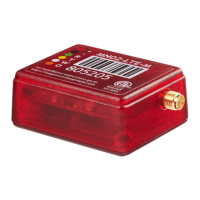
The MQ03-LTE-M-FIRE-AV is a sophisticated digital cellular communicator designed for the security industry, offering a robust and reliable solution for data transfer from alarm systems to Central Monitoring Stations (CMS). This device is engineered for both dual-path and sole-path communication, leveraging LTE CAT-M1 network and LAN connectivity to ensure high reliability and redundancy. Its primary function is to act as a bridge, enabling alarm panels to transmit critical event data over modern cellular and internet networks, thereby replacing or augmenting traditional PSTN dialers.
At its core, the MQ03-LTE-M-FIRE-AV features a dial capture interface, making it universally compatible with a wide range of alarm panels that support Contact ID, SIA, and Pulse 4/2 communication formats. This broad compatibility ensures that existing alarm systems can be easily upgraded to utilize advanced cellular communication without requiring extensive panel modifications. The device is equipped with dual-SIM functionality, providing exceptional redundancy. In the US, this means support for both AT&T and Verizon networks, significantly enhancing reliability by ensuring continuous connectivity even if one network experiences an outage or weak signal. This dual-SIM capability is a critical feature for fire alarm systems, where uninterrupted communication is paramount.
The communicator offers several key usage features that enhance its performance and user experience. Connection monitoring is a standout feature, allowing for adjustable fault reporting times as low as 20 seconds. This rapid fault detection is crucial for maintaining the integrity of alarm communications, especially in fire and life safety applications where every second counts. The device's high reliability is further bolstered by its ability to utilize multiple transmission channels (LTE CAT-M1/LAN) and redundant servers. This multi-layered approach to communication ensures that alarm signals are delivered promptly and consistently, even in challenging network conditions.
For configuration and diagnostics, the MQ03-LTE-M-FIRE-AV integrates with web-based software and a dedicated smartphone app. This allows installers and administrators to remotely manage device settings, monitor status, and perform troubleshooting without needing to be physically present at the installation site. The ability to conduct remote firmware updates ensures that the device can always benefit from the latest features and security enhancements, extending its operational lifespan and maintaining optimal performance.
Beyond administrative functions, the device also supports an end-user smartphone app. This app provides valuable features such as push and email notifications, allowing property owners or designated personnel to receive real-time alerts and updates regarding their alarm system's status. This enhances situational awareness and enables quicker response to events, contributing to overall security and peace of mind.
Installation and wiring of the MQ03-LTE-M-FIRE-AV are designed to be straightforward, yet adhere to stringent safety and regulatory standards. The device must be installed in accordance with the National Electrical Code, ANSI/NFPA 72, and the National Fire Alarm and Signaling Code, NFPA 72. It requires connection to a UL Listed compatible panel with power-limited circuits and must be powered by a regulated UL Listed UOJZ, UTOU, or NBSX control panel or power supply. All wiring should be performed when the panel is powered down and is suitable for dry/indoor use only. The terminal strips accommodate solid or stranded wire sizes from 14 to 22 AWG.
The manual provides detailed wiring diagrams for various configurations, including connecting to the primary and optional backup dialers of the alarm panel, as well as wiring for FACP relay trigger input reporting. For enhanced supervision, the device supports optional wiring for supervised FACP relay trigger inputs, which can detect troubles like open circuits using end-of-line resistors. Furthermore, the MQ03-LTE-M-FIRE-AV offers optional wiring for two supervised RING/TIP lines, allowing the communicator to detect and report trouble if the RING/TIP connection between the device and the FACP is compromised. This feature, along with the communication supervision output, can be enabled through the M2M Administrative Platform or the RControl Admin mobile application, providing an additional layer of monitoring and reliability.
Mounting the communicator is also clearly outlined. The device comes fully assembled, with the exception of the external antenna. It must be installed within a UL Listed metal enclosure, such as the M2M FC08 Enclosure for Cellular Alarm Communicators, Altronix BC300R, or any other UL Listed (UOXX, NITW or CYIV) enclosure. All wiring must be routed through a conduit to maintain compliance and safety. The antenna, supplied with an SMA connector, features a magnetic base for easy attachment to the metal alarm panel box or can be secured with double-sided adhesive tape. Proper antenna placement is emphasized to avoid RF interference and ensure optimal cellular signal reception.
Maintenance features are primarily focused on ensuring continuous operation and troubleshooting connectivity issues. The device's LED indicator provides immediate visual feedback on its status, helping installers quickly diagnose problems. Different LED states indicate whether the unit is powered, attempting to establish a connection, has a low signal level, or is actively transferring data. For cellular connectivity issues, actions like repositioning the antenna are suggested to improve signal strength. Similarly, for LAN connectivity, the manual guides users through checking DHCP settings, static IP configurations, and router settings to ensure proper internet access. The RControl Admin mobile application plays a crucial role in diagnostics, allowing installers to view real-time signal strength and other critical parameters, aiding in optimal antenna placement and overall system health verification.
The programming of the MQ03-LTE-M-FIRE-AV is designed to be largely automatic, with the device ready for use out of the box without requiring extensive additional programming. The primary programming effort lies in configuring the control panel to work with the communicator. This involves enabling the PSTN dialer of the FACP, selecting DTMF mode, choosing the appropriate communication format (Contact ID, SIA, or Pulse 4/2), entering a telephone number for dialing (any number will suffice), and specifying a 4-digit account number. For Pulse 4/2 reporting, additional configuration within the M2M Administrative Platform is required. Troubleshooting guidance is provided for common issues, such as problems receiving events, emphasizing the importance of verifying RING/TIP connections and checking for panel error messages like "Cut Line" or "Communication Failure." Adjusting panel settings, such as disabling "Wait for Dial Tone" and ensuring correct account numbers for all partitions, are also recommended troubleshooting steps.
In summary, the MQ03-LTE-M-FIRE-AV is a comprehensive and highly reliable digital cellular communicator, offering advanced features for universal panel compatibility, exceptional redundancy through dual-SIM and multiple transmission channels, and robust connection monitoring. Its user-friendly web and mobile applications facilitate easy configuration, diagnostics, and end-user notifications, while its design adheres to strict safety and installation standards, making it an ideal solution for modern fire and security alarm systems.
 General
| Operating Temperature | -40°C to +85°C |
|---|---|
| Cellular Bands | B1/B2/B3/B4/B5/B8/B12/B13/B18/B19/B20/B25/B26/B28/B66/B85 |
| GNSS | GPS, GLONASS, Galileo, BeiDou |
| Interfaces | UART, GPIO |
| Application | Asset Tracking, Smart Metering |

 To Next Page